

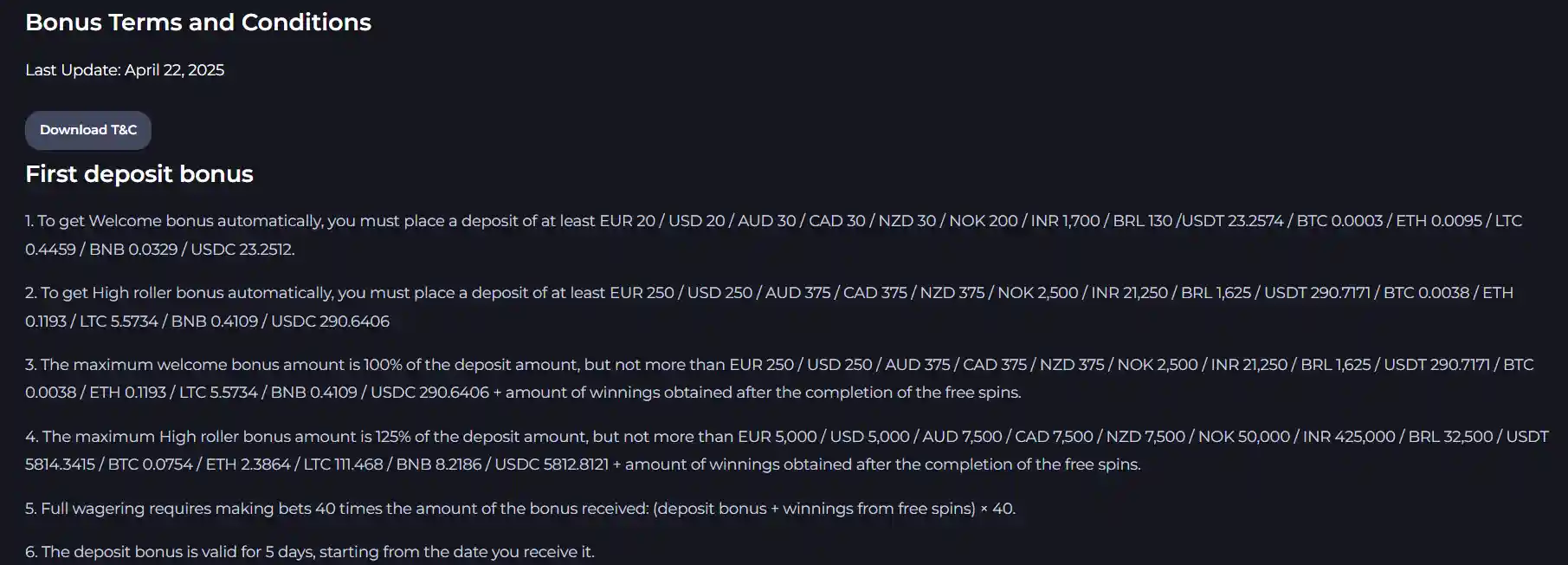



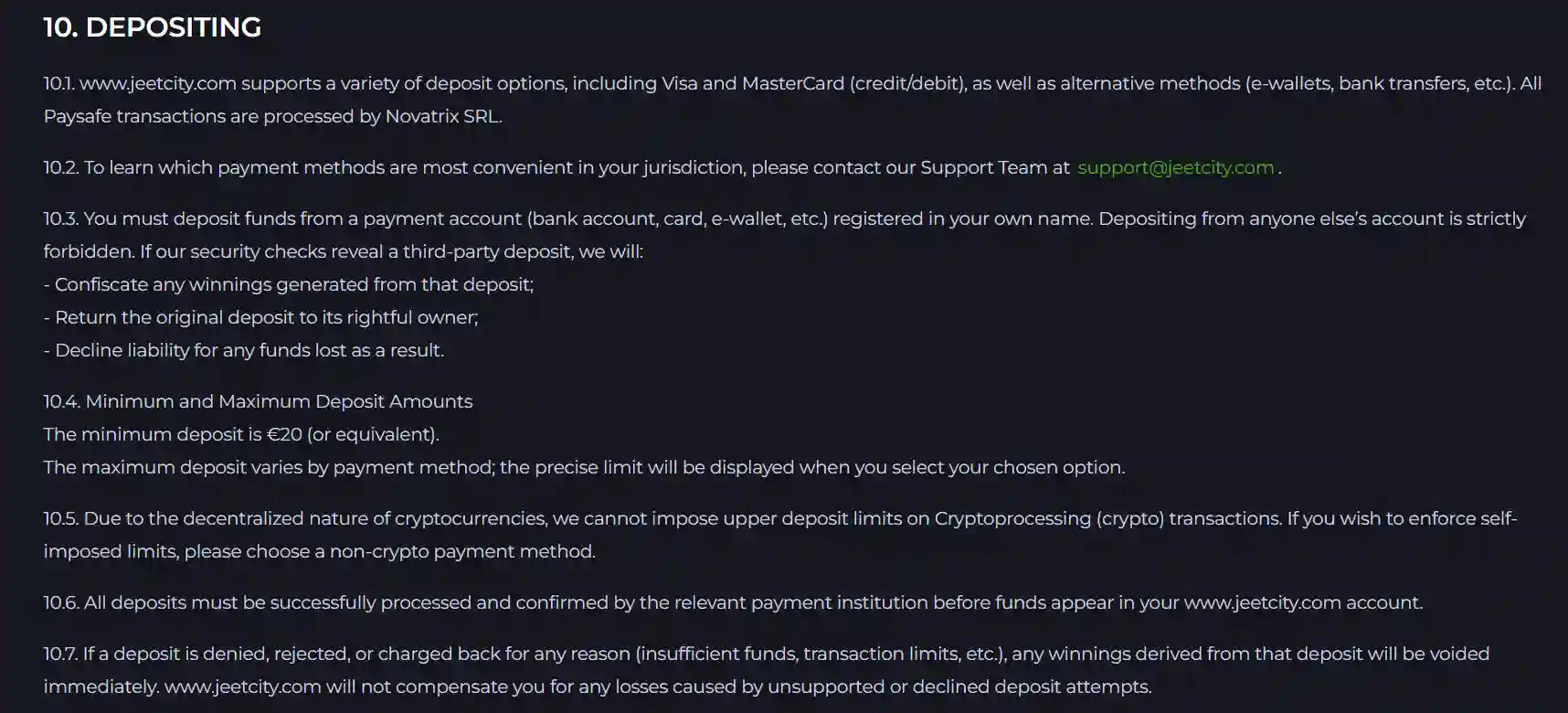

Low deposit online casinos in Australia: what to check
 Available in AU
A stated casino minimum can differ from the payment service’s floor, while bonus terms and cash-out rules shape what a small deposit means.

Table of Contents
- What “low deposit” actually means in Australia
- The Australian rules behind offshore online casinos
- What “best” should mean when your deposit is small
- Low deposits and pokies: where the money goes
- PayID deposits: the realistic minimum and payout timing
- A small deposit does not make a bonus small
- Before trusting a low-deposit casino site
- Real-money play: check the cash-out rules too
- Crypto deposits: tiny minimums, real-world limits
- How to compare low-deposit options without a ranking
What “low deposit” actually means in Australia
“Low deposit” sounds like a clear price tag. It isn’t. The figure on a casino page may describe the operator’s stated minimum, while the payment method you select can set a different floor. Those are separate rules, and the smaller number does not automatically tell you what you can actually put into an account.
There is an important Australian context before getting into the arithmetic: real-money online casino games are prohibited from being provided to people in Australia. So a low figure on an offshore site is not evidence of a locally authorised casino offer. I’m discussing what the numbers on such pages mean, not recommending that you use them.
An operator may set


A specialist review puts the effective minimum for a usable deposit in Australia in

Neosurf shows how the gap can arise. The voucher’s minimum purchase is typically A$10, which means the practical starting amount through that route is set by the voucher, even if the casino page displays a lower minimum. You are not choosing an arbitrary smaller sum at checkout; the payment product has already defined the amount you can spend.
I used to read the smallest number as the answer and stop there. That was the mistake. The useful question is not only, “What does the page say?” It is also, “What does this particular payment route allow?” If those answers differ, the route sets the practical floor.
It helps to separate three things when reading a deposit page:
- The operator’s stated minimum: the amount the site says it will accept.
- The payment method’s minimum: the amount the processor or payment product will let you send.
- The amount you can actually use: what remains available after the transaction is accepted and any applicable conditions are accounted for.
That distinction matters even when the figures look close. A low minimum can be a genuine operator setting and still be unusable with a chosen method. Conversely, a payment route might accept a small transfer while the operator rejects it. You need both sets of terms to line up.
There is another reason not to judge the whole transaction by the deposit figure: putting money in and getting money out are separate steps. A specialist review reports minimum cash-out thresholds in the A$20–A$50 range, but that is not a universal rule and should not be treated as one. The point is simply that a deposit small enough to be accepted may still leave a balance below a site’s stated cash-out threshold. That can make a tiny starting amount less flexible than it first appears.
So when a page calls itself a low-minimum option, read the word “low” as incomplete until you have checked the payment route and the relevant account terms. The displayed deposit figure is only one part of the transaction. It does not establish that every method accepts that amount, or that the same amount can later be cashed out.
Keep the distinction simple: an operator can set its own minimum, while a payment provider can impose another. For a usable figure, both have to allow the transaction. Otherwise, the headline number is just the smaller of two rules. A small print detail.
The Australian rules behind offshore online casinos
The legal distinction that matters is between the person placing a bet and the business offering the service. Australia’s main federal law in this area is the Interactive Gambling Act 2001, or IGA. It prohibits operators from providing certain online gambling services to people in Australia, including real-money casino-style games. That rule concerns the provision of the service; it does not make an individual player’s act of betting with an offshore operator a criminal offence.
Legal Distinction
Real-money online casino games are prohibited from being provided to people in Australia under the Interactive Gambling Act 2001.
I used to treat those two sides as if they were interchangeable: if a site was reachable, I assumed the law must allow it; if it was offshore, I assumed I was the one breaking the rules. Neither is a sound reading of the distinction. The IGA puts the central prohibition on the service being supplied to Australians. It does not turn a player into the operator, or make the operator’s obligations disappear because the business is based overseas.
That is a narrow distinction, not a stamp of approval. The fact that the law does not criminalise an individual’s bet does not mean an offshore service is lawful to provide here, locally licensed, or protected from enforcement. Nor does an Australia-facing page change which side of the law the operator is on. The relevant question is what service is being supplied to people in Australia, not how familiar the website looks.
What the regulator can do
The Australian Communications and Media Authority (ACMA) is the federal body responsible for enforcing the IGA and monitoring compliance with federal interactive gambling laws. Its role is directed at prohibited services and their presence in the Australian market, rather than treating an individual player as the target of the operator rules.

One enforcement tool is website blocking. ACMA can ask Australian internet service providers to block access to websites that provide prohibited interactive gambling services or advertise them in Australia. A block can make a site harder to reach from within the country, although it does not change the underlying legal distinction: the prohibition concerns the service being provided, while the player’s act of placing a bet is not itself criminalised under this framework.
The scale of enforcement gives some context to what “offshore” means in practice. Since November 2019, ACMA has blocked more than 1,455 illegal gambling and affiliate websites following enforcement action. That figure includes affiliate websites as well as gambling sites, so it should not be read as a count of operators alone. The number describes websites blocked, not a guarantee that every other site is lawful or available.
There is also a reported count of services that have left the Australian market since ACMA began enforcing the rules in 2017. The figures conflict: one account puts the number above 210, while another says more than 190. Both describe services withdrawing from the market, but they do not give the same total. The useful point is the enforcement context, not pretending those counts match.
Access is not the same as legality
A site may still appear in search results or load for a user without that proving it is authorised to provide real-money casino games to people in Australia. Conversely, a site that has been blocked may be difficult to access, but the block is an enforcement measure aimed at the website, not a criminal finding against each person who tried to visit it.
ACMA Enforcement
Since November 2019, ACMA has blocked more than 1,455 illegal gambling and affiliate websites to monitor compliance with federal laws.
That distinction matters when a page uses language such as “available to Australian players.” Availability is a claim about access, not a statement that the service complies with the IGA. A brand’s Australian references, currency display or local payment wording do not, by themselves, settle the legal position. I have learned not to read convenience as legitimacy.
For someone considering a low-deposit casino, the small amount does not alter the legal framework. A modest first payment is still connected to the same kind of real-money service, and the operator’s obligations do not shrink because the balance is small. Nor does the IGA’s treatment of the player’s bet amount to a recommendation to use an offshore site. It only describes where the law draws the line between the provider and the individual.
So the practical picture is quite specific: federal law prohibits operators from supplying certain online gambling services to Australians; ACMA monitors compliance and can seek website blocks; and the player’s act of betting with an offshore operator is not itself criminalised by the IGA. Those points can sit together without contradiction. Reachable does not mean permitted.
What “best” should mean when your deposit is small
If you’re looking for a low-deposit online casino in Australia in 2026, check the minimum deposit and the terms that apply to your chosen payment method before signing up. The details below highlight what is specifically known about each operator.
License: Curacao eGaming (Roby Games Ltd) Roby Casino is listed with a Curacao eGaming license held by Roby Games Ltd. No minimum deposit is specified here, so check the current deposit requirements before you play.
License: Curacao eGaming OGL/2023/174/0082 (Dama N.V.) · Min. deposit: A$15 LevelUp Casino has a stated minimum deposit of A$15, a useful detail if you’re looking for a low-deposit option. Its listed license is Curacao eGaming OGL/2023/174/0082, held by Dama N.V.
License: Curacao – Antillephone N.V. (Versus Odds B.V.) · Min. deposit: EUR 20 Thor Casino’s stated minimum deposit is EUR 20, and its listed license is from Antillephone N.V. in Curacao, with Versus Odds B.V. identified. Check how the deposit amount applies to your payment method.
Payout speed: crypto 30-120 minutes, fiat 24-72 hours · Min. deposit: A$30 MrPacho lists a minimum deposit of A$30. Its stated payout times are 30–120 minutes for crypto and 24–72 hours for fiat.
License: Curacao Gaming Control Board OGL/2023/176/0095 (Hollycorn N.V.) Neospin is listed with a Curacao Gaming Control Board license, OGL/2023/176/0095, held by Hollycorn N.V. A minimum deposit is not specified here, so check it before signing up.
License: Curacao Gaming Control Board (TechSolutions Group N.V.) Bizzo Casino is listed with a Curacao Gaming Control Board license held by TechSolutions Group N.V. No minimum deposit is provided here, so verify the deposit requirement directly.
License: Curacao Gaming Control Board OGL/2023/176/0095 (Hollycorn N.V.) Rollero Casino is listed with a Curacao Gaming Control Board license, OGL/2023/176/0095, held by Hollycorn N.V. Its minimum deposit is not specified here.
License: Curacao Gaming Authority (Jumpman Gaming Ltd) DragonSlots Casino is listed with a Curacao Gaming Authority license held by Jumpman Gaming Ltd. Check the current minimum deposit, as no amount is specified here.
License: Curacao Golden Pokies is listed with a Curacao license. No minimum deposit is specified here, so confirm the amount before you deposit.
License: Curacao OGL/2024/1335/0780 · Min. deposit: EUR 20 Vegaz Casino has a stated minimum deposit of EUR 20 and is listed with Curacao license OGL/2024/1335/0780. Check how the minimum applies to your chosen payment method.
A low entry figure can look like a bargain while telling you almost nothing about whether the balance will be usable. I used to treat the smallest advertised deposit as the whole story. It isn’t. The useful question is what that amount lets you do, and what rules stand between the money going in and any money coming back out.
There is no single best low-deposit option for every player. A sensible assessment starts with the payment route’s actual minimum, not a headline on a page. A specialist review puts the effective minimum for a usable deposit in Australia in the A$10–A$20 range. Treat that as a reported snapshot, not a standing rule: payment methods and operator settings can change, and the minimum shown at checkout is the one that matters for that transaction.
Then consider the size of the balance you would have after depositing. A small starting amount may leave little room to recover from a run of losing bets or to choose a stake that suits your budget. That doesn’t mean you should deposit more to make the experience feel worthwhile. It means a low minimum is not automatically a good fit. If the amount you are comfortable risking is too small to use under the site’s rules, walking away is a real option.
I now look for friction, not glossy labels. Can you see the deposit conditions before committing? Are there fees or restrictions that change the amount credited? Are the rules written clearly enough that you can tell what happens to your balance? If the answer is buried in vague promotional language, the low figure is doing more work than the terms.
The cash-out end matters too, even though it is easy to ignore when you are focused on getting started. A specialist review reports minimum cash-out thresholds commonly in the A$20–A$50 range, but that is not a guarantee for a particular site. A balance below the applicable threshold may not be available to cash out yet. So compare the deposit minimum with the cash-out rules before deciding whether the entry amount is genuinely practical.
- Check the payment route’s actual minimum
- Compare deposit minimums with cash-out rules
- Verify if conditions are written clearly
- Rely on a glossy “best” label
- Assume the headline deposit figure is the whole story
- Ignore the cash-out thresholds
A “best” label can also hide a mismatch between what you want and what the site allows. Check whether the payment route fits the amount you plan to spend, whether the credited balance is clear, and whether the conditions on that balance are understandable. For a mobile casino, the same checks apply on a small screen: being easy to tap through is no help if important terms are difficult to find.
My test is plain: could I understand the cost, the usable balance and the route out before putting money in? If not, the low deposit is just the first number I saw. A small entry point can reduce how much you risk at the start; it cannot make unclear terms harmless or turn a balance into spending money you can necessarily access.
No magic minimum.
Low deposits and pokies: where the money goes
A small balance can look more useful than it is when a promotion comes with a wagering requirement. The catch is that the games may not all count equally towards clearing it. In the terms, “contribution” means how much of your stake is counted; it does not mean that the game returns that amount to you.


I used to read “full contribution” as if it meant the promotion was easier to clear. It only tells you how the operator counts eligible stakes. It says nothing about the outcome of a spin, how quickly money can be lost, or whether any winnings will remain. Easy to misread.
What the contribution rate changes
Imagine the terms count every eligible pokies stake in full, while counting only a fraction of a table-game stake. You could place the same total amount in stakes on each type of game and see very different progress against the requirement. With table games, a smaller share may count, so reaching the same target can take more betting.
That distinction matters when your starting balance is limited. A low deposit does not change the contribution rate, and it does not turn a wagering requirement into a small task. If the balance runs down before the required play is completed, the promotion may be of little practical value. The displayed progress bar, where provided, is not the same as cash available to take out.
I would look for the game-weighting table before treating a bonus as part of a usable balance. Check whether the stated rate applies to every game in a category, and whether the terms exclude particular games or restrict play while the promotion is active. A broad label such as “pokies count fully” can still sit alongside conditions that matter to your choices.
Why a small balance can feel tight
The apparent advantage of full contribution can also push you towards faster or more frequent staking. That is where the arithmetic stops being the whole story: counted progress may rise, but your balance is still exposed to the results of each bet. A low-deposit balance gives you little room to absorb losses, and contribution percentages do not protect it.
Attention: Contribution percentages are rules for counting bets and do not protect your balance from being lost during play.
Table games are not automatically a safer workaround. Their lower weighting can mean less progress per stake, while the balance can still change with each result. Comparing games only by how quickly they count towards a requirement misses the risk of losing the money being used to make that progress.
I now separate two questions: how much of a stake counts, and what happens to the balance while making it. They are not the same question. Before opting into any promotion, read the game weighting alongside the wagering terms and check which games are eligible. If those details are unclear, the headline offer tells you very little about how workable it is.
“Full contribution” sounds generous. It is just a rule for counting bets.
PayID deposits: the realistic minimum and payout timing
PayID can look like a straightforward way to make a small deposit, but the minimum is not set by the payment name alone. The operator’s payment rules and the limits applied to the transaction both matter. A specialist review puts the reported minimum for PayID or instant bank transfer at AU$10–AU$20. Treat that as a finding from that review, not a fixed rule for every service or a promise that a particular amount will be accepted.
That distinction matters if you are comparing a low-deposit PayID option with another payment route. A site may display PayID as available while setting its own minimum above the amount you had in mind. The payment method can also have conditions shown separately from the casino’s general deposit terms. Check the PayID-specific minimum on the payment screen before authorising anything; a general “low deposit” label does not settle the question.

I have made the mistake of treating the smallest advertised figure as the amount I could actually send. It is the wrong number to rely on until the cashier confirms the method and minimum. Read the amount shown for PayID itself, and check whether it is in Australian dollars. If the details are unclear, there is no reason to guess. Small print, big difference.
Payout timing is a separate issue. A specialist review describes PayID cash-outs as often arriving on the same day, but that is a reported timing, not a guarantee and not a statement about how quickly a deposit will be credited. The two directions of a transaction can follow different checks and processing steps. In particular, the time quoted for a cash-out should not be used to infer that a PayID deposit will be instant.
Account verification can also affect when a payout is released. So when a page uses words such as “fast” beside PayID, look for whether it is describing deposits or cash-outs, and whether the timing is conditional on verification. The payment label alone does not answer either question.
There is another point I keep separate: the minimum you can send is not the amount you can necessarily take back in one cash-out. Those rules are set out elsewhere in the account terms and should be read independently. A low entry amount says nothing by itself about the cash-out threshold or the time taken to process it.
For a PayID payment, the useful checks are simple: confirm the displayed minimum, make sure the currency is clear, and do not treat a reported same-day cash-out as a promise. That is less exciting than an instant-payment banner. It is also more useful.
A small deposit does not make a bonus small
A bonus can look modest because the amount added to your balance is modest. The wagering requirement is the part that changes the maths. It sets how much qualifying betting must take place before bonus-related winnings can be cashed out.
A specialist review cited wagering requirements of 35x to 50x the bonus amount for low-deposit promotions. Treat that as a reported range, not a fixed rule across every offer. The key detail is what the multiplier applies to: the bonus alone, or the deposit and bonus together. Those are very different calculations, and the headline rarely makes the distinction obvious.
The scale is easier to see with a concrete calculation. A specialist review gives the example of a $1,000 bonus with 35x wagering: that means $35,000 in total bets before bonus winnings can be withdrawn. The required betting is not a target you are guaranteed to reach, nor does completing it guarantee a profit. It is simply the turnover condition attached to the bonus.
That is why “extra funds” can be a misleading label. The money may sit in your balance, but the terms can restrict when winnings become available and what counts toward clearing the requirement. I would not judge a low-deposit bonus by the amount shown beside it. I’d read the conditions first.

Before confirming any promotion, check three things: the minimum deposit needed to activate it, the wagering multiplier and the game weighting. The minimum deposit tells you whether your payment qualifies at all. The multiplier tells you the size of the betting obligation. Game weighting tells you whether your chosen games count fully or only partly. The difference matters: pokies are commonly listed as counting at 100%, while blackjack and roulette may count at 10% or 20%.
So a low-deposit bonus casino offer can still demand a large amount of qualifying play. If the terms are hard to find, or the calculation is unclear, that is enough reason to pause rather than accept first and untangle it later.
Read the small print. Then decide.
Before trusting a low-deposit casino site
An Australian flag, local spelling or “made for Australia” banner tells you who a site is trying to attract. It does not tell you where the operator is licensed. I used to treat a familiar-looking page as a sign that someone had checked the important details. That was a lazy shortcut.
Most online casinos using Australian branding operate under licences issued offshore, with Curaçao, Malta and the Isle of Man among the jurisdictions commonly named. That distinction matters: an offshore licence is not an Australian licence, and the branding does not change where the licence comes from. Nor does a licence displayed on a page, by itself, prove that every claim on the page is accurate.
Verifying Licences
Find the legal name of the operator, the issuing jurisdiction, and the licence reference.
Check the details through the relevant issuing authority to ensure the licence is valid.
Compare the operator name in the licence with the name listed in the site’s terms.
Before

Also compare the operator name in the licence details with the name in the site’s terms. If they differ, look for a clear explanation of the relationship; don’t assume they are the same business. Check that the licence information appears to relate to the site you are viewing, rather than being copied from another page. If you cannot establish that connection, pause.
That still does not make an Australian-facing casino locally licensed. The Interactive Gambling Act 2001 prohibits operators from providing real-money online casino games to people in Australia. So a foreign licence should not be read as permission to provide those services here. There is a difference between checking what a site claims and treating that claim as approval.
I know the temptation: the deposit looks small, the page looks polished, and the licence badge seems like a tidy answer. It isn’t. Check the legal entity and the licence details before sharing information or making a decision. If they are missing, inconsistent or impossible to verify, I would not fill in the blanks for the operator.
A neat badge proves very little.

Real-money play: check the cash-out rules too
A small amount going into an account does not tell you whether the same amount can come back out. The cash-out threshold is a separate condition, and it can leave a balance stranded below the amount an operator says it will process.
A specialist review reports minimum cash-out thresholds in the $20–$50 AUD range. That is a reported range, not a fixed rule for every site, and conditions can change. The practical point is the gap: if an account balance is below the stated threshold, having money displayed on screen does not necessarily mean it is available to cash out.
I would read the cash-out terms before treating any advertised starting amount as meaningful. Look for the minimum amount, any fees, identity checks and the conditions attached to funds. If a bonus is involved, check whether its wagering requirement must be completed before bonus-related winnings can be released. A small deposit can sit alongside a much larger set of conditions.
Also separate a cash-out threshold from processing time. One tells you how much you must have before a request can be made; the other concerns what happens after a request is accepted. A claim about fast processing does not remove a minimum threshold, and a low threshold does not tell you how quickly money would arrive.
There is a more basic issue in Australia: the Interactive Gambling Act 2001 prohibits operators from providing real-money online casino games to people in the country. A site using Australian branding is not evidence that its service is locally authorised. This is not a recommendation to use an offshore service; it is a reason not to mistake a displayed balance or a cash-out promise for a dependable route to your money.
Cash-Out Realities
- The deposit figure is only the entry point, not a guarantee of withdrawal
- Minimum cash-out thresholds often range between $20–$50 AUD
- Wagering requirements must be completed before bonus winnings are released
- Australian branding does not equal local authorisation
My old mistake was treating the deposit figure as the whole deal. It is only the entry point. The cash-out rules decide whether a small balance is even eligible to leave, while the other terms may decide whether it can be released at all. Read the conditions as a whole, not as a reassuring headline. A balance on screen is not cash in hand.
Crypto deposits: tiny minimums, real-world limits
Crypto can make the number shown as a deposit minimum look almost meaningless. A specialist review reported that some offshore operators accepted cryptocurrency deposits as low as A$5. Another specialist review described casino-set minimums as nominal, in some cases equivalent to A$1. Those are reported examples, not a dependable market standard; the amount and accepted coin can change from site to site.
The catch is that the deposit field is only one part of the cost. A blockchain transaction can involve a network fee, and the amount you send may not be the amount credited after fees or conversion. With a very small transfer, that difference can take a noticeable bite. The receiving service may also set its own minimum, separate from the casino’s stated minimum.
Then there is the balance after it arrives. If the minimum bet for a game is too large relative to your funds, a tiny deposit may leave little room to play. A low number on the payment screen is not the same thing as a workable balance. I used to focus on the minimum and treat everything around it as fine print. That was the wrong bit to ignore.
Crypto also adds practical details that ordinary bank payments do not: you need to select the correct coin and network, and a mistake in the destination details can be difficult to fix. Check the payment instructions and fees before deciding whether the amount makes sense. Don’t send a test-sized sum just because a page advertises one; it may not cover transaction costs or meet the conditions for crediting.
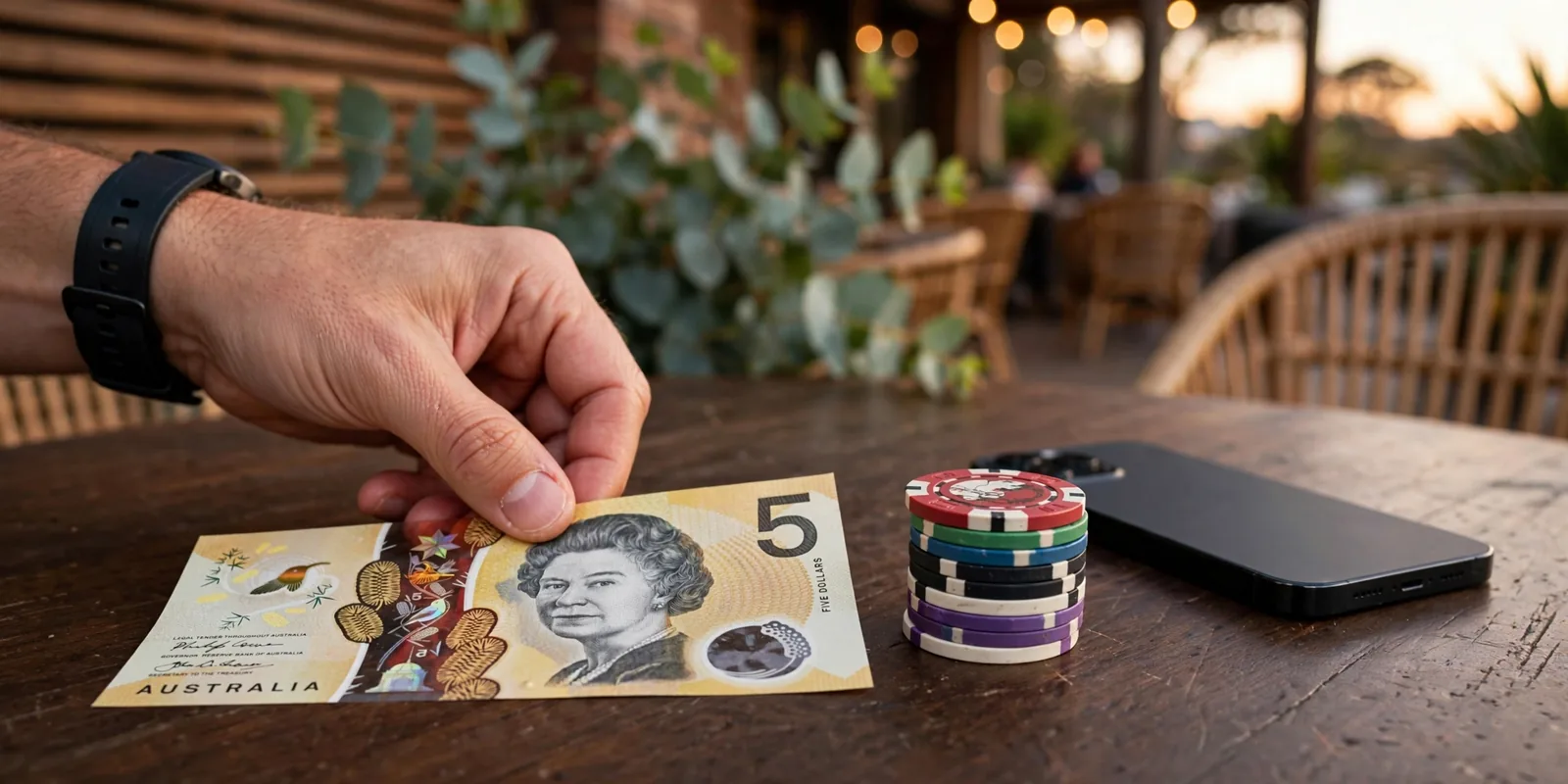
A “tiny minimum” sounds useful. In practice, fees and bet sizes can make it a poor measure of affordability. And a low crypto threshold does not establish that an offshore gambling service is lawful to provide in Australia.
How to compare low-deposit options without a ranking
When comparing low-deposit offers, I look past the headline minimum and ask what the payment route takes out of a small balance. A deposit can meet the stated threshold and still be a poor fit if fees or delays eat into the amount available.
A specialist review reports that Skrill and Neteller deposits to gambling sites may carry fees, with a minimum transaction amount often set at A$10. Treat that as a detail to verify for the specific payment route, not a fixed rule: check the fee and minimum shown before confirming anything. On a small transfer, even a modest charge matters. It can turn a low entry point into a less useful deposit.

Bank transfers are another case where the advertised amount tells only part of the story. They can take several business days to process, and the sending bank may charge a fee. That delay makes them less practical when you are comparing routes for a small amount. I learned not to treat “available” as the same as “ready to use.” It isn’t.
For each option, compare three things together: the amount that leaves your account, any payment fee, and how long the transfer may take. Then check whether the amount that arrives is still worth the wait and cost. A low minimum on its own says very little.
I would not turn that comparison into a “top” list. The useful distinction is between a low number on a page and a payment route whose costs and timing are clear before you act.
What is the actual minimum deposit at a no-minimum-deposit casino in Australia?
A usable deposit commonly starts at A$10–A$20, even when the operator itself sets no minimum, because the payment method may impose one. Some offshore casinos accept deposits as low as A$5 via cryptocurrency, while a Neosurf voucher typically starts at A$10.
Are no-minimum-deposit casinos legal in Australia?
No real-money online casino service may lawfully be provided to people in Australia under the Interactive Gambling Act 2001. The law does not make an individual’s bet with an offshore operator a criminal offence, but that does not make the service locally authorised.
What payment method is best for small deposits in Australia?
Cryptocurrency can allow the smallest deposits, sometimes around A$5, but transaction costs and minimum bets can make tiny amounts impractical. Neosurf typically requires a A$10 voucher, while PayID or instant bank transfer commonly starts at A$10–A$20.
What is the minimum deposit and wagering requirements?
A usable deposit commonly starts at A$10–A$20, though some cryptocurrency deposits may be lower. Low-deposit bonuses can require wagering the bonus amount 35–50 times; slots usually count fully, while blackjack and roulette may count only 10% or 20%.
Can I withdraw winnings from a low deposit?
A small deposit does not guarantee that you can cash out the same small amount: minimum withdrawal thresholds are often A$20–A$50. Check the site’s cash-out threshold and any bonus conditions before depositing.
Do low-deposit bonuses have wagering requirements?
Yes. Low-deposit bonuses may carry wagering requirements of 35–50 times the bonus amount, and game weighting matters: slots typically count 100%, while blackjack and roulette may count only 10% or 20%.
Can I legally deposit and withdraw money to online casinos?
The Interactive Gambling Act 2001 prohibits operators from providing certain online gambling services, including real-money casino games, to people in Australia. It does not criminalise an individual’s act of betting with an offshore operator, but that does not make the service locally authorised.

Created by the ”JeetCity Casino” editorial team.