Pokies Parlour Casinos in Australia: What to Know
 Available in AU
The phrase is informal; a venue’s state or territory licence matters, while online casino-style services follow a different legal framework.
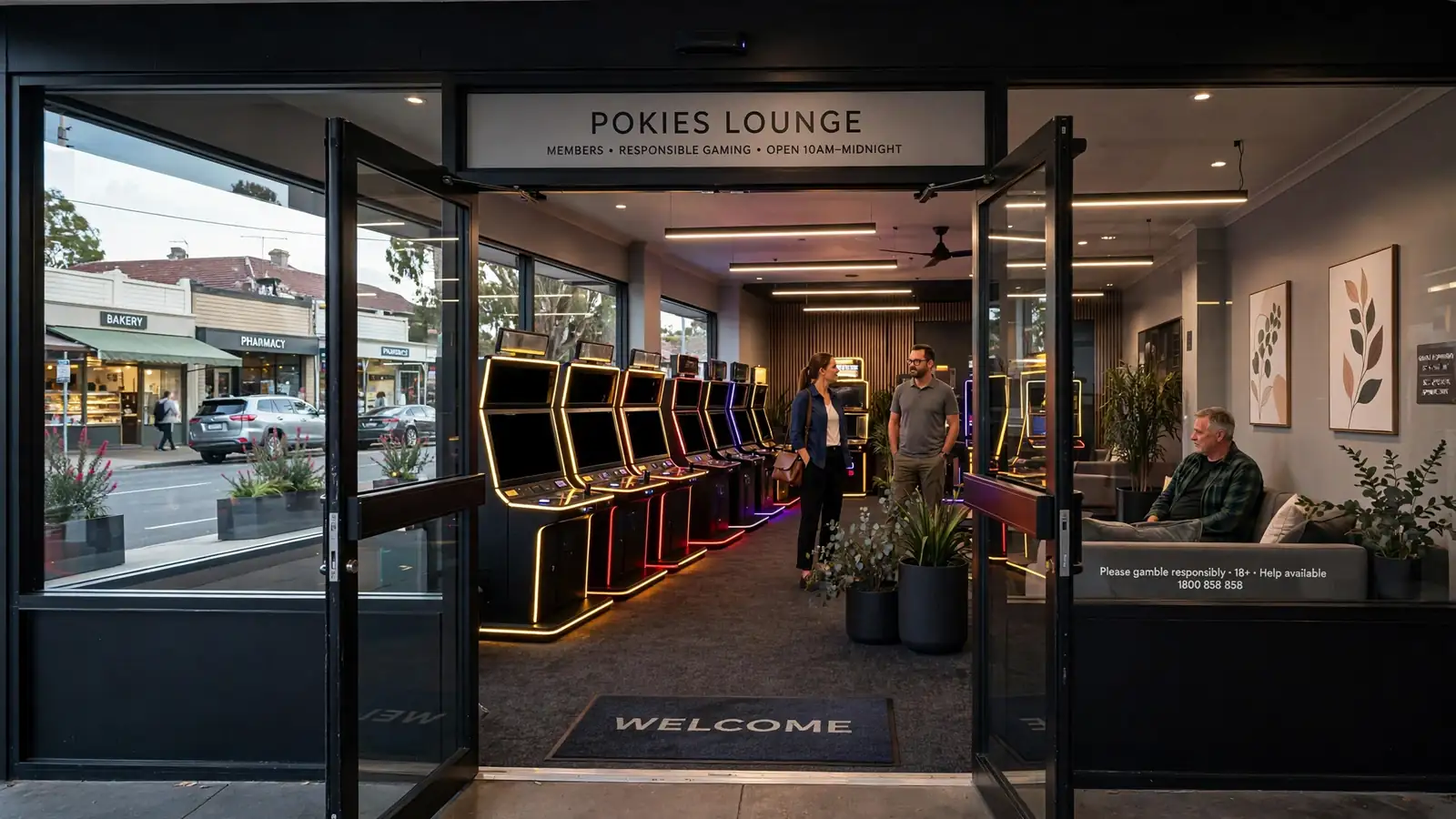
Table of Contents
- What “Pokies Parlour” Means in Australia
- Bonuses, Sign-Up Offers and Free Spins: Read the Fine Print
- Can You Play Pokies Parlour Online or for Free?
- How to Read a Pokies Parlour Casino Review
- Australian Casinos: Where They Are and How the Market Is Spread
- VIP Parlour Access, Opening Hours and Entry
- Parlour Pokies and Real-Money Searches: Know the Boundary
What “Pokies Parlour” Means in Australia
“Pokies parlour” sounds like the name of a particular kind of place, but it is not a standard Australian licence category. People use the phrase loosely, often to mean a physical casino with gaming machines. In practice, the important distinction is whether you mean a venue you can visit or an internet service offering casino-style games.
I used to treat those as two versions of the same thing: one with a front door, one with a screen. That was a tidy assumption, and a misleading one. A casino is a physical property operating under a licence issued by the state or territory where it is located. An online casino-style service is not simply that venue transferred to a website. The legal framework for the two is different.
In everyday conversation, “parlour” can suggest a dedicated room or a smaller gaming venue. But seeing that word in a name or description does not, by itself, tell you what kind of establishment it is, who regulates it, or what licence it holds. Nor does “casino” necessarily mean a large resort. The label people use can be vague; the venue’s actual status is what matters.
If you’re exploring pokies parlour casino options in Australia for 2026, this list gives you a concise reference to the details available for each operator. Use the stated licensing or payment information as a starting point when deciding what to check further.
License: Curacao eGaming (Roby Games Ltd) Roby Casino is listed with a Curacao eGaming license held by Roby Games Ltd. That licensing detail is the available point of reference for you.
License: Curacao eGaming OGL/2023/174/0082 (Dama N.V.) · Min. deposit: A$15 LevelUp Casino is listed with a Curacao eGaming license, OGL/2023/174/0082, held by Dama N.V. Its stated minimum deposit is A$15.
License: Curacao – Antillephone N.V. (Versus Odds B.V.) · Min. deposit: EUR 20 Thor Casino is listed with a Curacao license from Antillephone N.V., with Versus Odds B.V. identified. Its stated minimum deposit is EUR 20.
Payout speed: crypto 30-120 minutes, fiat 24-72 hours · Min. deposit: A$30 MrPacho lists crypto payout times of 30–120 minutes and fiat payout times of 24–72 hours. Its stated minimum deposit is A$30.
License: Curacao Gaming Control Board OGL/2023/176/0095 (Hollycorn N.V.) Neospin is listed with a Curacao Gaming Control Board license, OGL/2023/176/0095, held by Hollycorn N.V. This licensing information is the available detail for you to consider.
License: Curacao Gaming Control Board (TechSolutions Group N.V.) Bizzo Casino is listed with a Curacao Gaming Control Board license, with TechSolutions Group N.V. identified. That licensing detail is the available point of reference.
License: Curacao Gaming Control Board OGL/2023/176/0095 (Hollycorn N.V.) Rollero Casino is listed with a Curacao Gaming Control Board license, OGL/2023/176/0095, held by Hollycorn N.V. This gives you a specific licensing detail to check.
License: Curacao Gaming Authority (Jumpman Gaming Ltd) DragonSlots Casino is listed with a Curacao Gaming Authority license, with Jumpman Gaming Ltd identified. The available information here is limited to that licensing detail.
License: Curacao Golden Pokies is listed with a Curacao license. That is the only supplied detail for you to use as a starting point.
License: Curacao OGL/2024/1335/0780 · Min. deposit: EUR 20 Vegaz Casino is listed with a Curacao license, OGL/2024/1335/0780. Its stated minimum deposit is EUR 20.
Australia has a substantial physical casino footprint. A specialist gambling-industry review counts more than 20
The licence sits within the relevant local jurisdiction. That matters because Australian casinos are not all managed under one national venue licence. A physical property’s permission to operate comes from its state or territory, with the rules applying to that venue. So when someone calls a place a “pokie parlour casino,” I would not take the phrase as proof of its official category. I would look for the property’s identity and licensing context instead.
Online wording can blur the distinction further. A website may borrow the language of a real venue, use casino imagery, or call itself a parlour. None of that turns it into a physical Australian casino, and the existence of a familiar-sounding label does not make an online service equivalent to a locally licensed property. The Interactive Gambling Act 2001 prohibits operators from providing real-money online casino games to people physically located in Australia. Casino-style games provided online, including slots, poker and table games, fall within that prohibited-service framework.

That legal difference is easy to miss when the same words appear in both places. “Casino” may describe a licensed building in one context and an online operator in another. “Pokies” may be everyday Australian slang, but it does not change the rules attached to a service. I find it helps to separate the nouns from the setting: a venue is a place with a local licence; a website is an online service, and its wording does not establish that it is lawful to provide here.
There is also a difference between a casino and the broader range of Australian gaming venues. People may use “parlour” for a small room, a local gaming area, or simply as a casual label. Those descriptions are not interchangeable with a casino licence. If you are trying to understand a particular place, start with whether it is a physical venue and then identify the jurisdiction and licence associated with it. A catchy name will not answer that.
So, in Australian usage, “pokies parlour” is best treated as an informal description rather than a precise legal term. It may point to a physical casino or to another kind of gaming venue, depending on who is using it. If the phrase appears online, it is still only a label; it does not make the site a local casino or give it the status of one.
That’s the distinction. A building, or a website.
Attention: A “pokies parlour” is an informal description and not a precise legal term; always verify the specific identity and licensing context of a venue.
Bonuses, Sign-Up Offers and Free Spins: Read the Fine Print
“Bonus” sounds like something extra. In practice, it is a promotional claim designed to make gambling seem more attractive, and the conditions can matter more than the headline. If you have come across wording about a sign-up reward, a no-deposit offer, free chips or free spins, pause before treating it as a genuine benefit. For Australians, there is a more basic question than whether the offer is generous: is this kind of promotion lawful to advertise here at all?
The short answer for online casinos is no. Real-money online casino services are prohibited for people in Australia, and advertising those services to Australian audiences is also banned. That includes promotions built around online casino games, not just advertisements that plainly say “casino”. A message can be dressed up as a welcome reward or a free-play invitation and still be promoting a prohibited service.
That changes how you should read the usual bonus vocabulary. A large headline does not make an offer legitimate, and a long page of terms does not cure an unlawful advertisement. Fine print can help explain what a promotion claims to do; it cannot turn a prohibited promotion into a lawful one.
What the headline leaves out
Promotional language is built to be noticed quickly. “Welcome” suggests a friendly start. “Free” suggests there is nothing to lose. “No deposit” sounds like you can take part without committing money. Those words describe the pitch, not necessarily the practical conditions or legal status behind it.

The restrictions may be placed in smaller text, spread across several pages or described in language that sounds technical. Even when you find them, ask what the offer requires, what it applies to and whether the advertised benefit is actually available on the terms presented. A headline is not a full account of an offer.
But there is a limit to what this kind of checking can achieve. If the promotion is for a real-money online casino service aimed at Australians, working through its conditions is not a way to make it acceptable. Nor should an advertised reward be mistaken for approval by Australian authorities. Promotional wording is not a licence, endorsement or guarantee.
I used to give the headline too much weight and the conditions too little. That is an easy mistake: the headline is clear, while the restrictions make you slow down and piece things together. Still, reading every condition carefully only answers questions about the claim. It does not settle whether the claim should have been advertised to you in the first place.
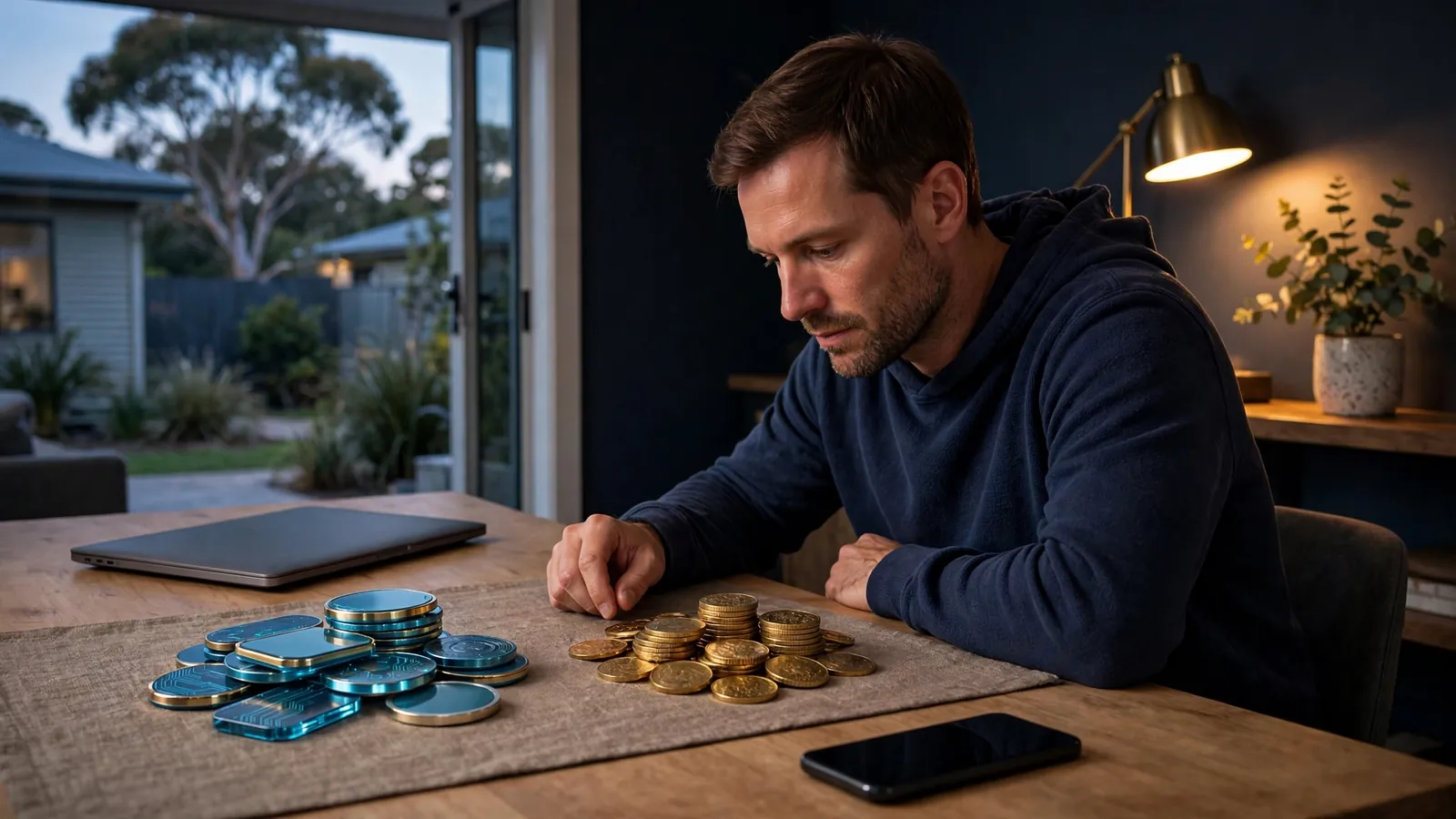
“No deposit” is still a promotion
A
There is also a difference between seeing the phrase and having a valid offer. A page can display attractive language without establishing that its claims are accurate, complete or lawful. A welcome message does not prove that a reward exists as described. A bonus label does not show that a person can claim it without further requirements.
Legal Risk
Real-money online casino services and their advertisements, including “no deposit” offers, are prohibited for people physically located in Australia.
Most importantly, removing a deposit from the sales pitch does not remove the advertising issue. If the underlying promotion points Australians towards prohibited real-money online casino gambling, presenting it as free or deposit-free does not change its character. The wording may soften the invitation. It does not make the underlying service lawful.
That is why I would not treat a no-deposit claim as a harmless free sample. It is still a way of promoting gambling, and the legal question does not disappear just because the first step is described as costing nothing.
Free chips, spins and other inducements
The same caution applies to free chips, free spins and other rewards that appear to have value. These phrases can make a promotion feel like a small gift. But an inducement is still an inducement when it is framed as something free, and attaching a reward to gambling can be part of encouraging someone to take part.
For Australian audiences, advertising real-money online casino services is prohibited. A promotion does not escape that restriction by focusing on a reward rather than naming the service directly. Nor does a label such as “free play” settle the question. The important issue is what the message is promoting, not simply which attractive words it uses.
There are restrictions on advertising gambling inducements and promotions to Australian audiences. The rules for gambling advertising also require particular care during the period from 5:00 am to 8:30 pm. That timing should not be read as permission to advertise an online casino outside those hours: online casino advertising to Australians is banned. Time-based restrictions do not create an exception to that ban.

Promotions can also be presented in indirect ways: through a message about joining, a reward, or an invitation to return. A change in format does not necessarily change the substance. If the point of the message is to encourage participation in a prohibited online casino service, describing it as a perk rather than an advertisement does not make it acceptable.
So when a page uses “free” repeatedly, I would not stop at the question of whether there is a charge. I would look at what the offer is trying to lead the reader towards. No charge at the first step is not the same thing as no inducement.
Why the regulator matters
The Australian Communications and Media Authority, usually shortened to ACMA, is the federal regulator responsible for enforcing the Interactive Gambling Act 2001 and overseeing compliance with federal interactive gambling laws. Its role is relevant because promotion claims are not just a private disagreement between a website and a customer. Federal rules govern what prohibited interactive gambling services may be provided and advertised to people in Australia.
That does not mean every phrase on a page has been examined or approved by ACMA. A polished design, detailed terms, customer support language or confident legal wording is not proof of regulatory approval. Nor does a promotion become acceptable because it appears beside material that looks professional. The regulator’s role is to enforce the law, not to certify every marketing claim a reader encounters.
If a promotion seems doubtful, avoid treating a disclaimer as a complete answer. A statement that terms apply may tell you to read those terms, but it does not establish that the advertisement itself complies with Australian law. Likewise, a claim that an offer is available to Australians is not evidence that it may lawfully be marketed here.
- Separate the headline from the fine print
- Check if the service is lawful in Australia
- Read for the purpose of the message
- Treat a headline as a full account
- Mistake promotional wording for a licence
- View a list of conditions as consumer protection
This is the part that can feel unsatisfying. You may want a simple way to compare one offer with another, but comparing the size or wording of promotions misses the threshold issue. If the promotion is prohibited, the details of the advertised reward are not a reason to engage with it.
A practical way to read the wording
When a promotion crosses your path, separate its claims rather than letting them blur together. What is the headline promising? What does the smaller text qualify? Is the message offering a reward, encouraging a sign-up or inviting someone to gamble? And does it promote real-money online casino gambling to people in Australia?
That last question comes first. If the promotion is for a prohibited online casino service, do not treat more careful reading as a workaround. You do not need to decide whether a reward is worthwhile before recognising that the advertisement itself is the problem.
Be wary of wording that shifts attention away from the service. A page may dwell on a welcome gift, a free-play feature or a limited offer while leaving the nature of the underlying gambling service less prominent. That framing can make a marketing message feel like a harmless perk. Read for the purpose of the message, not just its most appealing phrase.
I have found it useful to be suspicious of confident adjectives. “Exclusive” may mean the offer is targeted. “Simple” may mean the important conditions are elsewhere. “Free” may describe only one part of a much larger invitation. None of those words answers whether the advertisement is lawful for an Australian audience.
And do not confuse a list of conditions with consumer protection. Conditions can explain how an advertiser says an offer works; they do not prove the claim is fair, available or permitted. Fine print is information to assess, not a stamp of approval.
The useful takeaway
Searches for a pokies parlour sign-up bonus, a no-deposit offer or free spins all point towards the same kind of promotional promise: something extra in return for attention or participation. But for Australian readers, the central distinction is not between a small reward and a large one, or between a deposit offer and a no-deposit claim. It is between advertising that is permitted and promotion of a prohibited online casino service.
A bonus does not make the underlying gambling service lawful. “Free” does not neutralise an inducement. And a page full of terms does not establish that an advertisement may be shown to Australians. Those are the checks I would make before giving any promotional wording the benefit of the doubt.
If you cannot tell what the promotion is really asking you to do, that uncertainty is a reason to step back, not a reason to follow the offer further. The headline can wait. The legal boundary comes first.
Can You Play Pokies Parlour Online or for Free?
A page can load perfectly well and still have no lawful basis to offer online casino games to people in Australia. I used to treat a working link as a kind of stamp of approval. It isn’t. A site accepting account traffic, or switching to another web address after one stops working, tells you about access—not whether the service is authorised here.
Under the Interactive Gambling Act 2001, operators are prohibited from providing real-money online casino games, including slots and table games, to people in Australia.
The legal distinction matters. Under the Interactive Gambling Act 2001, operators cannot provide real-money online casino games to people physically in Australia. That includes online slots and table games. A foreign licence does not turn an offshore casino into an Australian-licensed one, and the fact that a page opens on your device does not change the law.
The same goes for a new or alternate domain. Websites can become unavailable through Australian internet providers after blocking action, while other addresses may appear later. That can make the service look as if it has simply moved. It does not mean the replacement address has passed a local licensing check. There is no sound shortcut here: loading, registration prompts and payment options do not establish that a real-money online casino is lawful for Australian customers.
The Australian Communications and Media Authority (ACMA) enforces the federal interactive gambling rules. It can ask Australian internet service providers to block websites that provide prohibited interactive gambling services or advertise them to people in Australia. Since November 2019, its enforcement actions have led to more than 1,455 illegal gambling and affiliate websites being blocked. Blocking is a practical way to restrict access, not a certification system for the sites that remain reachable.
ACMA’s actions have also been reported in connection with alternate domains associated with Fair Go. A specialist review has described blocking involving those addresses; that report should not be read as proof that another domain is authorised, or that a service has become lawful because it is reachable. The important point is the regulator’s role and the limits of what a domain can tell you.
There is also a discrepancy in published figures about services that have left the Australian market since ACMA began enforcing the rules in 2017: one account says more than 210, while another reports over 190. Those figures should not be silently treated as the same number. Either way, withdrawals and website blocks are enforcement outcomes; they are not a list of approved online casinos.
“Free play” can mean different things. It may refer to a game that imitates casino play without real-money gambling, or it may be used to draw attention to a site that also offers paid play. The label alone does not tell you which applies, and it does not establish that the operator can lawfully provide real-money casino games in Australia. I would not treat a free-play button as a safety check. It’s just a label.
If a service asks you to create an account, accept terms or move to another address, pause before treating those steps as evidence of legitimacy. The basic test is not whether you can reach the page or whether it calls itself a parlour. It is whether the service it provides is permitted under Australian law. For real-money online casino games offered to Australians, the answer is no.
Online Access Limits
- A working link or alternate domain does not establish legal authorisation
- ACMA blocks websites that provide or advertise prohibited gambling services
- “Free play” labels do not guarantee the lawfulness of a real-money service
- The basic test is whether the service is permitted under Australian law
How to Read a Pokies Parlour Casino Review
A polished review can make a place sound settled, safe and straightforward. I used to read that confidence as evidence. It isn’t. A review is a set of claims, and the useful question is what each claim is actually about: a physical venue, an online service, or simply the reviewer’s impression.
For a physical casino, the licensing context is specific. Australia regulates casinos at state and territory level, and each property operates under a licence issued by its own jurisdiction. So a review that says a venue is “licensed” should make clear which physical property it means. A licence attached to a venue is not a general stamp that follows its name everywhere.
That distinction matters when a page uses “parlour” loosely. It might describe a real place, or use familiar venue language while discussing a website. Those are not interchangeable. A review can be detailed about menus, rooms or entertainment and still tell you nothing useful about the legal status of an online gambling service.
Separate facts from impressions
I look for claims that can be checked independently, then treat the rest as opinion. “Easy to use” is a reviewer’s judgement. A venue address or the name of the licensing jurisdiction is a concrete detail. Those details do not prove every other statement on the page, but they give you something specific to verify.
Watch for language that sounds official without saying anything precise. “Regulated,” “trusted” and “approved” can be made to carry more weight than they deserve. Ask: regulated by whom, and what exactly is covered? If the review does not identify the venue or the relevant state or territory, the wording may be doing more work than the evidence.

I have been taken in by confident presentation before. A tidy layout, a verdict badge and a string of broad assurances can feel like research, even when they leave the central claim unanswered. That is the point where I slow down.
Check what the review is reviewing
A page may mix observations about a physical casino with comments about a website, account or gaming offer. Read those as separate claims. A venue’s local licence does not establish that a site using similar branding has permission to provide online casino games in Australia. Nor does a reviewer’s favourable experience establish regulatory status.
Look for the basis of the reviewer’s knowledge. Does the page identify the property and jurisdiction? Does it distinguish firsthand observations from claims repeated from elsewhere? Is the date clear enough to tell whether the material may have become stale? If the wording blurs these categories, I would not treat its overall rating as a substitute for checking the underlying claim.
A review can still help with ordinary questions about a venue, but only when its scope is clear. I give more weight to specific, attributable details than to a confident verdict, and I do not let a venue’s reputation answer a separate question about online access.
The short version: identify the subject, identify the jurisdiction, and keep facts apart from praise. If those pieces are missing, the review has not earned your trust.
Australian Casinos: Where They Are and How the Market Is Spread
A map gives a more useful picture of Australian casinos than treating “parlour” as if it named one particular venue. The country has more than 20 full-scale casinos across its eight states, but that broad spread does not mean every city has one, or that the venues are clustered in the same way everywhere.
Located at 93 Barrett Drive, Alice Springs, NT 0870, Australia.
Located on Broadbeach Island on the Gold Coast, Queensland.
The Northern Territory offers a smaller-scale snapshot. One specialist review counts three casinos across three cities and identifies Alice Springs as the city with the most, at one casino. That is a dated count from a review, not a permanent map of the market; venue lists can change, so I would treat it as a point-in-time guide rather than a guarantee that every directory will show the same picture.
One named Alice Springs address is Lasseters Casino, 93 Barrett Drive, Alice Springs, NT 0870, Australia. The address is the useful detail if you are trying to distinguish a real physical location from a vague mention of a town. It also makes clear that a casino listing is tied to a specific property, not simply to the idea of a “pokies parlour” somewhere in the Territory.
For a contrasting location, Jupiters Gold Coast Casino & Hotel is on Broadbeach Island on the Gold Coast. Putting that beside Alice Springs shows how far apart Australian casino settings can be: a location in the Territory’s inland centre and a named venue on the Queensland coast. That is a geographic contrast, not a recommendation or a claim that the two places offer the same experience.
I have learned not to read a list of cities as a ranking of venues. A count tells you where a source has recorded facilities; it does not tell you whether a particular site is open, what is available inside, or whether a listing has been updated. The address and the jurisdiction matter more than a broad label. Casino properties operate under licences issued by their state or territory, so the local context is part of identifying the venue.
Maps are snapshots. If you are planning a physical visit, confirm the address and current details directly with the venue before setting out. A casino name appearing in a directory is not enough to establish that every detail on that page is current. That small check has saved me the irritation of relying on a listing that looked definitive but was not.
The wider Australian picture is therefore best read in layers: the national spread gives scale, while named addresses anchor individual venues. Alice Springs and Broadbeach Island are specific places, not interchangeable labels for every casino in the country. And a count attributed to a review should stay attributed to that review. It is a sensible way to use a changing map without pretending it is fixed.
VIP Parlour Access, Opening Hours and Entry
“VIP” can make a casino visit sound like there is a separate door with special rules. I’ve learned not to read too much into the label. For a physical venue, the practical questions are simpler: when can you enter, how old do you need to be, and what identification must you show?
All major Australian casinos operate around the clock, so their doors are not limited to standard daytime opening hours. That does not mean every area or service inside a venue is available at every moment; check directly with the casino if you are going for something specific. The general point is that a late-night visit is possible at major properties.
Entry is for adults aged 18 or over. Bring valid photo ID. I would not treat having visited before, looking old enough, or having a booking as a substitute for identification. Staff may need to verify your age at the entrance, and arriving without ID can leave you unable to enter.
That is the part worth planning around. Age and ID.
If you see “VIP parlour” used to describe access, read it as a claim about a venue’s arrangements, not as proof that you qualify for a particular area or benefit. Ask the venue what its entry requirements are before setting out, especially if the wording comes from a third-party page rather than the casino itself. I have found that glossy labels explain less than a clear answer from the venue.
Keep the basics straight: major casinos are open around the clock, but entry still depends on being an adult and presenting valid photo identification. A supposed VIP label does not change those entry requirements.
Parlour Pokies and Real-Money Searches: Know the Boundary
The word “parlour” can make an online offer sound like an extension of a familiar Australian venue. It isn’t proof of one. A page can use local-sounding language, accept account traffic or appear at a different web address, but none of that establishes that it is an Australian-licensed online casino. The label is marketing, not a legal status.
That distinction matters because the rules treat physical casino gaming machines and online casino services differently. Australia has 3,308 gaming machines endorsed on venue licences and installed in casinos. That figure belongs to the physical casino environment: machines in licensed venues, under the authority of the relevant jurisdiction. It does not mean that the same games can lawfully be supplied online for real money to people in Australia.


I’ve learned not to let a familiar name do the thinking for me. “Australian” can mean the page mentions Australian cities, uses local wording or has an address that loads here. Those details may tell you how a site wants to present itself. They do not establish who is legally providing the service or whether that service is permitted.
Under the Interactive Gambling Act 2001, operators are prohibited from providing real-money online casino games to people physically in Australia. That includes casino-style games such as poker, roulette, blackjack and gaming-machine play. A foreign licence or a polished local-facing website does not turn that prohibited service into a locally authorised one. The legal line concerns what the operator supplies, not how convincing the site looks.
The Australian Communications and Media Authority (ACMA) is the federal body that enforces the Act and monitors compliance with federal interactive-gambling laws. Its role is not the same as the state or territory licensing framework for physical casinos. Keeping those responsibilities separate helps make sense of the language: a real venue’s gaming machines sit within a local venue-licensing system; an online real-money casino offer to Australians falls under federal restrictions.

That can feel less obvious than it should. An online page may borrow the atmosphere of a physical parlour, while the underlying service is entirely different. “Real money” is not just a payment detail attached to a venue experience. In an online casino context, it points to a service that operators are not allowed to provide to people in Australia. Don’t blur the two.
The machine count gives the physical side a concrete scale, but it is not a measure of online availability, legality or suitability. Nor does finding an accessible page settle those questions. I used to treat a site that looked established as a reassuring sign. It wasn’t. Appearance is not authorisation.
So when you see parlour-style wording attached to online play, separate the familiar image from the actual service. A licensed venue and an online casino website are not interchangeable, even if the language makes them sound close. That’s the boundary.
Prepared by the JeetCity Casino editorial staff.