




Casinos That Accept PayID in Australia: What to Check
 Available in AU
A PayID label alone does not confirm Australian access, cashier availability or that a payment will succeed.

Table of Contents
- What “PayID casino” claims can—and can’t—tell you
- The Australian legal position behind offshore casino searches
- Before treating PayID as a deposit option
- Casino games and PayID are separate questions
- What “Australian casino” means in a PayID search
- PayID withdrawals: don’t assume deposits work both ways
- Real-money claims need more than a payment label
- Paying with PayID: what remains unverified
- PayID casino bonuses are not established here
What “PayID casino” claims can—and can’t—tell you
I used to treat a payment logo as a straight answer: if a site displayed it, surely I could pay that way. That shortcut taught me very little. A PayID label can tell you what a page claims, but it does not, by itself, establish that PayID is available to you or that a transaction will go through.
The wording can be slippery. A page might mention PayID in a
That distinction matters when the phrase “PayID casino” sounds like a clear category. It isn’t necessarily one. A payment method’s name beside a casino-related claim does not verify that the operator accepts it for Australian customers. Nor does it tell you whether the label refers to a direct payment, a service connected with a bank, or something else entirely. The name alone leaves too much unsaid.
If you’re looking for an Australian casino option involving PayID, check the payment methods and terms directly before depositing: the details available here do not confirm PayID availability. The notes below highlight the specific information provided for each entry.
License: Curacao eGaming (Roby Games Ltd) You can note that Roby Casino is listed with a Curacao eGaming license held by Roby Games Ltd. This detail does not confirm whether PayID is available.
License: Curacao eGaming OGL/2023/174/0082 (Dama N.V.) · Min. deposit: A$15 You can note its Curacao eGaming OGL/2023/174/0082 license, held by Dama N.V., and a minimum deposit of A$15. Check directly whether PayID is among the available payment methods.
License: Curacao – Antillephone N.V. (Versus Odds B.V.) · Min. deposit: EUR 20 You can note Thor Casino’s Curacao – Antillephone N.V. license, held by Versus Odds B.V., and its minimum deposit of EUR 20. The details provided do not specify PayID availability.
Payout speed: crypto 30-120 minutes, fiat 24-72 hours · Min. deposit: A$30 You can use the stated payout information as a reference: crypto payouts take 30–120 minutes, while fiat payouts take 24–72 hours; the minimum deposit is A$30. PayID availability is not specified.
License: Curacao Gaming Control Board OGL/2023/176/0095 (Hollycorn N.V.) You can note Neospin’s Curacao Gaming Control Board license, OGL/2023/176/0095, held by Hollycorn N.V. Check with the casino to confirm whether it accepts PayID.
License: Curacao Gaming Control Board (TechSolutions Group N.V.) You can note that Bizzo Casino is listed with a Curacao Gaming Control Board license held by TechSolutions Group N.V. The available details do not confirm PayID acceptance.
License: Curacao Gaming Control Board OGL/2023/176/0095 (Hollycorn N.V.) You can note Rollero Casino’s Curacao Gaming Control Board license, OGL/2023/176/0095, held by Hollycorn N.V. Its PayID availability is not stated in the information provided.
License: Curacao Gaming Authority (Jumpman Gaming Ltd) You can note DragonSlots Casino’s Curacao Gaming Authority license, held by Jumpman Gaming Ltd. Confirm directly whether PayID is available before making a deposit.
License: Curacao You can note that Golden Pokies is listed with a Curacao license. No payment or deposit details are provided, so check directly whether PayID is accepted.
License: Curacao OGL/2024/1335/0780 · Min. deposit: EUR 20 You can note Vegaz Casino’s Curacao OGL/2024/1335/0780 license and its minimum deposit of EUR 20. The details provided do not say whether PayID is accepted.
I’ve learned to be wary of pages that turn a short label into a confident recommendation. “Best” often sounds like a tested verdict; in practice, it may just be a heading attached to a list. A ranking does not prove that its entries accept the named method, and a payment badge does not prove that a site is appropriate or available for people in Australia. Strong wording is not the same thing as strong evidence.
There is also a gap between a claim and an actual option. A page can say “PayID accepted” without showing whether that statement applies to the Australian version, to every customer, or to the cashier at the point of payment. Even a current-looking page can leave those details unclear. I wouldn’t infer more than the words support.
This is not just pedantry. Payment claims can influence what you believe you can do next. If you assume that a label means a working route, you may spend time creating an account or sharing personal information before discovering that the claim did not answer your real question. The safer reading is narrower: the page is making a claim about PayID. It has not necessarily demonstrated the practical details behind it.
The same caution applies to phrases such as “Australian,” “mobile,” or “online pokies” when they appear beside a payment label. Those words may describe the intended audience or the page’s subject; they do not independently confirm a payment option. A mobile-friendly page, for instance, is not evidence that PayID works on a phone. They are separate assertions, even when a headline squeezes them together.
I’m not saying every payment claim is false. I’m saying the label is only one small piece of information, and it is easy to let it stand in for answers it never gave. When I see a bold payment promise, I now pause before treating it as proof. “Accepted” sounds definite. The details may not be.

There is a bigger issue with offshore casino offers in Australia: Australian consumer law does not protect players who use offshore casinos. That is worth keeping in view when reading confident claims about payment access. A smooth-looking page or familiar payment name does not make the offer safer, locally protected or endorsed.
So, if you come across a page describing an Australian-facing casino as accepting PayID, read that as a claim—not as a guarantee, recommendation or confirmation of what would happen in a real transaction. The wording may be enough to explain why the page appeared in front of you. It is not enough to settle what the label means for you.
That’s the distinction I wish I’d made earlier: a payment name can attract attention, but it cannot carry the whole decision.
The Australian legal position behind offshore casino searches
A payment label can make an offshore casino offer look local, but it does not change the law. In Australia, the central distinction is between what the law says about the operator and what it says about the person who encounters the site. The Interactive Gambling Act 2001 makes it illegal for operators to provide real-money online casino games to people physically located in Australia. It does not explicitly make it a crime for an Australian player to use an offshore site.
That difference matters, but it is not a green light. The rule places the prohibition on providing the service, rather than turning a player’s use of an offshore casino into an offence under that Act. It does not mean the service is lawful for Australian customers, that an overseas operator is approved here, or that the player has the protections they might expect from a domestic business.
The Act covers online casino-style gambling, including poker and table games as well as pokies. The question is not settled by the site’s branding, the currency it displays, or a payment option shown on a page. Those details do not establish that the operator may legally offer real-money casino gambling to people in Australia. Nor does calling a site “Australian” make it a locally regulated service.

Who the law addresses
The legal obligation falls on operators providing prohibited interactive gambling services to customers in Australia. The Australian Communications and Media Authority, or ACMA, is responsible for enforcing the Interactive Gambling Act. That is the regulator to know when trying to understand the enforcement side of the rules; a casino’s own description of its status is not the same thing as an official determination.
The law also has consequences for operators that violate it. The maximum daily penalty is $360,000 for an individual and $1.8 million for a body corporate. Those figures are maximum penalties, not a prediction of what will happen in any particular case. They show why the distinction between a player and a service provider is important: the Act’s prohibition and stated penalties are directed at the people or businesses providing the service.
That distinction can be easy to miss when an offer is presented as a routine entertainment product. A polished site, familiar payment language, or Australian-facing wording may make the service seem ordinary. None of those things changes who is responsible for making an online casino available to people here. Marketing does not rewrite the law.
What player non-liability does—and does not—mean
It is fair to say that the Act does not explicitly criminalise a player for using an offshore casino. It would be misleading to turn that into “there is no risk” or “it is legal to play.” Those statements collapse two different questions: whether a player is criminally liable under this Act, and whether an operator may lawfully provide casino gambling to Australian residents. The answers are not the same.
There is also a practical question beyond criminal liability: what happens if money or an account becomes the subject of a dispute? Australian consumer law does not protect players who use offshore casinos. If an overseas operator does not honour a claim or is difficult to contact, the player should not assume they can rely on the ordinary protections available in a local consumer transaction. An operator’s promise to resolve disputes is still the operator’s promise; it is not a substitute for Australian consumer protection.
Consumer Protection
Australian consumer law does not protect players who use offshore casinos, meaning you cannot rely on local protections if a dispute arises.
I have learned to be suspicious of neat little assurances that make a complicated arrangement sound settled. “Safe” can mean a page loads without a warning. “Australian” can mean the site accepts visitors from here. Neither word, by itself, tells you that Australian consumer law will stand behind a player using an offshore casino. That gap is the part an advert tends to leave in small print—or leave out altogether.
The absence of player criminalisation under this Act is therefore a narrow point, not a consumer guarantee. It does not establish that a player can recover money through Australian consumer channels, obtain the same remedies as with a local provider, or make an offshore operator answerable in practice. Those are separate issues, and the legal position does not become more protective just because the account is easy to open or a payment method sounds familiar.
Enforcement is not the same as approval
ACMA’s role is enforcement. It does not follow that every site visible to an Australian user has been reviewed and approved, or that an operator’s claim about its customers is reliable. The broader legal position is that offshore casino services offered to Australian residents are prohibited, and enforcement applies to that prohibition. Online casino services are also subject to active blocking and enforcement measures.
Blocking and enforcement do not turn the player into the regulated operator. They do, however, make it especially unwise to read availability as a sign of permission. A link, a working page, or a site that appears in a list is not an official stamp. Access at one moment cannot prove that the service is lawful, protected, or likely to remain reachable.
Advertising is another part of the picture. Real-money interactive gambling services, including online casinos, cannot be advertised to Australian audiences. So a promotional message reaching someone in Australia should not be mistaken for evidence that the offer has been authorised here. The fact that an offer is visible does not settle whether it complies with the rules.
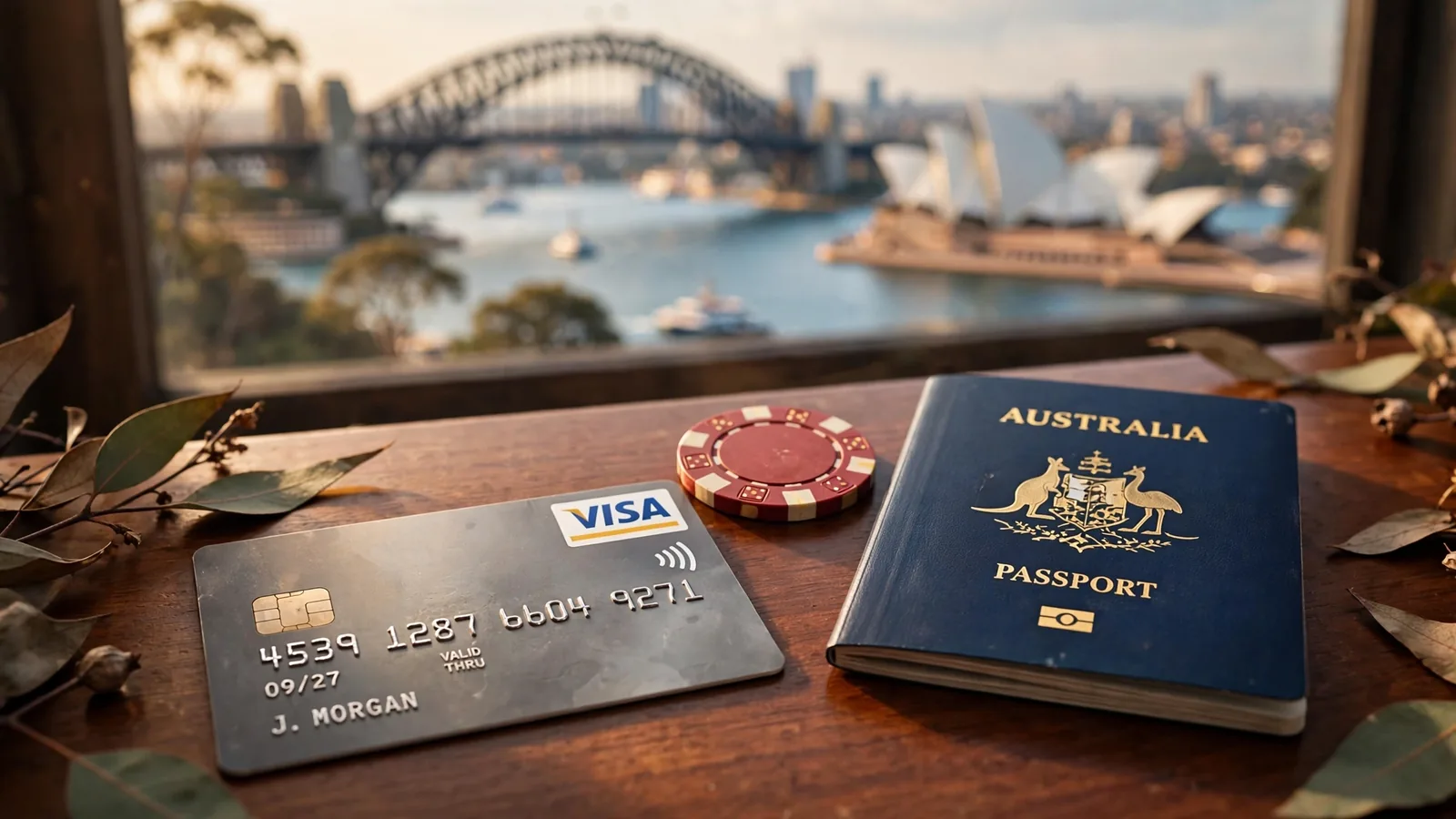
That can leave a strange impression: the offer looks like a normal consumer choice, while the legal framework treats the operator’s provision of the service as prohibited. I would not confuse the ease of finding a page with the presence of a local safety net. Those are different things.
Why a PayID label does not alter the legal position
People may come across an offshore casino while looking for a familiar way to pay. But a payment method is not a licence, a regulator, or a consumer remedy. Whether a site displays PayID has no bearing on the Interactive Gambling Act’s treatment of real-money casino services offered to people in Australia. It cannot make a prohibited service lawful or give an offshore operator Australian consumer-law obligations it would not otherwise have.
This is why “best PayID casino” is not a useful legal category. It mixes up a payment feature with the operator’s status and the player’s protection. A site could describe a payment option in confident language and still be an offshore casino service that the law prohibits operators from providing to Australian residents. The payment wording does not resolve that contradiction.
Nor does the player-side distinction answer the practical questions that follow when something goes wrong. Not being explicitly criminalised under the Act is not the same as having a straightforward route to recover funds or compel an overseas business to act. Consumer law does not protect players using offshore casinos, and no familiar payment label changes that.
The plain version is less comforting than a sales pitch: Australian law targets the operator providing online casino gambling here, while it does not explicitly criminalise the player for using an offshore site. At the same time, that player should not assume Australian consumer law will protect them. Keep those points separate. A legal distinction is not an endorsement, and visibility is not approval.

Before treating PayID as a deposit option
A PayID label can look like a clear answer: the site lists it, so surely it accepts PayID deposits. I’ve learned not to treat a payment logo as a working payment option. A label might be outdated, general information, or a reference to a service that is not available for the particular account or transaction. It does not, on its own, show that a deposit can be made.
For any claim about a casino accepting PayID deposits, the useful question is whether the operator’s own current information clearly confirms that PayID is available to customers in Australia. A third-party page can point you towards a claim, but it cannot guarantee that the cashier will offer that method when you check. Payment options can change, and a page that sounds definite may no longer reflect what the operator provides.
I’d look for the method named plainly in the operator’s payment information and in the cashier before treating the claim as established. The wording should distinguish PayID from bank transfer or other bank-linked services rather than bundling them under a vague heading such as “banking.” A general reference to instant payments is not enough to show that PayID itself is accepted.
There is a difference between a method being mentioned and a deposit being available. The operator should make clear that the option applies to deposits, rather than leaving you to infer its purpose from a logo or a broad list of payment brands. If the description is ambiguous, don’t fill in the gaps yourself. “Supported” is a handy word for a page; it is not a substitute for a clear description of what the cashier actually offers.
I also wouldn’t rely on an old screenshot, a search snippet, or a copied list. Those can stay visible after the underlying payment information changes. Check the operator’s current terms and payment information, and see whether the same claim appears consistently there. If the cashier does not show PayID, or the operator’s wording does not say how it applies to deposits, that is a reason to pause—not an invitation to send money another way and assume it amounts to the same thing.
- Check the operator’s current payment information and cashier
- Look for PayID named plainly and distinguished from general banking
- Verify that the method is explicitly available for deposits
- Rely on old screenshots, search snippets, or copied lists
- Assume “supported” is a substitute for a clear cashier description
- Share banking credentials or approve unidentified requests
The details matter before any payment is attempted. The operator’s information should identify which customers can use the method, what account details must match, and what happens if a payment cannot be credited. Don’t guess at a process from instructions for another payment method. Nor should you share banking credentials, verification codes, or approve a request you cannot identify. A deposit claim should not require you to ignore basic safeguards.
The honest distinction is simple: a claim may be printed somewhere, but that alone does not establish that an Australian customer can make a deposit with PayID.
Even clear payment wording does not settle whether using an offshore casino is protected. Australian consumer law does not protect players who use offshore casinos. That is worth keeping in view before treating a polished cashier page as reassurance.
I used to read “available” as “ready to use.” It isn’t. Until the operator’s own current information and cashier agree about PayID deposits, treat the claim as unconfirmed and keep your money where it is.

Casino games and PayID are separate questions
A payment label and a game listing answer different questions. One describes how a site says money can be moved; the other describes what its catalogue claims to offer. Seeing PayID mentioned beside casino games does not, by itself, show that a particular game can be played using that payment method.
I used to read a page as if everything on it belonged to one neat package: games, payment methods, and a claim that the whole setup worked for Australian customers. That was too generous. A page can put those details near each other without explaining whether they connect. The wording may be broad, promotional, or out of date. Proximity is not proof.
“PayID games” can sound like a special category, as though a game itself has a payment feature built into it. In ordinary use, payment methods apply to transactions with an operator, not to the rules or mechanics of an individual game. A site might describe its payment options separately from its catalogue; that still would not establish that every listed option works for every transaction, or that a particular game is available through a particular route.
The same distinction matters when a page uses phrases such as “casino payment options” beside game content. A payment-method mention is not a property of the game. It does not tell you whether the operator accepts that method, whether the wording applies to Australian users, or whether the offer is current. Nor does a game listing prove anything about the payment arrangements. Two claims need to be checked as two claims.
I’ve learned not to let a tidy page layout do the checking for me. A badge, a logo, or a sentence tying PayID to a casino catalogue can look definitive at a glance. But the useful detail is what the operator actually says about the relationship between the payment method and the service, and whether that information is clear and consistent. If the wording slides between “games available” and “payments accepted,” treat those as separate statements, not one confirmation.
There is another reason to keep the distinction clear: a catalogue can change independently of its payment information. A page may continue to display one while the other has changed. Even when both are mentioned together, that does not make the connection self-explanatory. Marketing shorthand is still shorthand.
So, when you encounter a claim about casino games and PayID, read it narrowly. A listed game tells you what the page says about its catalogue; a payment reference tells you what it says about payment. Neither statement fills in the other. Keep them apart.
What “Australian casino” means in a PayID search
“ Australian casino” can point to different things. It might mean a casino aimed at Australian customers, a site that displays prices in Australian dollars, or simply a website someone has grouped with Australian gambling options. None of those descriptions, by itself, establishes where the operator is based or whether the site is locally licensed.
Adding PayID to the phrase narrows what the person is looking for, but it does not settle what “Australian” means. “Aussie-facing” is a description of an intended audience, not proof of an Australian business or a locally authorised service. And a page using Australian language or currency can still leave the operator’s location unclear.

I used to treat familiar wording as a useful shortcut. It isn’t. A site can sound local without that label telling you anything definite about its status. The wording is doing less work than it seems.
The same goes for phrases such as “PayID casino in Australia” or “Australian casino with PayID”. They express a combination of location and payment preference; they do not certify that the casino accepts Australian customers, that PayID is available to them, or that the service is legally available here. Those are separate matters, and a label cannot stand in for confirmation.
There is also a more important distinction behind the word “Australian”. A site’s intended audience is not the same as an Australian licence. Real-money online casino games cannot lawfully be provided to people physically in Australia, and Australian consumer law does not protect players who use offshore casinos. That is not a reason to read “Australian” as a reassuring badge. It is a reason to be careful about what the word actually describes.
So when you see “Australian” attached to a PayID casino claim, read it narrowly: it may indicate that the page is written for Australians, but it does not prove local licensing, availability, or payment acceptance. I would keep those questions separate rather than letting one familiar label answer all of them.
A label isn’t a credential.
PayID withdrawals: don’t assume deposits work both ways
A payment method shown for putting money in does not, by itself, tell you how a casino handles money going out. I used to treat a familiar logo in a cashier as a kind of promise: if it could take a payment, surely it could return one. That assumption is not safe. A PayID deposit label alone does not establish that PayID can be used for a withdrawal, that a cash-out will arrive instantly, or that the same route is used in both directions.

Those are separate details. A site’s withdrawal rules may describe available payout methods, account checks and conditions for releasing funds. Read the actual terms that apply to withdrawals, rather than relying on a payment badge, an old review or a headline. If the wording does not clearly explain whether PayID is available for cash-outs, don’t fill in the gaps yourself.
There is another wrinkle: online casinos may ask customers to complete identity checks before handling financial transactions. That can affect when a withdrawal is considered ready to process, but it does not tell you which payment method will be used or how long a PayID transfer would take. “Instant” is a claim to verify, not a property you can infer from the name of a payment service.
And the legal setting matters. The Interactive Gambling Act 2001 makes it illegal for operators to provide real-money online casino games to people in Australia. Australian consumer law does not protect players who use offshore casinos. A payment route does not change either point.

If you are trying to work out whether a casino withdrawal can go to PayID, look for an explicit, current statement covering that specific withdrawal method. Check whether the terms distinguish deposits from payouts, and whether they explain any required account verification. If the details are vague or contradictory, treat the cash-out claim as unconfirmed rather than counting on it.
No assumptions.
Real-money claims need more than a payment label
“Real money” is a weighty phrase to attach to a PayID label. It can make a page sound as though the payment method, the account and the gambling service all fit together. They are separate claims. Seeing PayID mentioned beside real-money play does not establish that PayID is accepted, that a debit payment would work, or that the service is available to you.
I used to treat a payment logo as a kind of quiet confirmation: if it was displayed, surely someone had checked the details. That was a bad shortcut. A label can tell you what a page wants you to associate with it; it cannot, by itself, confirm the conditions behind that claim. “PayID accepted” is not the same as evidence that a particular transaction is supported.

The word “debit” does not fill the gap. It describes a type of card payment, not proof that PayID is an option or that a payment will be processed. Nor does combining “real money” and PayID establish that a service has been checked for Australian customers. Those phrases can sit together on a page without answering the practical questions a reader needs answered. A neat label. An unresolved claim.
There is a more important distinction in Australia: the law prohibits operators from providing real-money online casino services to people physically here. Australian consumer law does not protect players who use offshore casinos. That is not a payment detail, and it is not something a PayID badge can change.
So I would not read a real-money payment label as an invitation or a guarantee. Treat it as a claim that needs independent confirmation, not as proof that a service is legitimate, available, or suitable for Australian residents. And if a page folds several promises into one short phrase, slow down. The wording may be simple; what it establishes is not.
Paying with PayID: what remains unverified
A PayID logo or line in a payment-method menu can look like a clear answer. I’ve learned not to treat a label as the whole story. It doesn’t show what happens when you try to pay, whether a charge applies, or what transaction limits are in force. Those details need to be stated in the relevant terms, not guessed from the name of a payment service.
For a PayID payment at a casino, the practical details would include how the payment is initiated, what information is required, how the amount is confirmed, and what the cashier displays before you proceed. A familiar payment brand doesn’t make the missing parts self-explanatory.
That matters because people in Australia are used to moving between cards, mobile wallets and


I’d want the payment information to be specific and consistent: the method should be clearly named, the applicable terms should explain any charges or restrictions, and the cashier should match that description. If those pieces don’t line up, the label alone is not enough to rely on. Marketing shorthand is still shorthand.
There is also a bigger point that a payment label can’t fix: Australian consumer law does not protect people who use offshore casinos. A payment method being mentioned does not change that position or make an offshore gambling service locally authorised.
No guesswork.
PayID casino bonuses are not established here
A payment label and a promotional claim are separate things. Seeing PayID mentioned beside a bonus does not, by itself, show that a promotion exists, that it applies to a particular person, or that using that payment method has any bearing on eligibility. The wording can sound definite while leaving the important part unclear.
I’ve learned to be wary of words that make an offer sound automatic. “PayID bonus” may read like a direct link between a payment method and a reward, but the phrase alone tells you nothing about the terms. The same goes for claims about a no-deposit bonus: the label does not establish that one is available or explain what conditions attach to it.
That distinction matters because promotions are not just decoration around a payment option. They are claims with terms, and those terms can determine whether a player can use an offer or withdraw any resulting balance. Without clear, applicable terms, there is no sound basis for treating the wording as a promise. Don’t assume the payment method creates an entitlement. It doesn’t follow from the label.
There is another point I would keep in view: Australian consumer law does not protect players who use offshore casinos. A promotional phrase should not be mistaken for consumer protection or reassurance about an operator.
So if you encounter a claim connecting PayID with a casino bonus, read it as a claim—not as proof of an available promotion or a guaranteed benefit. No automatic offer. No assumption.
How do you check if casino sites accept Amex deposits?
Check the casino cashier for American Express as a deposit option. Availability can differ by casino and customer, so a payment logo or general claim alone does not confirm that it will be available to you.
What are the deposit and withdrawal limits at the best Amex casinos?
Each casino sets its own Amex deposit and withdrawal limits, and they can vary. Amex transaction limits are usually higher than those for Mastercard and Visa; check the cashier for the limits that apply to your account.
Are there any fees for depositing with American Express?
Amex deposits are typically free, but a casino may add a 1.5% surcharge, and Amex cards incur a 3% currency conversion fee. Withdrawal fees may also apply.
What should I do if my American Express deposit is declined?
Your bank or Amex may be blocking gambling-related payments or payments to that particular website. Check with your card issuer and confirm that the casino lists Amex in its cashier.
Are there fees for using Amex at online casinos?
Amex gambling transactions are generally free, but a casino may charge a 1.5% surcharge. Currency conversion can add a 3% fee, and withdrawals may incur separate fees.
What are the fees involved with American Express payments?
Deposits are typically free, though a casino may apply a 1.5% surcharge. Amex cards incur a 3% currency conversion fee, and withdrawal fees may apply.
Is it safe to use American Express for transactions at online casinos?
Using Amex does not establish that an offshore casino is safe or locally protected. Australian consumer law does not protect players using offshore casinos, so a familiar payment method should not be treated as a guarantee.

Prepared by the JeetCity Casino editorial staff.