


Big Red Pokies Online in Australia: Free Play
 Available in AU
A look at demo play, Australian online-pokies rules, game settings and the limits of what a session can show.

Table of Contents
- What “free” play tells you—and what it doesn’t
- The Australian rules behind online pokies
- Real-money play: know the risk before you decide
- How a spin works, without the “system” talk
- Playing free: a session is not a payout
- What “demo” means—and what it can’t prove
- Big Red game details: check the return setting
- Download searches and the mobile browser question
- Searching for Big Red Kangaroo pokies
What “free” play tells you—and what it doesn’t
When I see someone looking for Big Red pokies to play free, I read that as a wish to get a feel for the experience without putting money at stake. That is a sensible thing to want. The trouble is that the word “free” can sound more definite than it is. It tells you what someone hopes to find; by itself, it does not tell you what a particular game or page actually offers.
I would separate the idea from the assumption. Wanting a no-cost way to try a pokie does not establish that a specific Big Red title is available, that it has a free-play option, or that every page using the name means the same thing. A familiar label can make a result look more certain than it is. I have been too quick to fill in those blanks myself. That is how a guess starts feeling like a fact.
A free session, where one is offered, can let you see some of the basic presentation: the reels, the buttons and the general pace of play. It may help you decide whether the screen is readable or whether the sounds and animations are your sort of thing. Those are impressions of the session in front of you. They are not evidence about what a later session would produce.
If you’re looking for big red pokies online in Australia in 2026, this list gives you a starting point for reviewing the available operators. Check the details that matter to you before choosing where to play.
License: Curacao eGaming (Roby Games Ltd) Roby Casino lists a Curacao eGaming license held by Roby Games Ltd. You can use that licensing detail as a point of reference when reviewing the operator.
License: Curacao eGaming OGL/2023/174/0082 (Dama N.V.) · Min. deposit: A$15 LevelUp Casino lists a Curacao eGaming OGL/2023/174/0082 license held by Dama N.V. Its stated minimum deposit is A$15.
License: Curacao – Antillephone N.V. (Versus Odds B.V.) · Min. deposit: EUR 20 Thor Casino lists a Curacao – Antillephone N.V. license held by Versus Odds B.V. Its stated minimum deposit is EUR 20.
Payout speed: crypto 30-120 minutes, fiat 24-72 hours · Min. deposit: A$30 MrPacho lists crypto payouts at 30–120 minutes and fiat payouts at 24–72 hours. Its stated minimum deposit is A$30.
License: Curacao Gaming Control Board OGL/2023/176/0095 (Hollycorn N.V.) Neospin lists a Curacao Gaming Control Board OGL/2023/176/0095 license held by Hollycorn N.V. You can consider this licensing information when assessing the operator.
License: Curacao Gaming Control Board (TechSolutions Group N.V.) Bizzo Casino lists a Curacao Gaming Control Board license held by TechSolutions Group N.V. This gives you a specific licensing detail to consider.
License: Curacao Gaming Control Board OGL/2023/176/0095 (Hollycorn N.V.) Rollero Casino lists a Curacao Gaming Control Board OGL/2023/176/0095 license held by Hollycorn N.V. You can use this detail as part of your review.
License: Curacao Gaming Authority (Jumpman Gaming Ltd) DragonSlots Casino lists a Curacao Gaming Authority license held by Jumpman Gaming Ltd. Its stated licensing information is the key detail available here.
License: Curacao Golden Pokies lists a Curacao license. You can factor that information into your review of the operator.
License: Curacao OGL/2024/1335/0780 · Min. deposit: EUR 20 Vegaz Casino lists a Curacao OGL/2024/1335/0780 license. Its stated minimum deposit is EUR 20.
That distinction matters because it is easy to turn a short run into a story. A few wins can feel like a clue that the game is “warming up”; a dry stretch can feel like a sign that a win must be close. I have caught myself thinking both ways. Neither thought turns a sequence into a forecast. Each spin is generated as its own random event by the game’s Random Number Generator. What happened earlier in a session does not give you a reliable way to predict the next result.
So a free run can show you what it feels like to press spin. It cannot show you that you have found a rhythm, learned a pattern or worked out when a result is due. That is a much less exciting answer than the one people want from a lucky streak. Still the honest one.
It also helps to be precise about what “free” refers to on the page you are looking at. It might describe an attempt to play without staking your own money, or it might appear in wording about an offer or promotion. Those are not automatically the same thing. The label alone does not tell you the conditions, what happens after the free portion ends, or whether any outcome has a cash value. Read the wording around it rather than letting one attractive word do all the explaining.
I would be wary of language that quietly shifts from “try it free” to “see what you could win.” A session without a real-money stake is not the same as a real-money result, and the feeling of having won something on screen does not settle what it means outside that session. A free experience may be useful for getting familiar with controls, but it should not be treated as proof of future returns or as a promise of a particular outcome.
The name in the search matters less than the details of the actual page. If it presents a free option, check what the page says that option includes. If the wording is vague, do not assume the most generous interpretation. I would not take a page title, a colourful banner or a familiar game name as confirmation of features that are not clearly described. Marketing has a way of making a possibility sound like a settled arrangement.
There is a small but important difference between curiosity and expectation. Curiosity says, “I want to see how this plays.” Expectation says, “This session will tell me whether I can win later.” The first can be answered by trying a session that is genuinely offered as free. The second cannot be answered by the session, because independent random results do not become a dependable forecast just because you watched them unfold.
I used to treat any run of results as information if I stared at it long enough. It felt like paying attention. Mostly, I was giving random outcomes a plot. That habit can make a free session feel more meaningful than it is, especially when the game keeps you watching and waiting. A streak is a streak. It is not a system.
Understanding Free Play
- A free session can show you the game’s presentation and controls.
- It cannot be used to predict future results or find a winning rhythm.
- The label “free” does not guarantee a specific game’s availability or a cash value.
- Each spin remains a random event generated by the RNG.
The useful takeaway is modest: “free” can describe the kind of experience someone is seeking, but it cannot verify a particular Big Red game, establish what a page provides, or tell you what later spins will do. Keep those questions separate. Enjoyment is one thing; prediction is another. No hidden signal.
The Australian rules behind online pokies
When I first looked into

The key law is the Interactive Gambling Act 2001. It makes it illegal for a company to provide real-money online pokies to people in Australia without a domestic licence. No domestic online casino licences have been issued, so there is no Australian-licensed online casino. That is the awkward centre of the rules: a familiar-looking site, a local payment option or an Australian-facing page cannot turn an offshore operator into a locally licensed one.

The law is aimed at the companies offering the service, not at an individual simply for playing. Australians may legally play on offshore sites that accept them. But “the law targets the operator” is not the same as “there is no risk for the player”. It describes who the legislation is directed at; it does not promise that an offshore site will treat you fairly or that you can get help recovering money if it does not.
That distinction matters if you are reading about Big Red pokies online in Australia. A game name or a site’s willingness to take a customer tells you nothing about whether the operator has a domestic licence. There is no Australian-licensed online casino to check against, and an offshore site does not gain local standing just because it is accessible to someone here.
Access can be disrupted, too. The Australian Communications and Media Authority (ACMA) enforces the Interactive Gambling Act 2001 and works to block illegal offshore gambling sites. Internet service providers must follow its blocklist. So a site appearing in a search or opening on your device is not proof of approval; access and legal status are separate things. I used to treat “it loads for me” as a kind of reassurance. It isn’t.
What a player can and cannot rely on
The most serious practical gap is what happens if an

I find that more useful to understand than a site’s polished wording. “Trusted” is a label; the important question is what protection you actually have if there is a dispute. With no Australian-licensed online casino, there is no local online casino licence that gives you that domestic route for an offshore operator. A site’s own terms may describe its process, but that is not the same as Australian legal recourse.
No Legal Recourse
If an offshore casino refuses to pay your winnings, you have no legal recourse in Australia to recover your money.
The age rule is clear: gambling in Australia, including online pokies, is for people aged 18 or older. Being old enough does not change the operator’s obligations or create a domestic licence. It is a threshold for participation, not a stamp of approval for the site.
BetStop needs a careful distinction as well. It applies to Australian-licensed operators; it does not bind offshore sites. Since there is no Australian-licensed online casino, do not treat BetStop as a way to block yourself from every offshore casino or as a safeguard that those sites must follow. If you use BetStop to exclude yourself from covered services, that exclusion does not automatically extend to an offshore site outside its scope. That boundary is easy to miss, and it matters.
I would not read the rules as a recommendation to try offshore play, nor as proof that every offshore site behaves the same way. They set out a narrower reality: the law prohibits companies from providing

So when a site presents itself as an Australian option, separate the appearance from the legal position. A localised page, a familiar game name or a working sign-up flow does not establish a local licence. Nor does the fact that the legal framework focuses on operators remove the practical uncertainty facing a player dealing with an offshore business. I wish I had understood that before treating a smooth website as a safety signal.

The plain version is less comforting than the marketing. No domestic online casino licence exists here, and an offshore operator accepting Australian customers does not become locally licensed by doing so. If you are under 18, online pokies are not legal for you. If you are considering an offshore site, remember that BetStop does not cover it and Australian legal recourse is unavailable if it refuses to pay. That is the part worth keeping in view.
Real-money play: know the risk before you decide
Looking for a Big Red pokie with

The Interactive Gambling Act targets companies that provide prohibited real-money online casino services to people in Australia. It does not make an individual player liable simply for playing. Australians may legally play on offshore sites that accept them. Those two points can sit together, even if the distinction feels counterintuitive: the law’s focus is on the service provider, not on prosecuting the customer.
But “not liable” does not mean “protected”. If an offshore casino refuses to pay winnings, Australian players have no legal recourse in Australia to make it pay. That is the part I would keep in front of me, rather than letting a polished page or a familiar game name do the reassuring. A site may accept a deposit; that does not give you an Australian route to resolve a payment dispute.
- Read the operator’s terms carefully.
- Check how the site handles withdrawal disputes.
- Weigh the risks before depositing money.
- Assume an Australian payment option means the site is licensed.
- Trust a familiar game name as a safety signal.
- Rely on BetStop to block access to offshore casinos.
It is easy to hear “real-money” and think mainly about the possible return. I would put the less exciting questions first: what happens if a withdrawal is held up, an account is closed, or the operator disputes the result? If the answer depends on getting help from an offshore company, you are relying on that company’s own process. There is no Australian legal recourse if it simply does not pay. That is a serious trade-off, not small print to skim past.
Nor should an Australian-looking payment option be read as proof that a casino is licensed, fair, or clear about its game settings. Payment access and player protection are separate questions. A payment method does not settle what rules apply to a dispute, or where you could turn if the operator will not cooperate.
BetStop also has a boundary worth knowing: it applies to Australian-licensed operators, not offshore gambling sites. It cannot be treated as a block that binds every overseas casino. If you rely on it to keep you away from gambling, do not assume it will stop access to offshore services.
I have made the mistake of letting a familiar name make an unfamiliar operator feel safer. It is not the name on the game that decides whether you can recover money after a dispute. The crucial issue is who is taking the payment and what practical options you have if they refuse to honour a withdrawal. When those options are limited, the risk is yours to weigh before depositing—not after.

So if you are considering real-money play, pause before entering payment details. Read the operator’s terms, look for how it handles account and withdrawal disputes, and ask yourself whether you could accept being unable to enforce a claim in Australia. None of that turns offshore play into a protected arrangement. It simply makes the exposure clearer.
A familiar title can still sit inside an arrangement with very different consequences from a free session. If you cannot accept the possibility of a refused payment with no Australian legal recourse, do not deposit. That is not a prediction that a particular site will withhold winnings; it is the practical limit you should understand before deciding.
How a spin works, without the “system” talk
When I first tried to make sense of a pokie, I looked for a rhythm. I thought a pause, a quick tap or a run of losing spins might tell me when to act. It felt like there had to be something I could read. That feeling is familiar, but it is not a reliable way to predict what comes next.
A spin’s result is produced by a Random Number Generator, or RNG. Each spin is its own random event. The result of one does not tell you what the next result will be, and a streak does not make a particular outcome due. There is no dependable sequence to uncover by watching the screen.
That matters if you are trying to play Big Red pokies by copying a supposed system. Waiting a few seconds, pressing at a particular moment or changing your pace does not give you a reliable way to steer the result. I used to treat timing as though it might give me an edge. Mostly, it gave me a reason to keep trying after I should have stopped.
Each spin is its own random event produced by a Random Number Generator (RNG), meaning previous results have no influence on future outcomes.
The screen can make patterns feel meaningful. A near miss can stick in your head; a short run of wins can seem like proof that you have worked something out. But the impression is not a prediction. What has just happened does not make the next spin more likely to follow the same pattern, reverse it or complete a sequence.
That is the part that is easy to forget while playing. A random outcome can look deliberate when several results happen close together. Our brains are good at turning coincidence into a story: “the machine is warming up”, “it’s about to pay”, or “I should change my bet now”. Those lines sound like knowledge. They are guesses.
I would separate a choice from a control. You can decide whether to start a spin, how long to stay, and when to stop. Those are choices about your own behaviour. They do not let you choose or predict the result. A strategy can help you stick to a personal boundary, but it cannot turn random outcomes into a controllable sequence.
So if you are deciding how to approach a session, keep the distinction plain: you control your actions, not the RNG’s outcome. A method that claims to forecast the next result from recent spins is asking you to trust a pattern that has no reliable predictive power. I have spent enough time chasing those patterns to know how convincing they can feel in the moment. Convincing is not the same as useful.

There is no special timing window to wait for, and no “system” that makes an individual spin predictable. The honest way to understand the mechanics is less exciting than the claims: each spin is decided independently, through random number generation. Previous results may be memorable, but they do not provide a dependable map of what follows.
That is not a trick to beat. It is a limit to keep in mind whenever you press spin. Don’t mistake a hunch for control.
Playing free: a session is not a payout
A free session can feel convincing while you are in it. The balance moves, symbols land, and a run of wins or losses gives the play a story. It is easy to start treating that story as a preview of what would happen with money involved. I’ve caught myself doing that: a decent stretch made the paid version seem tempting, as though I’d already learned something useful.
I hadn’t. Free play and real-money play are different situations, even if the screen looks similar. In a free session, you are not risking your own balance on each result, and any displayed credits are not money you can take away. A result there is an event in that session, not a promise about what a later paid session will return.
That distinction matters whether you are trying a pokie without paying or simply watching how it behaves. A string of wins does not put you “in form”; a string of losses does not mean a win is due. Each spin is generated independently at random, so the result you just saw does not steer the one that follows. The same goes for moving from a free session to paid play: the earlier screen offers no dependable clue about the next outcome.
Attention! A winning streak in a free session is not proof of a repeatable edge and should not be used to justify a real-money stake.
I used to read too much into a short run. If the credits climbed, I’d think I had found a rhythm. If they fell, I’d keep going because surely the session had to turn around. Both thoughts gave ordinary randomness a plot. “Good practice” sounded sensible, but it could quietly become a reason to expect a repeatable edge. There isn’t one in the results.
Free play can still tell you something modest about your own reactions. You may notice that you keep watching after you meant to stop, or that a near miss makes you want another spin. That is information about your attention and expectations—not evidence that the game is about to pay. I find that a more useful thing to notice than whether a brief session ends with a larger number on screen.
It also helps to keep the two balances mentally separate. If a free session shows credits, treat them as part of that session’s display. Don’t translate them into a cash figure or imagine they are a withdrawal waiting to happen. A paid outcome is not created by carrying a free-play balance forward in your head. The number can look persuasive. It still isn’t yours.
When people want to play Big Red pokies for free, the sensible expectation is limited: they may get a chance to experience a session without staking real money, if that option is available to them. That does not establish what any particular paid session would do, and it does not turn a free result into winnings. I would avoid making a money decision on the strength of one.
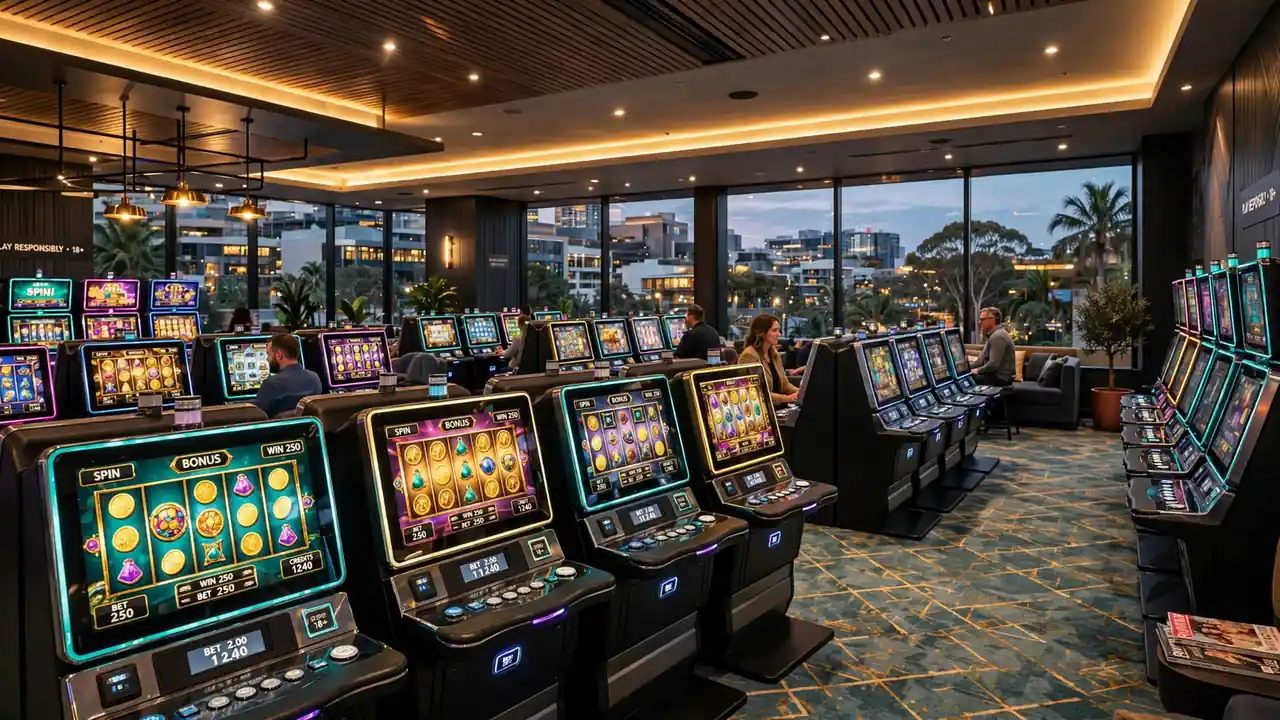
The tempting leap is small: “I did well there, so perhaps I’ll do well with a stake.” But no reliable link follows from that. A free session can be entertaining, dull, or frustrating; none of those moods predicts a payout. Keep the categories apart, and the screen becomes easier to read for what it is: a session, not a forecast.
What “demo” means—and what it can’t prove
When people call a pokie session a demo, they mean they can try the game without staking real money. That describes the kind of session, not a promise about what is available for every game. I can’t assume a particular Big Red title has a demo just because the phrase appears in a description or on a page.
A demo can let you get a feel for the screen, controls and pace. But it is a snapshot, not a test that reveals what will happen later. A run of wins, a long dry spell or a bonus appearing quickly tells you nothing dependable about your next session. I used to remember the unusual streaks and quietly forget all the ordinary spins. Bad record-keeping.
The key is that the game does not carry a usable memory from one spin to the next. A Random Number Generator determines each spin as a separate random event. So a result in a demo does not set up, predict or “warm up” a later result. Nor does repeating the same sequence of actions give you a reliable way to reproduce what you saw.
Why demo results aren’t forecasts
A demo session is a snapshot of gameplay, but because the RNG treats every spin as an independent event, a run of wins or losses in a demo does not “warm up” or predict the behavior of a later session.
That matters because demo play can feel more informative than it is. You may learn where a button sits or what an animation looks like, but you cannot use a short session to identify a pattern that steers future spins. Familiarity with the interface is one thing. An edge over randomness is another.
I’ve caught myself treating a small run as evidence: “It paid after that many spins, so maybe…” That is a story, not a dependable rule. The next spin remains its own event, whether the earlier ones happened in a demo or elsewhere.
Keep the word “demo” in its lane. It describes a non-real-money way to experience a game when one is offered; it does not certify a particular Big Red demo, validate a theory about results or predict what real-money play would do. Useful for orientation. Not a forecast.
Big Red game details: check the return setting
When you are comparing information about Big Red pokies, a game name by itself does not tell you its return percentage. I used to treat the title as if it came with one fixed figure everywhere. That assumption can be wrong: some providers give casinos a choice of RTP settings for the same pokie, so its listed return may differ between casinos.
A specialist review reports this provider option. The practical point is simple: look for the return information attached to the particular version being offered, rather than relying on a figure you saw beside the same game name elsewhere. If the setting is not stated clearly, the name alone cannot fill in that gap.
RTP, or return to player, describes a theoretical share of stakes returned over a very large number of plays. It is not a prediction for your session, and it does not tell you what you will get back from an individual run. A stated setting is useful for comparing published game information; it is not a promise of a personal result.

The label isn’t the setting.
I also learned not to let a neat percentage do all the work. Check that the information refers to the version actually available, and read the accompanying game rules rather than assuming a matching title means matching conditions. If you cannot tell which return setting applies, treat the figure as unconfirmed—not as a number you can safely carry over from another listing.
That distinction matters whenever you are looking at Big Red game details. A return figure may describe a particular configuration, while the same name elsewhere may be paired with a different one. The useful question is not simply “What is this game’s RTP?” but “Which setting does this version use, and where is that stated?”
I would not read a higher displayed return as a reason to expect a better session. It is background information about the game’s configured return, not a guide to what happens next. Keep the comparison narrow: confirm the setting, note where the information comes from, and don’t assume a game name settles it.
Download searches and the mobile browser question
A request to download Big Red pokies can sound like a simple way to get straight to a game. But a familiar name on an app icon or file does not establish who made it, what it contains, or whether it is connected to a genuine game. I’ve learned not to treat a polished-looking download button as proof of anything. A file can ask for permissions that have little to do with what you expected, and installing it may expose your device or personal information.
So don’t assume you need an app, or that a result labelled “official” is official. If you encounter a download offer, pause before installing anything: check who is distributing it, read the requested permissions, and don’t enter account or payment details into a page you cannot independently trust. If those checks leave you unsure, closing the page is the safer call. Less hassle.
The browser question is different from the download question. Some online games are designed to open in a mobile browser, while others may be presented through an app; that general distinction does not tell you how any particular Big Red game works. A browser page bearing the name is not proof that it provides a real game or a safe service. Nor does the absence of an app mean a browser version must exist. Avoid letting a page’s wording push you into installing software just to find out.

Access can be affected by Australian restrictions, too. The Australian Communications and Media Authority blocks access to illegal offshore gambling sites, and internet providers are required to follow its blocklist. That means a page failing to load is not a reason to search for a workaround or install a file claiming to restore access. A working page, if you come across one, is not evidence that the service is approved or that its claims are trustworthy.
I’d keep the distinction plain: a download is software to install; browser access means a page runs without that installation. Neither label, by itself, verifies a Big Red product or tells you what happens to your data. Don’t hand over device access or personal details just because a screen uses a familiar game name. No shortcut is worth that guess.
Searching for Big Red Kangaroo pokies
The kangaroo wording can make it sound as though there is a clearly identified Big Red title built around that animal. I wouldn’t assume that from the phrase alone.

That distinction matters because a familiar-sounding label can blur into a game’s actual title. If a page uses the words together, check whether it identifies a specific game or is simply combining search terms. A kangaroo image, if one appears somewhere, would not by itself establish the game’s name or its rules. Nor would a page mentioning Big Red prove that a kangaroo version exists.
I’ve made the mistake of filling gaps in a description with what seemed likely. It’s easy to picture a theme, then start expecting features that may not be there. Better to keep the claims modest: without a confirmed title and game details, there’s no sound basis for describing its symbols, bonus rounds, paytable or other mechanics. Guesswork dressed up as a catalogue is still guesswork.
One point does apply to pokies generally: the outcome of each spin is generated at random, independently of the previous one. A run of results cannot establish that a particular kangaroo-themed version is due to pay, or that a certain sequence will make it happen. The same goes for timing a spin or reading meaning into a pattern. It doesn’t turn uncertainty into a method.
If you encounter a page making specific claims about a Big Red Kangaroo game, look closely at what it actually identifies rather than relying on a label or picture. Is there a precise game title? Are the rules and features tied to that title, rather than described in vague terms? If not, you have little reason to treat the description as confirmed. I’d rather leave a blank than invent details to make a name sound more definite.
That is the sensible limit here: the kangaroo wording may describe what someone hopes to find, but it does not, on its own, establish a specific pokie. And no theme changes the randomness of a spin.
Can I play pokies for free?
Yes, if the game or page offers a free-play option. Check what it includes: a free session can help you get familiar with the controls, but it cannot predict future results.
How do I know if an online casino is safe to play at?
A site accepting Australian players or offering local payment options does not mean it is Australian-licensed; no Australian-licensed online casinos exist. Offshore sites can leave you without legal recourse in Australia if they refuse to pay your winnings.
What’s the best strategy for playing pokies?
There is no strategy that can predict the next spin: each result is an independent random event. Past wins or losses do not reveal when a win is due.
What is the legal age for online gambling in Australia?
You must be at least 18 years old to gamble online in Australia.
What does “wagering requirement” actually mean?
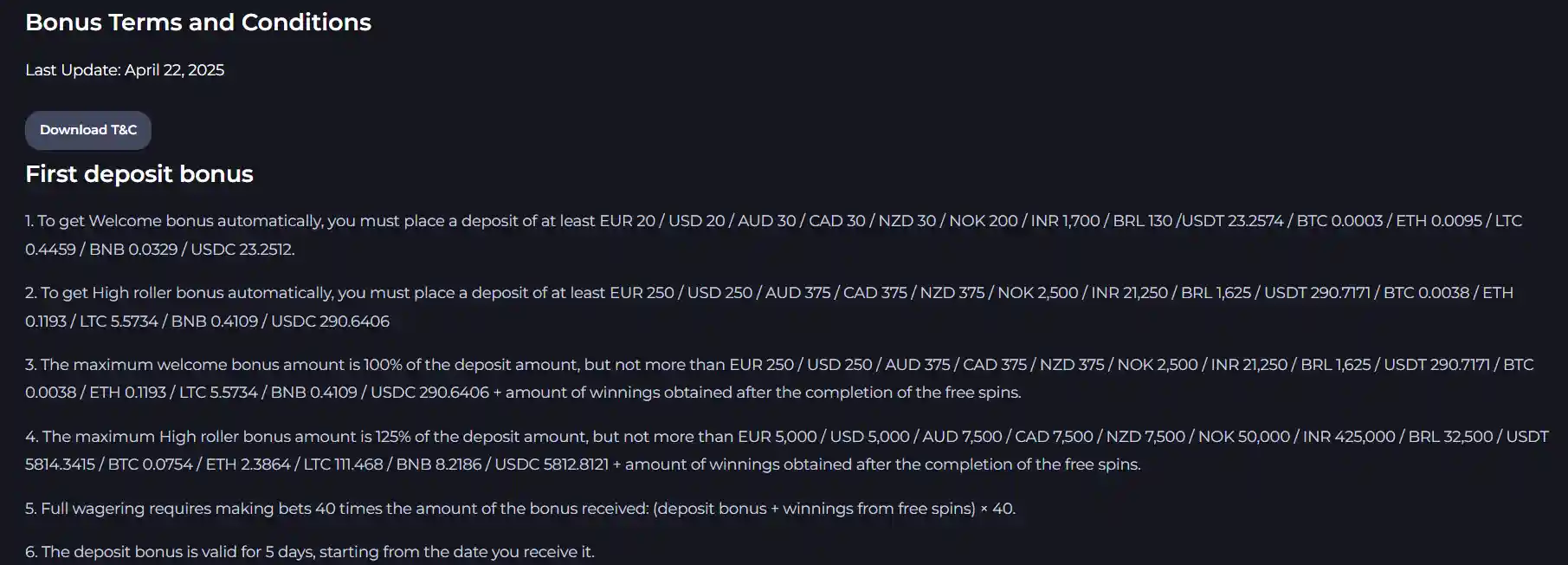
It is the amount you must bet, expressed as a multiple of the bonus, before you can withdraw. For example, a $500 bonus with a 40x requirement means $20,000 in bets.
Prepared by the JeetCity Casino editorial staff.