




No-verification casino withdrawals in Australia
 Available in AU
A sign-up without documents does not guarantee a document-free cash-out; payment rules, bonus terms and identity checks can still apply.

Table of Contents
- What “No Verification” Really Means at Withdrawal
- Online Casino Payments: Banks, Cards, E-Wallets and Vouchers
- Bonus Funds Can Keep Your Withdrawal on Hold
- Crypto Deposits and Withdrawals Still Have Conditions
- Fast Pokies Withdrawals: What “Instant” Leaves Out
- Real-Money Play Without Phone Verification
- Live Casino Play Still Comes with Identity Checks
- PayID Withdrawals: Fast Transfers, Not Instant Approval
What “No Verification” Really Means at Withdrawal
“No verification” sounds like a promise that you can open an account, play and cash out without showing who you are. In practice, it may describe only the sign-up stage. A service might ask for little information at first, then request identity documents when you try to withdraw. The important distinction is not whether a form appears on day one; it is whether your identity has been confirmed before funds can be released.
There is also a legal point that should not get buried under the marketing language. Under Australia’s Interactive Gambling Act 2001, operators cannot provide real-money online casino games, slots, poker or table games to people located in Australia. These services are prohibited for Australian customers. A site describing itself as a no-verification casino does not change that position, and a claim about easy withdrawals should not be read as an assurance that the service is lawful or accessible.
“No KYC” may mean “not yet”
KYC is short for “know your customer”. It refers to checks used to establish that an account belongs to the person using it. In a casino context, those checks can include a request for identity documents or other information. The timing can vary: a site might not ask for documents during registration, but still require them later, particularly when a withdrawal is requested.
For Australian players looking into casino withdrawals without ID verification, it’s worth checking the details each operator actually makes available. This list offers a concise reference, while the information provided does not establish whether any casino can guarantee verification-free withdrawals.
License: Curacao eGaming (Roby Games Ltd) Roby Casino is listed with a Curacao eGaming license held by Roby Games Ltd. That licensing detail is the available point of reference for you.
License: Curacao eGaming OGL/2023/174/0082 (Dama N.V.) · Min. deposit: A$15 LevelUp Casino lists a Curacao eGaming OGL/2023/174/0082 license held by Dama N.V., and a minimum deposit of A$15. These details give you a concrete starting point when reviewing the casino.
License: Curacao – Antillephone N.V. (Versus Odds B.V.) · Min. deposit: EUR 20 Thor Casino lists a Curacao license from Antillephone N.V. for Versus Odds B.V. Its stated minimum deposit is EUR 20.
Payout speed: crypto 30-120 minutes, fiat 24-72 hours · Min. deposit: A$30 MrPacho lists crypto payouts at 30–120 minutes and fiat payouts at 24–72 hours, with a minimum deposit of A$30. These stated payout times are useful context for you, but do not specify whether withdrawals require ID verification.
License: Curacao Gaming Control Board OGL/2023/176/0095 (Hollycorn N.V.) Neospin lists a Curacao Gaming Control Board OGL/2023/176/0095 license held by Hollycorn N.V. This licensing detail is the available reference point for you.
License: Curacao Gaming Control Board (TechSolutions Group N.V.) Bizzo Casino lists a Curacao Gaming Control Board license held by TechSolutions Group N.V. You can use that as a starting point when checking the casino’s terms.
License: Curacao Gaming Control Board OGL/2023/176/0095 (Hollycorn N.V.) Rollero Casino lists a Curacao Gaming Control Board OGL/2023/176/0095 license held by Hollycorn N.V. The supplied information identifies its licensing, but does not state its withdrawal verification policy.
License: Curacao Gaming Authority (Jumpman Gaming Ltd) DragonSlots Casino lists a Curacao Gaming Authority license held by Jumpman Gaming Ltd. That licensing detail is the available point of reference for you.
License: Curacao Golden Pokies is listed with a Curacao license. No further operator details are provided here, so check its terms directly before relying on it for withdrawals.
License: Curacao OGL/2024/1335/0780 · Min. deposit: EUR 20 Vegaz Casino lists a Curacao OGL/2024/1335/0780 license and a minimum deposit of EUR 20. These details give you a limited but concrete basis for further checks.
That gap catches people out. I used to treat a smooth sign-up as evidence that the whole process would be simple. It isn’t. Creating an account is one step; satisfying identity checks before a payout is another. A page calling itself a “no verification casino” could be referring to what happens at registration, not what happens at cashout.
So, if you see “no ID verification withdrawal” in a promotion, read it carefully. It does not establish that a withdrawal will be approved without identity checks. Nor does a deposit going through prove that the account is cleared for withdrawals. The label is not a substitute for clear terms explaining when verification happens and what the operator may ask you to provide.
Why a withdrawal can trigger a document request
A withdrawal is a point at which the operator may need to confirm the account holder’s identity before processing payment. First withdrawals often prompt KYC requests, so a player who has not prepared for that step may find the request arrives after asking for funds. The status of the withdrawal can then depend on responding to the request and having the information accepted.
That is why “instant” and “no verification” should not be mentally joined into one promise. An account can look ready to go while a later review is still outstanding. If the operator asks for documents, the payment request has not skipped that requirement just because the registration screen did.

Completing identity verification early can significantly speed up future withdrawals. That does not mean every later request will be automatic, or that early checks make an unlawful service suitable for Australian players. It simply removes one avoidable source of delay: having to begin identity checks only when you are waiting for funds.
A small step, earlier.
What to check before sharing documents
If you are assessing a site’s wording, look for a plain explanation of its verification process rather than relying on a badge or slogan. Does it say identity checks can be required before a withdrawal? Does it explain what information is requested, how documents are submitted and how the operator handles them? Are the

Treat vague wording as a reason to pause, not as proof that checks have been waived.

Be careful about sending identity documents to a service whose status and handling of personal information you cannot assess. An identity document is sensitive information, not a harmless formality. Do not assume that a site asking for it is trustworthy just because it has allowed an account to be opened or a deposit to be made.
Attention: An identity document is sensitive information. Do not assume a site is trustworthy just because it allowed you to open an account or make a deposit.
The practical meaning of “no verification”
For Australian readers, the safest interpretation is narrow: a claim of “no verification” may describe an early part of an account journey, but it does not guarantee a withdrawal without identity checks. KYC can still be required before funds are processed, and preparing for it early can prevent an avoidable hold-up. None of that changes the legal status of real-money online casino services for people in Australia.
I would not make a decision on the strength of the headline alone. Read the withdrawal and verification terms, be cautious with personal documents, and don’t mistake an account that opened easily for a payout that is cleared. “No verification” can sound final. At withdrawal, it may only mean the question has not been asked yet.
Online Casino Payments: Banks, Cards, E-Wallets and Vouchers
Payment labels can make a cashier look simple: choose a method, add funds, then use it again to cash out. In practice, a method shown for deposits may not be available for withdrawals. I learned to check both directions before treating a payment option as useful.
There is an important Australian context here. Under the Interactive Gambling Act 2001, providing real-money online casino games, including slots and table games, to people in Australia is illegal for operators. The
Bank transfers and cards
Bank transfers can suit people who prefer moving money directly between accounts, but they are not necessarily quick. A specialist review reported that traditional bank transfers may take as long as five business days to complete. That is a reported timeframe, not a promise about what any particular bank or service will do.

Cards can appear convenient for deposits because the payment is familiar and tied to an existing account. But a card accepted for adding funds does not automatically work for withdrawals. The cashier may route cashouts through a different method, and the account holder may need to use a bank account linked to their profile.
There is also a firm distinction between debit and credit cards. Although payment-method listings may mention both, credit cards must not be accepted for online gambling services. Do not assume that seeing a card logo means every card type can lawfully be used for this purpose. A label in a payment menu is not the same thing as permission.
E-wallets

One specialist review described e-wallet transactions as being completed within hours rather than days. Treat that as a report about the service it assessed, not a dependable timetable across providers. Another payment overview describes e-wallet withdrawals as typically being processed within 24 hours, while card payments and bank transfers may take several days. Even then, “processed” may refer to the operator sending a payment; the time before it appears in an account can be different.
Traditional transfers may take as long as five business days to complete.
Convenient for deposits, but may require a linked bank account for withdrawals.
Typically processed within 24 hours, offering a way to track transactions separately from everyday spending.
The practical question is not just how quickly an e-wallet can move money. Check whether the method is available for both deposits and withdrawals, whether the account name must match your profile, and whether the service lists any fees or restrictions. If the cashier only allows an e-wallet for deposits, you may have to choose a different route to receive funds.
Vouchers and prepaid cards
A voucher can be used to fund an account without entering card details at the point of payment. Neosurf is one example. The trade-off is that prepaid vouchers are often deposit-only: a specialist review reports that they are generally offered for adding funds rather than paying winnings out.
That makes a voucher a poor choice if you have not first checked the cashout route. A balance cannot simply be sent back to a paper or digital voucher in the same way a card refund might be returned. The service may instead ask for another eligible method, which can create extra steps.
Compare the full route, not just the deposit
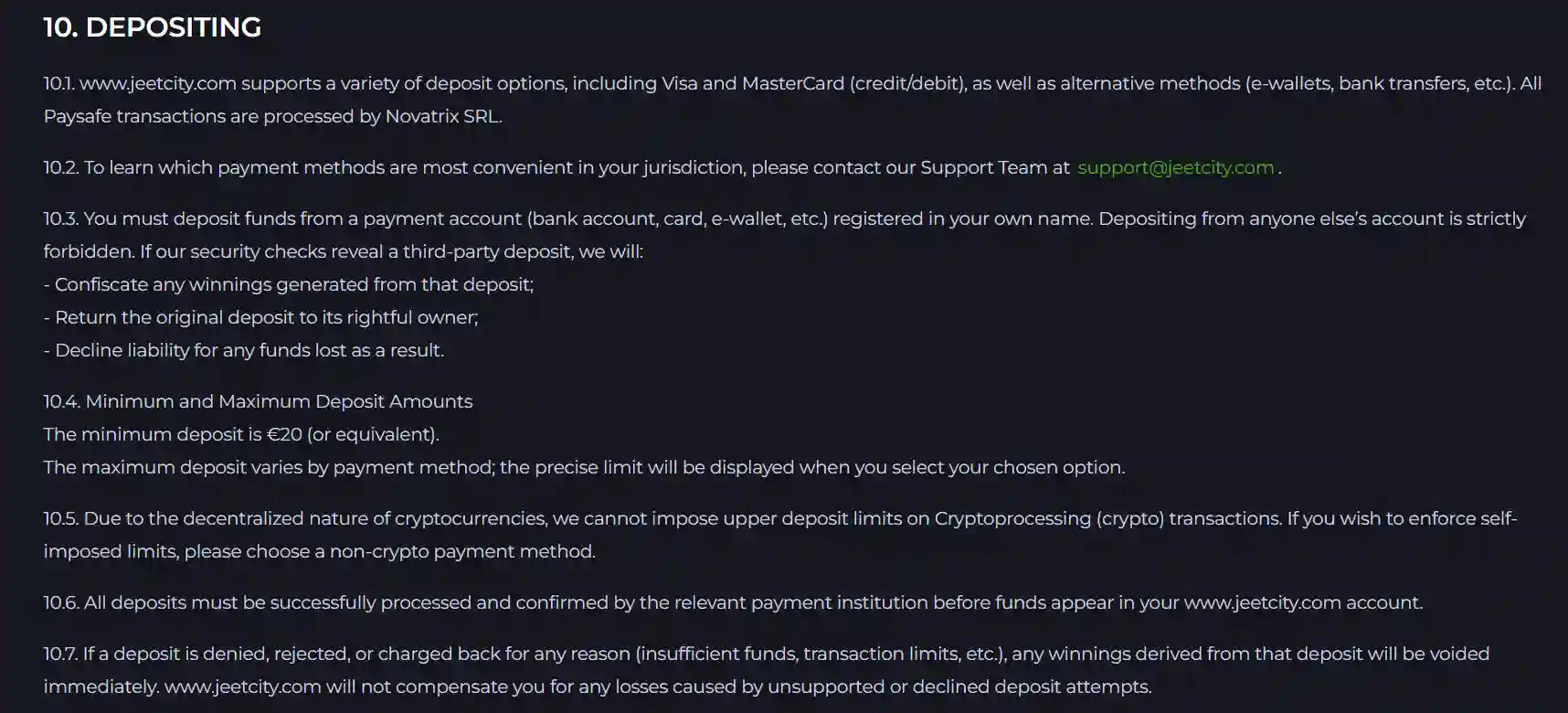
A payment table should be read in two columns: deposit and withdrawal. Look for whether a method works both ways, how the operator describes processing, and whether the account receiving funds must be in your name. Operators generally return funds to the original deposit method where possible, but the available route can depend on the payment provider and the operator’s rules.
I used to focus on the first transaction because that was the one in front of me. That was backwards. The cashout route matters just as much.

A specialist review of Australian-facing payment options reports that listings may include debit cards, PayPal, Skrill and bank transfers, with some services also displaying cryptocurrency. Availability changes between services, and a listed option does not establish that a service is lawful to offer in Australia. Nor does choosing a bank, card, wallet or voucher turn a “no verification” claim into a guarantee of an unverified withdrawal. Payment choice and identity checks are separate issues.
Before relying on any payment description, read the terms for withdrawal methods, processing stages, fees and limits. The details should be clear before funds are moved. If they are vague, or a method appears only on the deposit screen, do not treat it as a reliable way to receive money.
“Instant” is not a payment method. It is a claim that needs context. A bank network or e-wallet may move a released transfer quickly, while the service’s own rules determine whether and when it releases funds. That distinction is easy to miss when the cashier presents deposit and withdrawal buttons side by side.
Bonus Funds Can Keep Your Withdrawal on Hold
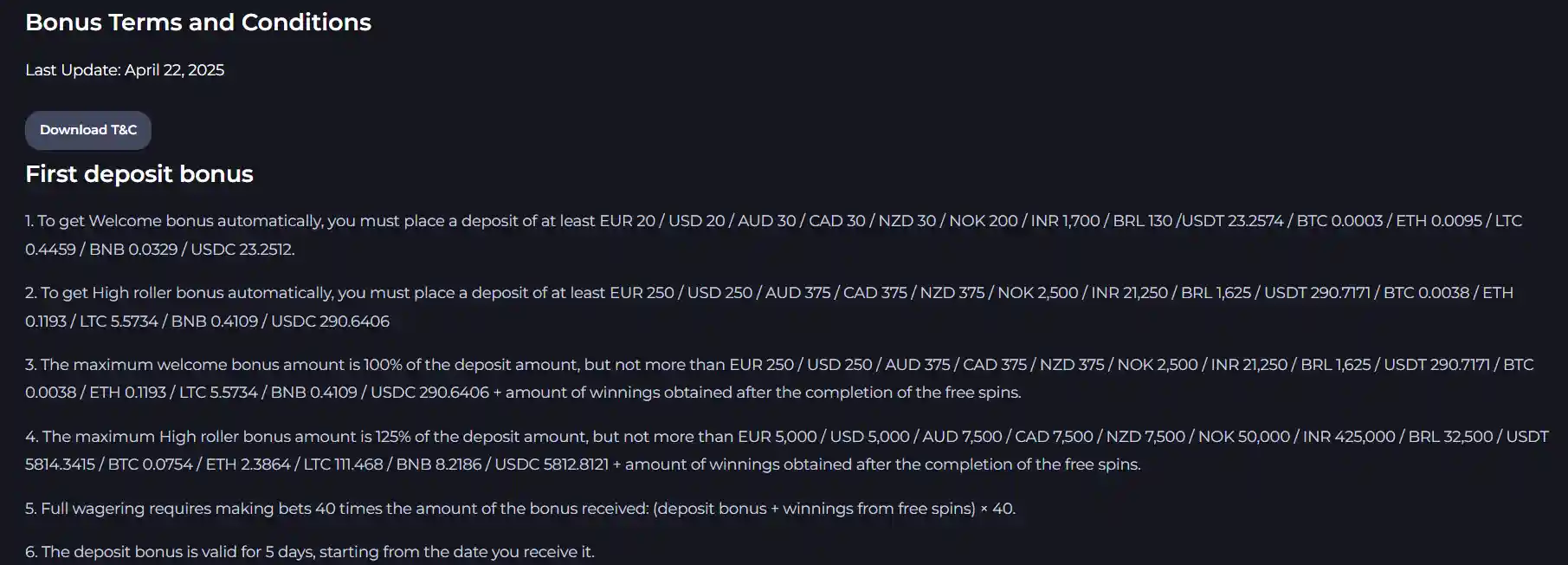
A bonus can look like money in your balance while still being money you cannot take out. That distinction is easy to miss when the offer is framed as a no-deposit bonus, free spins or a welcome reward. The balance may show winnings, but the offer’s wagering conditions can determine whether those winnings are available to withdraw.
Bonus funds may show as part of your balance, but wagering conditions determine whether those winnings are actually available to withdraw.
I learned to stop treating a bonus as cash the moment it appears on screen. It is better understood as a set of terms attached to a balance. Until those terms are met, a withdrawal request may be blocked or the bonus-linked funds may not be eligible to leave. “Free” has strings.
One specialist review describes two broad ways wagering requirements can work: they may apply to the bonus funds alone, or to the combined value of the deposit and bonus. The first arrangement is preferable because the amount of funds tied to wagering is narrower. With the combined approach, your own deposit may be included in the amount you have to play through before a withdrawal becomes available.
That difference matters even if two offers look similar in their headline wording. The promotional label does not tell you which balance is subject to the requirement. Look for the precise terms explaining what must be wagered, which funds are included, and what happens to the bonus and any associated winnings if you withdraw before completing the conditions. If the wording is unclear, do not assume the more favourable interpretation.
A no-deposit offer is still conditional
A bonus that does not ask for a deposit can sound like a way to try a game without putting your own funds in first. But “no deposit” describes how the offer is funded; it does not mean there are no rules attached. A no-deposit reward or free spins can still have wagering terms that affect whether any resulting balance can be withdrawn.
That is the part I used to skim. I would focus on the advertised reward, then discover that the important detail was elsewhere in the terms. The useful question is not simply whether an offer requires a deposit. It is what conditions apply to the bonus and to anything won using it.
The same caution applies when an offer is described as requiring only a quick sign-up step, such as providing an email address or confirming a phone number. Those steps do not explain the wagering rules. Nor does a claim of easy verification tell you whether bonus-linked funds are withdrawable. Account checks and bonus conditions are separate issues; satisfying one does not automatically satisfy the other.
For a deposit bonus, check whether the wagering condition attaches only to the bonus or to both the deposit and the bonus. If it covers the combined amount, the funds you put in yourself may remain tied to the offer until the requirement is met. If it applies only to the bonus, the scope is more limited, which is why that structure is preferable. Don’t infer the answer from the size or presentation of the promotion.
Read the terms before accepting
Before activating an offer, find the clause that explains wagering and read it through rather than relying on a short banner. Check what balance is covered and what the operator says happens if you request a withdrawal before meeting the requirement. If the condition cannot be understood from the written terms, accepting the promotion means taking on uncertainty you could have avoided.
- Read the precise wagering clause before activating an offer
- Keep bonus funds mentally separate from your own balance
- Rely on a short promotional banner for terms
- Assume a winning result has automatically cleared the wagering requirement
It also helps to keep bonus funds mentally separate from your own balance. A displayed total can combine different kinds of funds, but that does not mean every part is immediately available. If you accept a bonus, keep track of whether the balance is still subject to wagering. Do not assume that a winning result has cleared the condition; winning and completing the requirement are not necessarily the same thing.
I would be wary of treating “best” as a useful description on its own. A generous-sounding no-deposit offer may be less appealing if the wagering condition applies to a broader balance. The terms matter more than the label. Compare the scope of the requirement, not just the promotional wording.
There is an important Australia-specific point behind all of this. Under the Interactive Gambling Act 2001, operators are prohibited from providing real-money online casino games, including slots, poker and table games, to people located in Australia. That includes casino-style bonus offers attached to those services. This explanation is not an invitation to claim or use one; it is a way to understand why a bonus should not be mistaken for unrestricted money.
If you encounter an offer, the practical takeaway is simple: identify what funds are covered by wagering before you accept anything. Bonus-only wagering is the narrower arrangement; wagering on the deposit and bonus together can keep more of the balance tied up. Read first. Decide carefully.
Crypto Deposits and Withdrawals Still Have Conditions
Crypto can make a transfer look simple: send coins to an address, wait for the network, and see the balance update. But that describes the movement of funds, not whether a real-money platform will accept an account or release a withdrawal. A crypto payment does not switch off identity checks.

There is also a legal point that should not be buried under payment jargon. Australian law prohibits operators from providing real-money online casino games, including pokies, to people in Australia. A site accepting cryptocurrency does not change that rule. Nor does an offshore platform become lawful to provide those services here simply because the payment happens outside the usual banking system. I would not treat “crypto” as a loophole.
A fast transfer is only one part of the process
Cryptocurrency can support near-instant transactions, according to a specialist review. That describes the potential speed of the transaction itself; it is not a promise about the whole path from requesting money to receiving it. A platform may still have its own approval process, and the payment network cannot make that decision for it.
That distinction matters when a site advertises an “instant” crypto cashout. The word may refer to the transfer after the operator has approved it, not the time from clicking withdraw to having spendable funds in your wallet. Network conditions and the platform’s handling of the request are separate things. Fast on-chain movement does not guarantee fast approval.
I used to read payment labels as if they were the whole story. They aren’t. The approval step still counts.
“No verification” does not mean no identity checks
A crypto casino may appear to ask for little information when an account is opened or funded. That does not establish that it will let the account withdraw without checking who owns it. Identity verification is required before a casino processes a withdrawal, and a first cashout can be the point when the request for documents appears.
Legal Risk
Under the Interactive Gambling Act 2001, it is illegal for operators to provide real-money online casino games to people located in Australia.
So a search for a Bitcoin casino with no identity checks can lead to a misleading expectation. Bitcoin is a payment method, not proof of identity and not an exemption from KYC. If a platform asks for identity documents before releasing a withdrawal, switching from a bank payment to crypto does not remove that condition.
Be wary of language that turns “no verification” into a guarantee. It may describe what happened at signup, or it may simply be promotional wording. The useful question is what the platform says it will require before paying out, and whether those requirements are clear before you hand over money or personal details. If the answer is vague, that is a reason to pause, not a reason to assume the checks will never happen.
Bitcoin and credit cards are not interchangeable
Some people combine Bitcoin and card terms when looking for a way to fund play. In Australia, credit cards must not be accepted for online gambling services. A Bitcoin option does not make card funding acceptable, and a card payment should not be presented as an alternative route into online casino play.
The same caution applies to other cryptocurrencies. A site listing several coins is telling you about its stated payment options, not proving that it is lawful to provide casino services to Australians or that a withdrawal will be approved without checks. Payment choice and legal status are different questions.
If you are reading a site’s payment page, look for the distinction between a deposit address and a withdrawal method. A coin accepted for deposits may not necessarily be available for cashouts on the same terms. Check the platform’s own conditions rather than assuming that a deposit route works in reverse. Also be careful with wallet addresses: crypto transfers can be difficult or impossible to reverse if you send funds to the wrong destination.
What to check before taking a claim seriously
I would focus less on a banner calling itself the best no-verification casino and more on the actual withdrawal wording. Does it explain when identity checks can happen? Does it say how a crypto withdrawal is requested and approved? Are fees and limits disclosed in the terms? Can you tell who is responsible for the payment once the platform releases it?
Those details matter because crypto has no magic “undo” button. If a transfer is sent to the wrong address, contacting a bank to reverse a card payment is not an equivalent fallback. Nor should a fast blockchain transaction be confused with a safe or suitable way to gamble.
No payment method guarantees that a withdrawal will be approved, and no crypto label makes an identity request disappear. In Australia, there is an additional reason to be cautious: providing real-money online casino games to people here is prohibited. That applies whether a site calls its games pokies, slots, or something else, and whether it takes Bitcoin or another payment method. A different currency does not change the underlying service.
Crypto and Identity
- Cryptocurrency is a payment method, not an exemption from KYC checks
- Fast blockchain transfers do not guarantee fast operator approval
- Bitcoin options do not make the use of prohibited credit cards acceptable
- Crypto transfers are difficult or impossible to reverse if sent to the wrong address
Fast Pokies Withdrawals: What “Instant” Leaves Out
“Instant” sounds like a promise about the whole trip from pressing withdraw to seeing money in your account. In practice, it can describe only the final payment step—and that step cannot begin until the operator has reviewed and released the request. The difference matters. A fast transfer rail does not make an unfinished review disappear.
There is an important Australian context here: the Interactive Gambling Act 2001 makes it illegal for operators to provide real-money online casino games, including pokies and slots, to people physically located in Australia. So claims about instant withdrawals from real-money casino services should not be read as an invitation or recommendation to use them. The wording is worth understanding because it can make a payout sound simpler and more certain than it is.
A payment method is only one part of the clock
A withdrawal passes through separate stages. First, the casino receives and assesses the request. Then, if approved, it sends the funds through the selected payment method. Finally, that method and the receiving financial institution complete their part. An advertised “instant withdrawal” may refer to the transfer after approval, rather than the time from request to receipt.
That distinction is easy to miss when you are focused on a slots balance and want the money out. I used to read the headline and assume the timer started as soon as I clicked. It does not necessarily work that way. An internal review can hold up the request before any payment is sent, and a quick transfer cannot shorten that earlier stage.
A specialist review has noted that services advertised as instant have sometimes taken as long as a day because of internal review. That is a report about particular experiences, not a dependable timetable for every operator. Still, it shows why the word needs translating: “instant” may describe one part of the process, not the complete withdrawal.
What can slow a payout
A specialist review also points to several variables that can affect

E-wallet withdrawals have been described as reaching the processing stage within a day, whereas bank transfers and card payments can take several days. Those are broad timings, not a guarantee for a particular request. A card reference is not permission to use a credit card for online gambling in Australia: online gambling services must not accept credit card payments. The legal restriction matters even when a comparison of payment timings appears in general guidance.
There is also the route your money took on the way in. Operators generally seek to return funds to the deposit method where possible. If the route back is not the one you expected, the operator’s payment rules may explain why. Don’t assume that choosing a different method at withdrawal will automatically make the process quicker.
Factors affecting payout speed
Withdrawal speed depends on the chosen payment method, the operator’s internal review process, and potential per-transaction or monthly cashout caps.
Then there are payout limits. A per-transaction maximum is not necessarily the whole story: a specialist review notes that separate weekly or monthly cashout caps may apply. If a withdrawal is affected by such a cap, the advertised transfer speed tells you little about when the full balance could be paid. Read the payment terms for limits, fees and processing details rather than relying on a short promotional label.
“No verification” does not mean no hold
Search phrases such as “

That is especially relevant to instant-withdrawal claims. If a request cannot be released until identity checks are complete, the payment network’s speed is beside the point. The request is still waiting at the operator’s end. I learned to treat “no verification” as a headline, not as evidence that a withdrawal will bypass checks. A catchy phrase is not a payout policy.
“No deposit” language does not change that calculation either. A bonus or promotional balance is not automatically withdrawable just because the account shows a number. The conditions attached to funds determine whether they can be withdrawn; the payment method only comes into play once a withdrawal is eligible and approved.
For a reader in Australia, none of this makes real-money pokies a lawful service to use. The useful takeaway is narrower: when assessing any claim about speed, separate the review and approval stage from the payment stage, and distinguish a transfer estimate from a promise about the full journey. “Instant” is a small word carrying a lot of missing detail. Read the terms.
Real-Money Play Without Phone Verification
A casino may let you register or play without asking for a phone check. That only tells you what happened at sign-up. It does not mean the account is free of identity checks, or that a withdrawal will go through without them.
The distinction caught me out: I treated “no phone verification” as “no verification”. Those are different things. A phone number may be used to confirm contact details, while identity checks establish who owns the account. When money is due to leave, the second question matters.
First withdrawals often prompt a request for identity documents, according to specialist reviews of casino withdrawal procedures. So even if you were able to start playing without uploading anything, be ready for the operator to ask for documents before processing a cashout. A request can pause the process while the details are checked. No phone prompt does not prevent that.
There is a bigger issue for anyone in Australia considering real-money pokies. The Interactive Gambling Act 2001 makes it illegal for operators to provide online casino games, including slots, to people physically located in Australia. A platform’s willingness to accept a registration or deposit does not change that legal position. I would not treat a smooth sign-up as proof that a service is lawful or that a withdrawal will be straightforward.
Attention: No phone verification is not the same as no identity verification; operators may still require documents before processing a cashout.
If you encounter a site claiming that you can play for real money with no checks at all, read that claim carefully. It may describe the initial registration flow, not the point where the operator reviews a withdrawal. “No checks” can be a narrow marketing phrase; it is not a promise that identity questions disappear when you ask for your balance.
The practical takeaway is simple: phone verification and identity verification are not interchangeable. Do not plan around being able to cash out anonymously, and do not assume that avoiding a phone check will prevent a later document request. I learned to separate the sign-up screen from the withdrawal decision. Different stage, different questions.
Live Casino Play Still Comes with Identity Checks
The live dealer format can make a casino feel more like a room with a table and a human host, but it does not change what happens when you request a withdrawal. A “no verification” label is not a promise that you can cash out without proving who you are. The operator still has to verify your identity before processing a withdrawal.
I learned to separate the game from the account checks. Watching a dealer deal cards does not make the account less subject to identity screening, and opening an account without being asked for documents does not mean the request will never come. A first withdrawal can be the point when the casino asks for evidence that you are the account holder. If you leave that until you want your money, the request can sit while the checks are completed.
That is why I would not treat “casino no verification needed” as a useful description of the whole process. At most, it may describe what happens during registration or play. It says little about what the operator will require before releasing funds. Different wording, same check.
If you choose to play, read the account and withdrawal terms before depositing, and make sure the details on your profile are accurate. Completing identity verification early can significantly speed up later withdrawals; it is one less avoidable hold-up when you decide to cash out.
There is a separate issue for people in Australia: real-money online casino games, including live dealer tables, are prohibited services when offered to people physically in the country. The Interactive Gambling Act 2001 places the restriction on operators providing those games to Australian customers. So a live-casino label does not change either the withdrawal checks or the legal position. No shortcut there.
PayID Withdrawals: Fast Transfers, Not Instant Approval
PayID is

There’s an important legal point here: providing real-money online casino games to people in Australia is illegal under the Interactive Gambling Act 2001. PayID availability doesn’t make an online casino service lawful, and a “no verification” promise doesn’t change the rules.
Even where a withdrawal process is being described, “instant” should mean the payment stage after approval—not the whole journey from submitting a request to seeing money in your account. An operator may need to review a request and verify the player’s identity before releasing funds. PayID cannot skip those steps.
I’d also check that the PayID details match the account used for the deposit and are linked to the player’s profile. Using different details can prompt a security review. The request itself may involve signing in, opening the withdrawal area, entering the PayID identifier, specifying an amount and confirming. After release, the receiving bank and payment network handle the transfer.
So, searching for a

How fast are withdrawals?
E-wallet withdrawals are typically processed within 24 hours, while bank transfers and card payments can take several days; traditional bank transfers may take up to five business days. PayID transfers can arrive almost instantly once the casino releases them, but reviews or identity checks can delay processing.
What are easy withdrawal casinos?
PayID casinos may offer especially fast payouts, with some processing withdrawals in under five minutes and top-tier sites automatically approving withdrawals under $5,000 AUD. However, real-money online casino services are prohibited for Australian customers, and fast-payout claims do not change that.
How do you choose the best easy withdrawal casino site?
Check that withdrawal limits and conditions are clearly published, confirm that your chosen payment method works for both deposits and withdrawals, and read when identity checks may be required. Completing verification early can help avoid delays, but real-money online casino services are prohibited for Australian customers.
What payment methods are available?
Methods may include credit and debit cards, PayPal and Skrill, bank transfers, and, at some services, cryptocurrency. PayID is also used for near-instant bank-to-bank transfers, while prepaid vouchers such as Neosurf are usually for deposits rather than withdrawals.

Prepared by the JeetCity Casino editorial staff.