




Easy Withdrawal Casinos in Australia: Payout Timing
 Available in AU
A practical look at approval delays, Australian payment routes, verification checks and limits that can shape when casino funds arrive.

Table of Contents
- What “Fast Withdrawal” Actually Means
- PayID Payouts: Quick Once Approved, Not Always Immediate
- Real-Money Withdrawals Depend on the Route
- Why Your Deposit Method Can Shape Your Cashout
- Gaming Transactions: The Checks That Can Add Time
- Australian Payment Options and Their Typical Timings
- Online Slots and Withdrawal Timing
- Live Casino Cashouts Still Need Approval
- A Deposit Bonus Can Put Your Cashout on Hold
- Cashout Limits Can Matter as Much as Speed
What “Fast Withdrawal” Actually Means
“Instant withdrawal” sounds like a stopwatch starts when you press the button and stops when the money reaches your account. That is not what the term can safely mean. There are two separate stages: the operator first reviews and releases a request; the payment network then moves the funds. A quick second stage cannot erase a wait in the first.
PayID illustrates the difference. It operates through Australia’s New Payments Platform, with transfers processed in real time through the Osko network. That describes the payment rails, not the operator’s decision to send money. Until a withdrawal is approved and released, the transfer system has nothing to move. “Instant” is a description of the payment phase after release, not a promise that the whole request-to-receipt process takes no time.
I read timing claims with that split in mind. A specialist review reported PayID payout averages in the range of 30 to 90 seconds for the options it assessed. That is a reported result, not a dependable estimate for every request or operator. Another specialist review found that some services advertising “instant” withdrawals took as long as 24 hours because of internal review. Both claims can be true: one describes fast transfers in particular circumstances, while the other shows how a pending approval can stretch the total wait.
When you’re choosing a casino for easy withdrawals in Australia, check what is actually known about each option rather than assuming payout terms. These verdicts highlight the available details without making claims about withdrawal speed where none are provided.
License: Curacao eGaming (Roby Games Ltd) Roby Casino is listed with a Curaçao eGaming license held by Roby Games Ltd. No withdrawal-speed details are provided, so you’ll need to check its payout terms separately.
License: Curacao eGaming OGL/2023/174/0082 (Dama N.V.) · Min. deposit: A$15 LevelUp Casino is listed with a Curaçao eGaming license, OGL/2023/174/0082, held by Dama N.V., and a minimum deposit of A$15. Withdrawal timing is not specified.
License: Curacao – Antillephone N.V. (Versus Odds B.V.) · Min. deposit: EUR 20 Thor Casino is listed with a Curaçao license from Antillephone N.V. for Versus Odds B.V.; its minimum deposit is EUR 20. No payout-speed information is available here.
Payout speed: crypto 30-120 minutes, fiat 24-72 hours · Min. deposit: A$30 MrPacho lists crypto payouts at 30–120 minutes and fiat payouts at 24–72 hours, with a minimum deposit of A$30. These stated timings make it the entry here with specific withdrawal-speed information.
License: Curacao Gaming Control Board OGL/2023/176/0095 (Hollycorn N.V.) Neospin is listed with a Curaçao Gaming Control Board license, OGL/2023/176/0095, held by Hollycorn N.V. No withdrawal timing is provided.
License: Curacao Gaming Control Board (TechSolutions Group N.V.) Bizzo Casino is listed with a Curaçao Gaming Control Board license held by TechSolutions Group N.V. The available details do not specify how quickly withdrawals are processed.
License: Curacao Gaming Control Board OGL/2023/176/0095 (Hollycorn N.V.) Rollero Casino is listed with a Curaçao Gaming Control Board license, OGL/2023/176/0095, held by Hollycorn N.V. Withdrawal-speed details are not provided.
License: Curacao Gaming Authority (Jumpman Gaming Ltd) DragonSlots Casino is listed with a Curaçao Gaming Authority license held by Jumpman Gaming Ltd. No payout timing is stated in the available information.
License: Curacao Golden Pokies is listed as holding a Curaçao license. The information provided does not include withdrawal terms or processing times.
License: Curacao OGL/2024/1335/0780 · Min. deposit: EUR 20 Vegaz Casino is listed with a Curaçao license, OGL/2024/1335/0780, and a minimum deposit of EUR 20. No withdrawal-speed details are available.
The word “average” deserves a second look, too. It does not tell you what happened to every withdrawal included in a review, or whether the timing began at the request, at approval, or at release. If those starting points differ, the figures are not directly comparable. I don’t treat a seconds-long average as a personal deadline. It is a snapshot of reported performance, with the clock’s starting point doing a lot of quiet work.
The full payment timeline can depend on several factors, according to a specialist review. But the useful distinction is simple: pending means the operator has not released the funds; processed means the payment stage has begun or finished, depending on how the status is worded. A status label is not a bank receipt. If the request remains pending, a real-time network cannot speed up the operator’s review. If it has been released, the payment rail becomes more relevant.
That distinction also helps make sense of “fast” claims that sound contradictory. A


There is an important Australian context here: the Interactive Gambling Act 2001 makes it illegal for operators to provide real-money online casino games, including slots and table games, to people physically located in Australia. The timing descriptions above explain payment terminology; they are not an endorsement or an invitation to use such a service. That legal boundary matters when reading pages that present offshore real-money play as an ordinary local option.
When a page says “instant,” look for what the claim actually attaches to: the transfer after approval, or the entire time from requesting a withdrawal to receiving funds. Those are different measures. A reported range of seconds cannot guarantee that a future request will follow the same path, and a real-time payment network cannot control decisions made before release.
For me, the sensible reading is literal:

PayID Payouts: Quick Once Approved, Not Always Immediate
PayID can make the transfer stage feel quick, but it cannot make every withdrawal request pass through the casino’s checks automatically. The key distinction is between an automated approval and a payment being sent: a request may still be reviewed before the operator releases the funds. “Instant” is doing a narrow job here. It describes what may happen after approval, not a promise that money arrives as soon as you press the withdrawal button.
Some top-tier operators automatically approve withdrawals below $5,000 AUD, though this is a process choice and not a universal standard.
A specialist review of Australian PayID platforms reported that some top-tier operators automatically approve withdrawals below $5,000 AUD. Treat that as a description of the operators covered by that review, not a standard shared by every platform. Automation is a process choice, and a threshold is a boundary for that process, not a guarantee that a particular request will be approved without questions.
There is another wrinkle. A separate specialist review identified withdrawals above $2,000 as one possible reason for delay, alongside first-time identity checks and bank processing windows. That does not mean every request above that amount is held, or that all requests below it are waved through. It does mean a withdrawal can be subject to review even where a different operator’s reported auto-approval threshold is higher. The policy attached to your account is what matters.
That gap between advertising and process is where I would slow down and read the wording. “Auto-approved” does not mean “no checks”, and “instant withdrawal” does not necessarily mean instant from request to receipt. If a transaction is referred for manual review, the payment cannot move on until the operator completes that step. The transfer network may be ready; the request may not be.
What can interrupt automatic approval?
A first withdrawal is one point where additional checks may arise. A specialist review cited first-time identity verification as a common delay. I wouldn’t treat a fast estimate based on repeat withdrawals as a reliable guide to what happens on a new account: the first request can involve a different process. That is not a PayID fault. It is an approval issue.

The amount requested can also matter. The same kind of review reported withdrawals over $2,000 among possible causes of delay, while reporting auto-approval below $5,000 at some top-tier operators. Those figures describe different reported conditions; they do not create a universal rule that tells you exactly what will happen. A request may be checked for reasons beyond its amount, and operators can set different procedures.
Bank processing windows are another possible source of waiting, according to that specialist review. So even after an operator has authorised a request, the surrounding payment process may affect when it is reflected in an account. The phrase “PayID payout” can make the whole journey sound like one action. It is not always one action. Approval first; transfer after.
Check the small print before requesting
Before confirming a withdrawal, look for the PayID instructions in the account’s payment terms. Confirm that the identifier and account details match those associated with your profile, and check whether the operator describes an automated threshold, manual review, or a possible fee. Filmink.com.au has reported that a fee may apply to PayID withdrawals; that is a possibility to check in the relevant terms, not a fee that should be assumed in every case.
The described request process is straightforward: sign in, open the Wallet or Withdrawal area, enter the PayID identifier, set the amount, then confirm. Straightforward, yes. The decision after that can still depend on the account and the operator’s approval process.
Requesting PayID Payout
Sign in to your account and open the Wallet or Withdrawal area.
Provide your PayID identifier and set the withdrawal amount.
Confirm the details to submit the request for operator approval.
For me, the useful question is not just whether a platform advertises an easy withdrawal. It is whether its terms explain what happens when a request is flagged, what amount may be routed for review, and whether any fee applies. A clear process is more meaningful than a speed claim on its own. If those details are hard to find, I would not count on the word “instant” to fill in the gaps.
Real-Money Withdrawals Depend on the Route
In Australia, the route matters, but there is a bigger point before comparing payment times: the Interactive Gambling Act 2001 prohibits operators from providing real-money online casino games to people physically located in Australia. The methods below describe payment claims that may appear in material about offshore services; they are not a recommendation to use those services.
A specialist review has reported that some real-money platforms list

E-wallets such as PayPal and Skrill are another route named in specialist coverage of payment options. A specialist review has reported that e-wallet transactions can be completed within hours rather than days. That is a report about a particular kind of payment, not a dependable promise for every transaction. Even when the wallet transfer itself is quick, the timing you experience may still depend on when the funds are sent and on the wallet account being usable.

Traditional bank transfers are a different proposition. A specialist review has reported that they can take up to five business days to complete. That is a reported upper range, not a prediction for every transfer. Bank processing windows can matter, and a transfer that has been initiated is not necessarily one that has reached your account. If speed is the only thing you are comparing, the distinction between a payment being released and appearing in your balance is worth keeping in view.
Some specialist reviews also describe cryptocurrency as a possible payment route on certain platforms. The same kind of source has characterised crypto transactions as potentially near-instant. “Potentially” matters: the reported speed does not make every transaction immediate, nor does it establish how quickly an operator will release a withdrawal. Crypto is also a different way of holding and moving value from a bank transfer or e-wallet, so a short transfer time alone does not make it interchangeable with either.

The practical comparison is therefore about the route’s reported payment phase, not a guaranteed cashout time: reviews describe e-wallet transfers as sometimes completing within hours, bank transfers as potentially taking several business days, and cryptocurrency as capable of near-instant transactions. POLi is presented as an instant-banking service, but that does not settle the timing of an entire withdrawal. The operator’s release of funds remains a separate step.
Transactions can be completed within hours rather than days.
Processing can take up to five business days to complete.
Transactions are characterized as potentially near-instant.
Presented as an instant-banking service.
I used to read the quickest label as the whole story. It isn’t. For anyone comparing claims, separate the payment method from the service handling the withdrawal, and keep Australia’s legal position in view.
Why Your Deposit Method Can Shape Your Cashout
The payment option used to add funds can affect which route is available if money is later returned. Operators generally require funds to go back through the original deposit method where that is possible. That means a payment choice is not just about getting money into an account; it can also shape the way a return is handled.
I used to treat the deposit screen as a one-way decision: pick whatever looked simplest and think about the rest later. That is how you end up surprised when the withdrawal page offers fewer choices than the deposit page. A method that accepts incoming funds may not support outgoing payments at all, or the operator may be unable to return money to it. The terms for the specific service matter.
One method in, same method back
The same-method approach can help keep the payment trail consistent. If the original route can accept a return, an operator may use it rather than sending funds elsewhere. This is a policy constraint, not a guarantee that every payment will be returned through the exact same channel in every circumstance: the phrase “where possible” matters.

Before making a payment, I would check how the operator defines the method. A card, an e-wallet and a bank payment are not interchangeable just because they all move funds. If you use a particular account or identifier, confirm that it is yours and that it is the one linked to the profile. A mismatch can leave you having to clarify which route was used. Keep the payment details consistent, and do not assume you can nominate a different destination later.
This is the unglamorous part. Read
When a voucher only gets you in
Prepaid vouchers can be convenient for making a deposit, but they may not provide a route for receiving a withdrawal. A specialist review of payment options describes vouchers such as Neosurf as commonly accepted for deposits but not cashouts; availability can depend on the operator’s current arrangements. So the voucher may record how funds went in without being capable of carrying money back out.
That distinction is easy to miss. You might see a payment option on the deposit page and assume it will appear again when you want to withdraw. It may not. If a voucher cannot receive funds, the operator may need to return money through another eligible method, subject to its rules. Check that policy first instead of treating the deposit menu as a complete picture of cashout choices.
Prepaid vouchers like Neosurf are commonly accepted for deposits but may not provide a route for receiving withdrawals.
I would also avoid putting more weight on a method’s name than on the written terms. The important question is not whether a payment brand sounds familiar, but whether the operator allows a return to it and what alternative applies if it does not. Payment compatibility can be the difference between a straightforward return route and an avoidable back-and-forth.
In Australia, real-money online casino services are prohibited under the Interactive Gambling Act 2001. This explanation is about payment mechanics, not a recommendation to use such a service. Whatever the context, the same practical lesson holds: check the return path before sending funds. Less guesswork later.
Gaming Transactions: The Checks That Can Add Time
A withdrawal can be held up before any money moves because the account itself still needs checking. I used to treat a pending request as a payment problem. That was an easy assumption to make, but it missed the first question an operator may need to resolve: whether the person requesting the funds is the account holder.
Identity checks are part of that process. Casinos must verify a player’s identity through KYC procedures before processing a withdrawal. A specialist review reports that a first withdrawal often prompts a request for verification. That can make the first cashout feel slower than later ones, even if the payment route has not changed.

The practical point is to avoid leaving verification until the moment you want to withdraw. Completing it early can significantly speed up future withdrawals, because the account has already passed that stage. It does not guarantee an immediate payout: a later request can still need review, and approval is separate from the movement of funds.
I’d think of verification as account housekeeping, not as a button to press when a withdrawal is already waiting. If a request is paused for checks, look for a message or account notification explaining what is needed. Follow the instructions through the account’s official channel, and make sure the details you provide correspond with the account. Guessing, sending information through an unverified contact, or repeatedly submitting the same request is unlikely to make the check clearer.
There is another limit worth keeping in view: checks are not a way to promise a particular release time. An account can be ready for review and still require an operator decision before a withdrawal is approved. “Easy withdrawal” can describe a straightforward process, not one that skips identity controls. I learned that distinction late. Not the same thing.
Under the Interactive Gambling Act 2001, it is illegal for operators to provide real-money online casino games, including slots and table games, to people in Australia. So this is not a recommendation to open or use an account.
If you already have an account with an overseas service, do not assume that a fast payment route removes account checks. The operator must verify identity before processing a withdrawal, and completing verification in advance can reduce one source of delay on a later request. Keep your account information accurate and use the operator’s stated process if a check is requested. That is the useful takeaway: account approval comes before payment release, and preparing for the check can spare you an avoidable pause.
Completing identity verification early can significantly speed up future withdrawals by removing a common source of delay.
Australian Payment Options and Their Typical Timings
Payment timing depends partly on the route used. E-wallet withdrawals are typically processed within 24 hours, while bank transfers and card payments may take several days. That is a difference worth noticing, but it is not a promise that money will reach an account within those windows: the wording concerns processing, and the actual time can depend on the service handling the payment.
PayPal and Skrill are e-wallets that appear in descriptions of payment options for Australian players. A specialist review also reports that some real-money casino platforms present credit and debit cards, bank transfers and, in some cases, cryptocurrency as available methods. Those lists can change, so they should not be treated as a current or universal menu.
There is an important legal boundary here. Under Australia’s Interactive Gambling Act 2001, providing real-money online casino games to people in Australia is illegal. Credit card payments must not be accepted for online gambling services. A payment method mentioned in a review does not make the service lawful or amount to a recommendation to use it.
When comparing timing claims, keep the distinction between a wallet and a bank route in mind. An e-wallet may show a shorter processing window than a bank transfer or card payment, but “shorter” does not mean immediate. Bank and card payments may take several days, and payment providers can have their own handling steps. I have learned not to read a fast-sounding label as a delivery estimate.
Cryptocurrency is also mentioned by some platform descriptions, but that alone tells you nothing reliable about the time to receive funds. The destination, network and service arrangements matter, and a broad claim of speed is not a timetable.
So the practical comparison is modest: e-wallet withdrawals are typically processed within 24 hours; bank transfers and card payments may take several days. Check the relevant terms for the stated processing time, fees and limits before making any financial decision. “Easy withdrawal” is still a claim, not a clock.
Online Slots and Withdrawal Timing
With

Bank transfers and card payments may take several days. That difference matters when “easy withdrawal” sounds like money appearing as soon as you press a button. It doesn’t mean that. A request can be submitted quickly while the transfer takes longer to finish. I used to treat the word “instant” as a clock starting at the click. That was the wrong assumption.
If you are comparing timings, look at the stated processing time for the withdrawal method, rather than relying on a general claim about slots. An e-wallet’s faster payment stage does not make every cashout immediate, and a bank or card route may take longer even after a request has been approved. The payment method is only one part of the timing.
- Check stated processing windows
- Review specific payment terms
- Treat “instant” as a guarantee
- Rely on general slot claims
There is also an important Australian context: providing real-money online slots to people physically in Australia is prohibited under the Interactive Gambling Act 2001. This is not a recommendation to use an offshore service. The timing information is a general explanation of how payment methods can differ, not an endorsement of a platform or a way around that law.
If you encounter claims about fast slot withdrawals, read them as claims about a particular stage, not a guaranteed request-to-receipt time. Check the payment terms carefully, including any stated processing windows, before relying on a timing estimate. If the wording is vague, don’t turn it into a promise in your head.
Short version: e-wallets can be

Live Casino Cashouts Still Need Approval
A live table can make everything feel immediate: the dealer acts in real time, the balance changes, and the session keeps moving. None of that means a withdrawal is approved the moment you request it. The game and the cashout are separate processes. Before funds can be released, the operator has to complete its checks, including confirming who owns the account.
First withdrawals are a common point for identity requests. A specialist review reports that players may be asked to verify their identity at this stage. That request can mean providing documents or information through the account’s verification process. Until the operator has reviewed what it needs, the withdrawal is still awaiting approval. The money has not necessarily been sent.
I used to read “easy withdrawal” as if it meant one button and money in my account. That was the wrong measure. A smooth-looking request form tells you little about whether the operator has finished checking the account. Live casino play does not bypass that step, and a successful session does not itself clear a withdrawal.
There is an important Australian context here: the Interactive Gambling Act 2001 prohibits operators from providing real-money online casino games, including live table games, to people in Australia. A page describing cashouts should not be taken as a recommendation to use such a service. If you encounter claims about withdrawals, they do not change the legal position or remove the need for identity checks.
For any account you already have, a request for verification is not the same as a rejection, but it can hold up approval until the operator completes its review. Read the operator’s terms and use only accounts that belong to you; do not assume that a live dealer, an active balance, or a submitted request means the cashout has been cleared.
I would separate the question into two parts: has the operator approved the request, and has a payment actually been released? For live casino balances, the first part still matters. “Instant” is a sales word, not proof that identity checks have been skipped. Approval comes first.
A Deposit Bonus Can Put Your Cashout on Hold
A bonus can make a balance look larger without making all of it available to withdraw. The condition to read before accepting one is the wagering requirement: it says what must be wagered before bonus-related funds can be cashed out. Until you have met the applicable terms, a withdrawal request may be blocked.
Wagering Requirements
Until wagering requirements are fully met, your withdrawal request may be blocked regardless of the payment method used.
I used to focus on the headline offer and skim the rules. That was backwards. The key distinction is what the wagering requirement applies to. Under one structure, you wager the bonus funds only. Under another, the requirement applies to your deposit and the bonus together. The second can mean a larger amount of wagering before you are eligible to withdraw, even though the displayed bonus is the same.
A specialist review describes both structures and favours wagering on bonus funds alone. That is a useful comparison, not a promise that every offer works the same way. Read the specific terms attached to the offer and identify the amount counted toward the requirement. If the wording is unclear, do not assume the more favourable interpretation.
Also check what the terms say about when the requirement is considered complete and which funds become withdrawable afterwards. A balance shown on screen is not proof that wagering conditions have been satisfied. If you request a cashout too early, the bonus rules—not the payment method—may be the reason it cannot proceed.
My rule now is simple: work out what is subject to wagering before I opt in, then keep track of whether that condition has been met before trying to withdraw. If the requirement covers both the deposit and bonus, treat the offer as a more demanding commitment than one limited to bonus funds. Bonus-only wagering is the preferable structure, but the written terms still decide how that particular offer works.
“Easy withdrawal” means little if the bonus terms leave the funds locked. Read first. Then decide.
Cashout Limits Can Matter as Much as Speed
A cashout can be simple to request and still be limited by how much can leave at once. I used to look only for the maximum shown beside a payment method. That missed the other limit: a separate cap on withdrawals across a week or month.
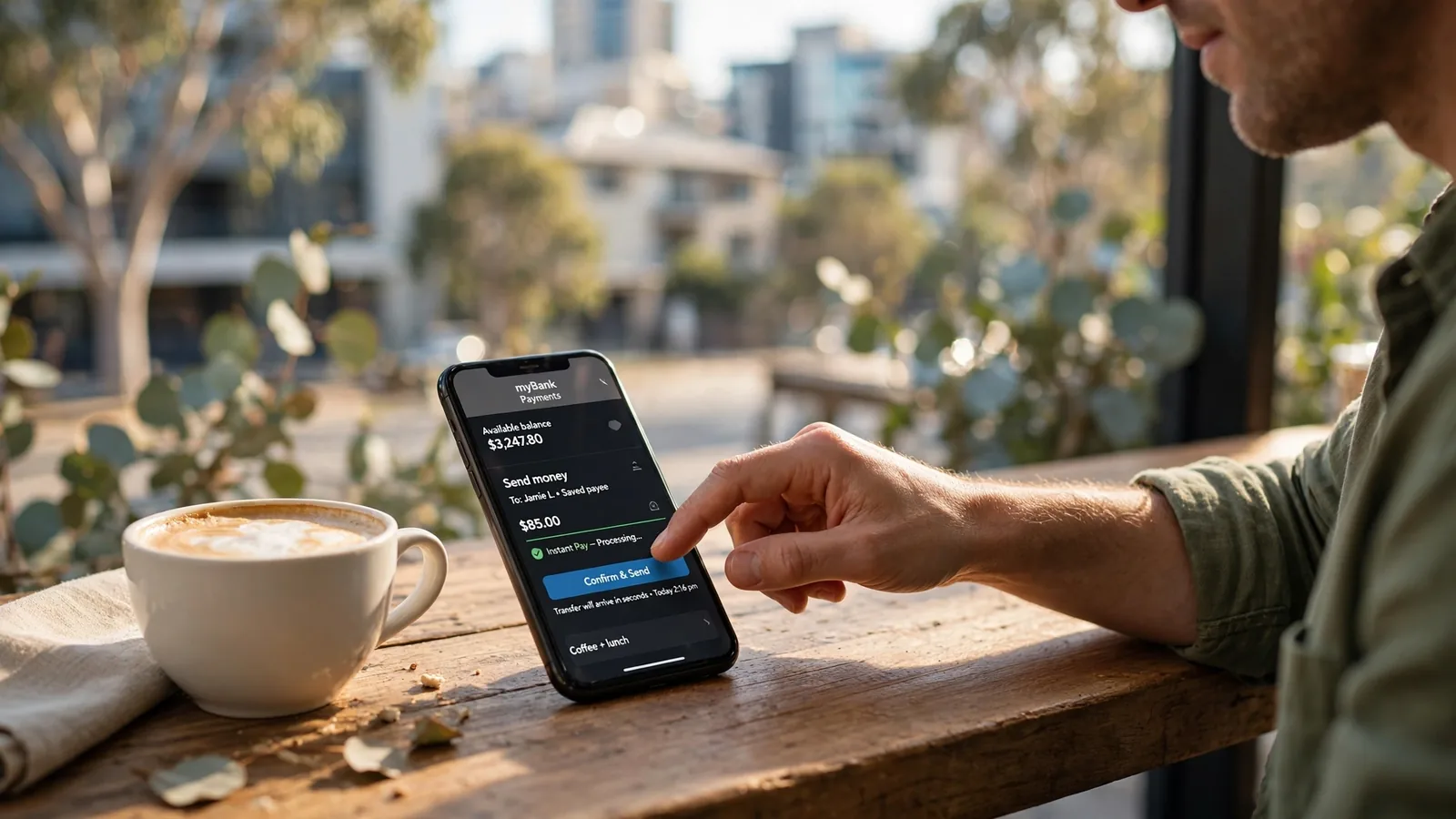
A per-transaction maximum applies to one request. If your balance is larger, the operator’s policy may require you to submit more than one request. A weekly or monthly cap works differently: it can restrict the total you withdraw during that period, even when each individual request is within the per-transaction ceiling. The result is that a large balance may take multiple requests or periods to withdraw.
The reverse matters too. A minimum withdrawal limit can make a small balance ineligible for cashout until it meets the stated threshold. These figures are policy details, not features of PayID itself. A specialist review reports that withdrawal amounts can be limited by casino policy, so don’t assume the payment route determines how much you can take out.
Before relying on any advertised “easy withdrawal” claim, look for the minimum and maximum per request, plus any weekly or monthly cap. A specialist review reports that some PayID operators publish these limits clearly; still, check the terms for the specific service rather than treating that as universal. Look for whether the limit applies to all payment methods or only the one you plan to use, and whether a large amount may be released in instalments under the operator’s policy.
The wording can be easy to skim past. “Maximum withdrawal” might refer to one transaction, not the amount you can receive during a wider period. If the terms are unclear, don’t build a cash plan around the headline figure. Get the policy clarified before depositing or requesting a payout.
One legal point shouldn’t be lost in the payment detail: Australian law prohibits operators from providing real-money online casino games to people in Australia. This isn’t a recommendation to use an offshore service. It’s a reminder that payment limits don’t change the legal position.
Keep the distinction simple: a transaction cap controls each request; a period cap controls the total across that period. Both can shape when money becomes available. Check both.
What are easy withdrawal casinos?
They are services where cashouts can be completed quickly, often because the payment method moves funds rapidly after the operator approves and releases them. PayID transfers can be near-instant at that stage, but the operator’s review may add time.
How do you choose the best easy withdrawal casino site?
Check that it clearly publishes withdrawal limits and find out how it handles approval, identity checks and your chosen payment method. Completing verification early can help with later withdrawals; also check whether withdrawals must return to the deposit method and whether transaction fees apply.
How fast are withdrawals?
PayID withdrawals may arrive in seconds or under five minutes once released, though internal reviews can take up to 24 hours. E-wallet withdrawals are typically processed within 24 hours, while bank transfers can take up to five business days.
What payment methods are available?
Options can include credit and debit cards, bank transfers, PayID, PayPal and Skrill, with cryptocurrency available at some services. POLi may be offered for instant banking, while prepaid vouchers such as Neosurf are usually for deposits rather than withdrawals.

Created by the ”JeetCity Casino” editorial team.