




Anonymous Crypto Casinos in Australia: Risks and Checks
 Available in AU
A practical look at crypto transfers, offshore casino risks, age checks and the limits of bonus offers and casino lists.

Table of Contents
- Bitcoin Transfers: The Trade-Off Between Cost and Convenience
- The Australian Legal Reality Behind Offshore Crypto Casinos
- Online Pokies, Age Checks and the Risks You Still Carry
- No-Deposit Bonuses and Crypto Deposits: Read the Conditions First
- What “Best” Should Mean When You Can’t Verify the Operators
- Casino Sites Can Disappear Without Warning
- Which Cryptocurrencies Are Commonly Accepted?
- Using a Casino App Doesn’t Make Crypto Transfers Safer
- Why an Old Casino List Can’t Tell You What’s Available Now
- New Casino Domains: Don’t Mistake “New” for Safe
Bitcoin Transfers: The Trade-Off Between Cost and Convenience
Bitcoin is familiar enough that it can feel like the obvious way to move funds at an offshore crypto casino.

A Bitcoin deposit starts with the casino displaying a receiving address. You send BTC from a wallet you control, then wait for the transaction to be recognised and credited. A withdrawal runs in reverse: the casino sends BTC to the wallet address you provide. Those steps sound tidy. The catch is that a transaction sent to the wrong address cannot simply be recalled, and a transfer broadcast to the Bitcoin network is not the same thing as money already available in your casino balance.
I once treated the address field like a minor formality and nearly sent funds to an old address I had copied from elsewhere. That was my mistake, not a Bitcoin feature. Now I slow down, check the destination, and confirm the casino is asking for a Bitcoin transfer rather than an address for a different asset or network. A familiar coin name is not enough. One careless paste can cost you the transfer.
What the convenience actually costs
Bitcoin fees are not a fixed promise attached to a casino deposit. The fee for sending a transaction depends on network conditions and the wallet’s settings; the casino may also apply its own payment rules. So a low-fee label in a payment menu does not tell you what your specific transfer will cost, or how promptly it will be processed.
Confirmation time can vary too. The network must process the transaction, and the casino decides when it considers a deposit or withdrawal complete. A pending transfer may leave you waiting even when you have done everything correctly. For withdrawals, there can also be a gap between the operator approving the request and the transaction appearing on the blockchain. Those are separate stages, and a vague “processed” status does not necessarily mean the BTC is already in your wallet.
A specialist review describes Bitcoin as better suited to larger, less frequent cashouts when waiting around half an hour is not a concern. I would treat that as a trade-off, not a promise about every transfer. If you need frequent small movements or want a predictable arrival time, Bitcoin may feel clumsy. If you value using a widely supported coin and can tolerate waiting, it may fit better. There is no universal winner.
The amount you receive can also shift in value while a transfer is pending. Bitcoin’s price can move between the moment you decide to withdraw, the moment the casino sends it, and the moment you exchange or spend it. The number of BTC is not the same as a guaranteed Australian-dollar value. I used to focus on the coin amount and forget the exchange rate could change. That is how a clean-looking balance becomes a messier result.
“Anonymous” is not the same as private
Searches for an anonymous Bitcoin casino can make the payment method sound like a cloak. It isn’t. Bitcoin transfers are recorded on a public blockchain, where wallet addresses and transaction amounts can be viewed. An address is not automatically a name, but that does not make a transaction invisible or guarantee that an operator will never ask who you are.
Using BTC does not remove identity checks. An offshore operator may request verification under its own policies, including when you seek a withdrawal. If an account is restricted or a payment is delayed, being able to point to a blockchain transaction does not create Australian consumer protection. Offshore crypto casinos are not regulated by Australian authorities and do not offer that local safeguard.
There are bigger risks than a slow confirmation. Australia requires players to be at least 18 to gamble, and meeting that age requirement does not make an offshore service safe or locally regulated. ACMA can direct internet providers to block prohibited gambling sites, so a casino domain may stop loading without notice. A bookmark is not a guarantee of continued access.
No Local Protection
Offshore crypto casinos are not regulated by Australian authorities and do not offer Australian consumer protection.
A practical check before sending
Before moving BTC, confirm the exact receiving address and the payment instructions shown for that transaction. Check that the wallet is sending Bitcoin on the Bitcoin network, not a different asset with a similar label. Make sure you understand whether the displayed amount includes any fee, and keep the transaction record until the casino has credited the deposit or the withdrawal has reached your wallet.
Most importantly, decide whether you can accept both the wait and the price movement. Bitcoin can be a practical option for a less frequent, larger cashout, but it is not an instant transfer, a privacy guarantee or protection against a casino failing to pay. If those risks would make you chase a pending balance or send more funds to “fix” a problem, stop before transferring. Slow down first.
The Australian Legal Reality Behind Offshore Crypto Casinos
The word “anonymous” can make a gambling site sound as if it sits outside the rules. It doesn’t. Using cryptocurrency does not turn an offshore casino into an Australian-licensed service, and it does not change who Australian gambling law is aimed at.
The Interactive Gambling Act 2001 prohibits operators from providing real-money online casino games to people in Australia. That includes


That distinction matters. The Act targets the providers of prohibited services, not the individual who accesses one. For a person in Australia, using an offshore casino is not itself a criminal offence under this law. That does not make the service lawful for the operator to offer to Australians, or turn it into a safe or locally protected option. Different sides of the same transaction.
What Australian oversight can and cannot do
The Australian Communications and Media Authority, or ACMA, administers online gambling rules under the Act. Its role is not to license offshore crypto casinos or supervise their customer service. When ACMA identifies prohibited offshore gambling services, it can direct internet service providers to block them. Blocking notices have applied to hundreds of domains by mid-2025, though that figure describes notices issued up to that point, not a permanent count.
A block can interrupt access to a particular web address. It does not mean that a blocked site has become safe, unsafe, or legitimate; it means ACMA has taken action against a prohibited service. Nor does a site remaining reachable prove it has been approved. The presence or absence of a warning page is no substitute for Australian oversight.
There is a gap here that I would not gloss over. If a dispute arises with an offshore operator, you cannot treat ACMA as the casino’s licensing authority or assume it can resolve your account problem as it might with a regulated Australian service. These operators are outside the local framework, so Australian consumer protections for locally regulated gambling services do not apply to them. “International” can sound reassuring. It is not the same as accountable in Australia.
ACMA Oversight
ACMA can direct internet providers to block prohibited gambling sites, meaning a casino domain may stop loading without notice.
Where crypto fits—and where it doesn’t
Crypto is a payment method, not a legal status. A site does not become compliant with Australian law because it takes Bitcoin or another digital currency, and a crypto transaction does not make the operator answerable to an Australian regulator. The same principle applies to a site calling itself an anonymous casino: the label tells you little about its legal position.
I used to read a polished page and take the confident wording as a sign that someone was keeping an eye on things. That was an easy mistake. A professional-looking interface, an account balance displayed on screen, or a claim about privacy is not evidence of Australian licensing or local recourse. “No-KYC” is a claim about the operator’s process, not a guarantee that your identity can never be requested or that you carry no risk.
So the legal picture is neither “players are prosecuted for placing a bet” nor “offshore sites are permitted because players are not prosecuted.” The law draws a line between the operator’s prohibited offer and the individual user’s conduct. Knowing that line can stop you from confusing personal legal liability with regulatory approval.
If you are weighing an offshore crypto casino, keep those points separate: Australian users are not criminalised simply for accessing one, but the operator is not licensed here, and Australian authorities do not provide the consumer protection you might expect from a domestic regulated service. Crypto changes the transfer method. It does not move the casino inside Australia’s rules. No magic cloak.
Online Pokies, Age Checks and the Risks You Still Carry
The word “anonymous” sounds reassuring until you ask what it actually means. A site may let you look around without showing identity documents straight away; that does not prove it will never ask for them. An offshore operator may request checks when you register, make a payment, or try to withdraw. Crypto does not switch those checks off.
I would not treat “no-KYC” as a promise of privacy, either. It is a label, not a guarantee about what information a site collects, keeps or later asks you to provide. If an account is restricted and the operator wants documents before releasing funds, the word “anonymous” on a page will not settle the dispute. Read the terms and privacy information before sharing personal details or sending money. If those explanations are vague, that is a reason to pause.
Age is not optional. You must be at least 18 to gamble. A site’s sign-up flow is not proof that it has properly checked your age, and an easy registration process does not make play suitable for someone under the legal age. If you are not 18, do not use a gambling service.
Access is not the same as protection
Australian residents can encounter offshore casino pages, but access does not make them locally regulated or give you Australian consumer protections. If something goes wrong, you may have fewer practical ways to challenge a decision than you would expect from a familiar domestic service. A polished design, support chat or “trusted” badge can look comforting. None of those things, by itself, guarantees a fair outcome or a useful remedy.
Attention: An offshore operator may request identity checks when you register, make a payment, or try to withdraw funds, regardless of “no-KYC” claims.
I have learned not to confuse a smooth sign-up with a safe account. The real test comes when you need help, want to close an account or disagree with a decision. With an offshore service, you may find that the rules are set by the operator and that getting an independent resolution is difficult. That uncertainty matters before you deposit, not just after a problem appears.
There is also no reliable shortcut from “anonymous casino online” to “untraceable.” A crypto transfer can be visible on its blockchain, while the operator may still hold account and transaction records. Your wallet address is not the same thing as a real-world name, but that does not mean a transfer or account has no link to you. Do not assume that using a nickname, a new wallet or a privacy-sounding feature makes your activity risk-free.
Crypto adds another exposure: its value can move while you are depositing or withdrawing. The amount you send and the value you later receive may not match in practical terms. A transfer can also be difficult or impossible to reverse if you send it incorrectly. Take time to check the details rather than treating a quick payment screen as a reason to hurry.
An offshore page can also stop loading. ACMA directs internet providers to block prohibited gambling sites, and a domain may become inaccessible without warning. A bookmark or an old link does not promise continued access. That can leave you unable to reach an account through the address you used before.

Keep your expectations grounded
I would be wary of claims that a service is the “best” anonymous option. A ranking cannot remove the basic uncertainty: you may be asked for identity checks, you may have limited recourse, and a site can become inaccessible. No claim about anonymity should be read as permission to ignore those risks.
There is no known case of an Australian player being prosecuted simply for placing a bet at an offshore casino. That fact is not a guarantee about every possible circumstance, nor does it make an offshore platform safer or more accountable. For me, the practical question is less about a bold promise on a landing page and more about whether I am willing to accept the risks if the operator asks for documents, disputes a transaction or disappears from reach.
If the answer is no, do not send funds. A little caution up front.
No-Deposit Bonuses and Crypto Deposits: Read the Conditions First
A no-deposit bonus sounds like a way to try a casino without putting money in first. The phrase does not tell you whether a qualifying offer is actually available, who can claim it, or what you would have to do before any bonus balance could be withdrawn. I would treat the headline as an invitation to read the terms, not as proof that free, usable funds are waiting.
Bonus Conditions
No-deposit bonuses are invitations to read the terms; they do not guarantee that free, usable funds are waiting or that you can play without identity checks.
That distinction matters with offers described as “anonymous”. It is marketing language, not a promise that you can play without checks. Using cryptocurrency does not remove identity-verification or KYC requirements, and you still need to be at least 18 to gamble. An offshore casino is not regulated by Australian authorities and does not provide Australian consumer protection. A bonus does not change that.
What the offer actually gives you
Before relying on a no-deposit promotion, look for the full terms on the operator’s own site. Check whether the offer is available to Australian users, what games or transactions it applies to, and whether there are conditions on withdrawing any resulting funds. If the terms are hard to find, unclear, or differ between the promotion and the account page, I would not count the advertised bonus as money you can use.
“Instant withdrawal” is another phrase that needs unpacking. A bonus may have conditions that affect whether a withdrawal is available at all; the label alone cannot tell you that. Nor does a crypto payment method guarantee privacy, approval, or a particular processing time. I have learned not to plan around a promotional line before reading the small print. Small print matters.

Deposit figures are not a promise
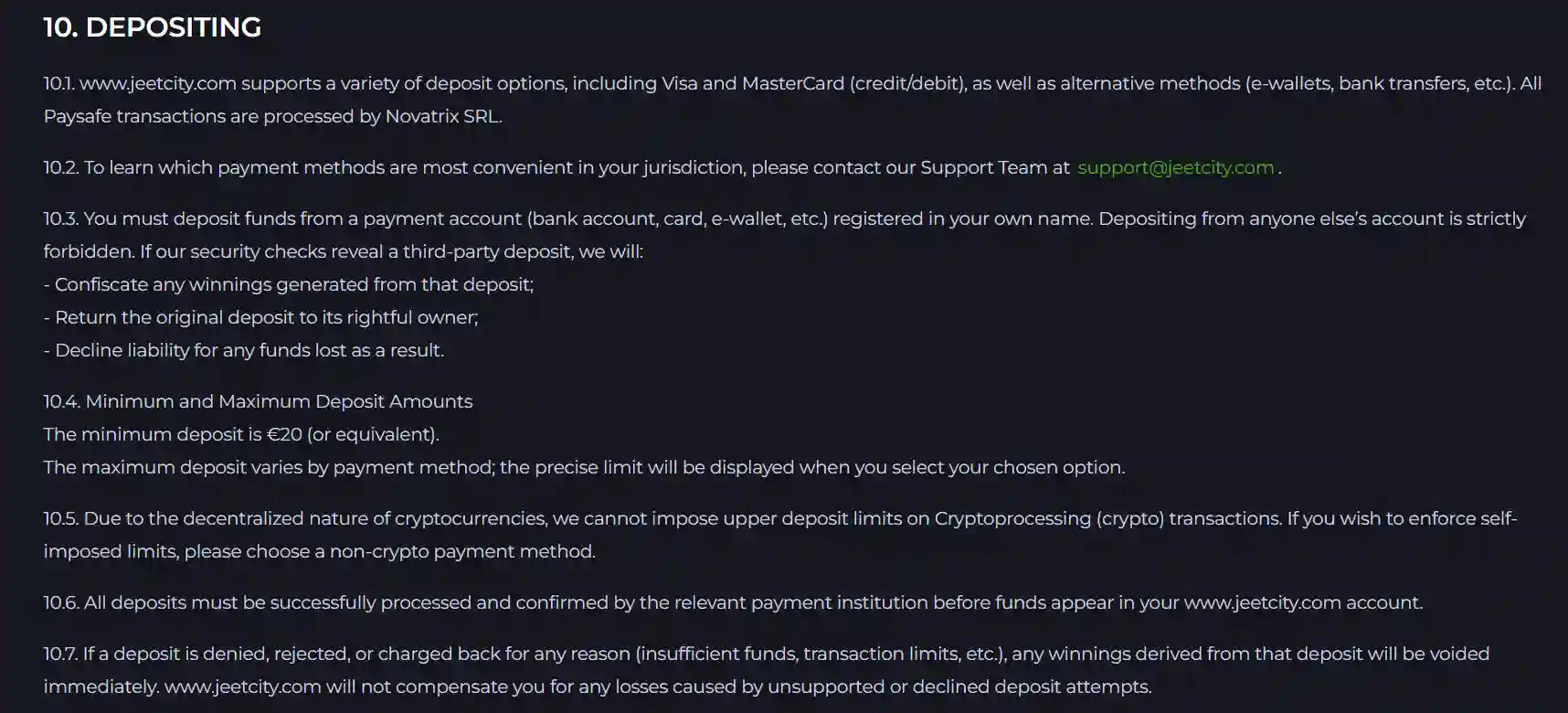
A specialist review reports that some listed casinos have crypto deposits starting at $5. That is a reported entry point, not a dependable offer across operators or a reason to assume a particular site will accept that amount. A separate specialist review reports minimum deposits equivalent to AUD 15–30 at most operators it covers, while Bitcoin minimums are often AUD 30–50. Those figures can differ from what you see on a particular payment page, so check the amount and currency shown before initiating a transfer.
Even a small deposit is still money at risk. The crypto’s Australian-dollar value can move between the moment you send it and the moment it is credited or withdrawn. I would also confirm the receiving address and the selected blockchain network before sending anything. A mismatch can mean funds do not arrive, and a crypto transfer may not be reversible. “Low minimum” is not the same as low risk.
- Confirm the receiving address
- Verify the blockchain network
- Record the purchase cost and value
- Assume a low minimum means low risk
- Rush a payment due to a quick screen
- Forget that deposits can trigger CGT
The deposit can matter for tax on its own
There is a tax detail that is easy to miss when the focus is a bonus or a possible win. The ATO treats cryptocurrency as a capital gains tax asset, and depositing crypto into a casino can itself count as a CGT event. That is separate from whether you win, lose, or receive a promotional balance.
In practical terms, the deposit involves disposing of crypto. Its tax treatment may depend on the difference between the asset’s cost base and its value when disposed of, so the fact that the transfer goes to a casino does not automatically make the tax question disappear. Keep records of the crypto’s purchase cost, the amount sent, its value at the time, and the transaction details. If you are unsure how your circumstances apply, get advice from a qualified Australian tax professional rather than relying on an offer page.
A bonus can look cost-free while the deposit and its conditions carry real consequences. I would check the terms, verify the network, and understand the tax record before sending funds. No shortcut.
What “Best” Should Mean When You Can’t Verify the Operators
If you’re looking for an anonymous crypto casino in Australia in 2026, use this list as a starting point and check each operator’s current privacy, payment and eligibility terms before you sign up. The available details vary, so don’t treat a listing as confirmation of anonymity.
License: Curacao eGaming (Roby Games Ltd) Roby Casino is listed with a Curacao eGaming license held by Roby Games Ltd. You can use that licensing detail as a starting point when checking the operator.
License: Curacao eGaming OGL/2023/174/0082 (Dama N.V.) · Min. deposit: A$15 LevelUp Casino lists a Curacao eGaming license, OGL/2023/174/0082, held by Dama N.V., and a minimum deposit of A$15. Check its current deposit and account terms before you play.
License: Curacao – Antillephone N.V. (Versus Odds B.V.) · Min. deposit: EUR 20 Thor Casino lists a Curacao license from Antillephone N.V. for Versus Odds B.V. Its stated minimum deposit is EUR 20.
Payout speed: crypto 30-120 minutes, fiat 24-72 hours · Min. deposit: A$30 MrPacho lists crypto payouts at 30–120 minutes and fiat payouts at 24–72 hours, with a minimum deposit of A$30. Check the applicable payment and withdrawal terms before choosing a method.
License: Curacao Gaming Control Board OGL/2023/176/0095 (Hollycorn N.V.) Neospin lists a Curacao Gaming Control Board license, OGL/2023/176/0095, held by Hollycorn N.V. You can use those details to check the operator’s licensing information.
License: Curacao Gaming Control Board (TechSolutions Group N.V.) Bizzo Casino lists a Curacao Gaming Control Board license held by TechSolutions Group N.V. The available information identifies its licensing, but does not establish its privacy or payment features.
License: Curacao Gaming Control Board OGL/2023/176/0095 (Hollycorn N.V.) Rollero Casino lists a Curacao Gaming Control Board license, OGL/2023/176/0095, held by Hollycorn N.V. Check the operator’s current terms for details beyond its licensing.
License: Curacao Gaming Authority (Jumpman Gaming Ltd) DragonSlots Casino lists a Curacao Gaming Authority license held by Jumpman Gaming Ltd. The provided information does not specify its deposit, payout or anonymity features.
License: Curacao Golden Pokies is listed as holding a Curacao license. No further operator details are provided here, so check its current terms before signing up.
License: Curacao OGL/2024/1335/0780 · Min. deposit: EUR 20 Vegaz Casino lists a Curacao license, OGL/2024/1335/0780, and a minimum deposit of EUR 20. Confirm the current deposit terms and other conditions before you play.
When people talk about the “best” anonymous crypto casino, they often mean a site that asks few questions and promises easy payments. I’ve learned not to treat either claim as proof of safety. “Anonymous” can mean less information is requested at sign-up; it does not mean you can avoid identity checks later, or that your funds and personal details are protected. A list of ten names would look decisive, but it would not tell you whether any operator can be verified or what happens if something goes wrong.
For Australians,

The other part I would put near the top of any comparison is tax. Australian recreational gambling winnings are generally not taxed as ordinary income. The ATO does not treat cryptocurrency received from gambling or lottery wins as ordinary income either. But that does not mean crypto can be moved around without tax consequences. Cryptocurrency is treated as a capital gains tax asset, and disposing of it can trigger CGT.
That distinction is easy to miss when a balance is shown in a casino account. If crypto is transferred in as a deposit, that transfer can itself count as a disposal for CGT purposes. You may have a CGT event even if you lose what you deposited and never make a gambling profit. I used to think “I only moved it to play” settled the matter. It doesn’t.
A win creates another point to track. The value of the crypto at the moment you receive the win becomes its cost base for CGT purposes. If you later sell, swap or spend that crypto, CGT rules apply to that disposal. The gambling result and the later change in crypto value are separate pieces of the picture; treating the whole balance as one untaxed “win” can leave you with a messy record.
So if you are assessing claims about the best BTC casinos or other crypto sites, tax clarity is not a perk to accept on trust. Keep your own records of what you transferred, when it happened, the value at the time, and what you later did with any crypto received. The operator’s account history may not be available when you need it, and a displayed amount in a different currency is not a substitute for recording the transaction.
Crypto prices can move between the time you deposit and the time you withdraw. That volatility affects the value you hold, quite apart from whether a gambling session ends ahead or behind. A crypto win is not automatically a cash-equivalent win.
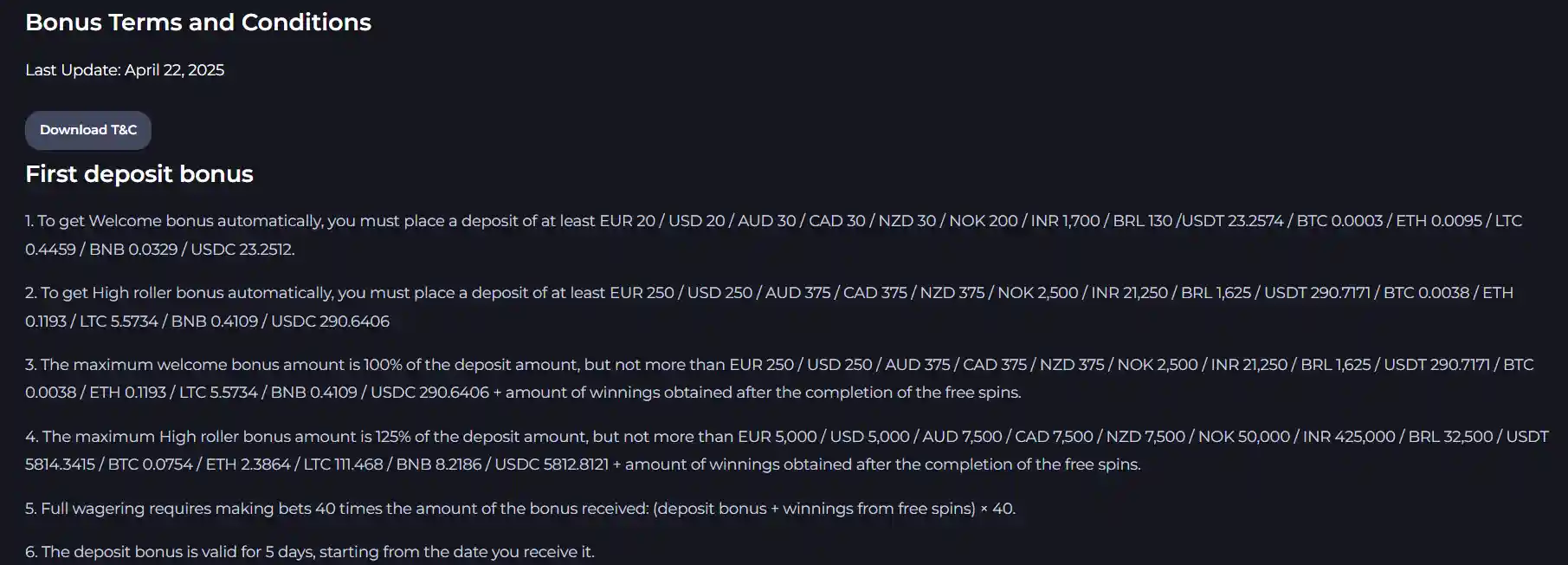
“Free spins” and other incentives do not change those basic distinctions. Read the conditions before relying on an offer, and don’t assume a bonus makes a site more verifiable. A no-KYC label is not a guarantee that no checks will be requested.
Understanding the Risks
- Offshore operators provide no Australian consumer protection
- Cryptocurrency is treated as a CGT asset by the ATO
- Anonymity does not guarantee that identity checks will be skipped
- Crypto value can fluctuate during the transfer process
My measure of “best” here is not the boldest promise or the longest list. It is whether you can understand the risks, keep a usable record, and accept that an offshore operator offers no local protection. Even then, you cannot remove the uncertainty—or the tax questions—by choosing a more appealing label.
Casino Sites Can Disappear Without Warning
An address that opens today may stop working later. Offshore casino domains can become inaccessible when internet service providers block them following directions from the Australian Communications and Media Authority (ACMA). A specialist review reported that hundreds of domains had received blocking notices by mid-2025. That figure is a dated report, not a promise about what will happen to any particular site.
A block can leave you staring at an error page even if you have used the same address before. A saved bookmark does not preserve access, and a familiar site name does not prove that a domain still leads to the same destination. I’ve learned not to treat an address as a stable point of reference. It can change. Access can go with it.
That matters more when money is involved. Offshore crypto casinos are not regulated by Australian authorities and do not provide Australian consumer protection. If a site becomes inaccessible while you have funds in an account, you may have little practical recourse. That is not a claim that every blocked domain has taken players’ money; it is a reminder that a working webpage is not the same as a reliable way to resolve a dispute.
Nor does a change of address prove that a replacement is genuine. A page using a familiar name may be unrelated, and a search result or message pointing to a new address is not verification. “Anonymous” can sound reassuring, but no-KYC branding does not establish who controls a site, remove identity checks, or make access risk-free. I would not send crypto just because a page looks familiar.
There is another wrinkle: cryptocurrency can move in value between the time you deposit and the time you try to withdraw. A domain problem can add uncertainty to an already volatile transfer. Check the destination carefully, and remember that blockchain transfers may be irreversible. Don’t use a domain change as a reason to rush.
You must be 18 or older to gamble. If a site stops opening, that alone does not tell you whether the cause is a block, a technical problem, or a change made by the operator. The blunt point is simpler: an offshore casino address is not a guarantee of continued access.
Which Cryptocurrencies Are Commonly Accepted?
The currency menu at an offshore crypto casino can look broader than a simple Bitcoin option. Bitcoin and Ethereum are common, and stablecoins such as Tether (USDT) appear alongside altcoins including

Widely supported by almost all crypto casinos, though transfer speeds and fees vary.
Designed to track another asset’s value, but require careful network selection (e.g., TRC-20).
Options like Litecoin and Ripple are available at some operators for potentially faster payouts.
A specialist review has reported casinos offering ten or more cryptocurrencies for deposits and withdrawals. Treat that as a description of what the review encountered, not a standard you can count on. The list changes from one operator to another, and a coin shown on a payment page may not be available for both sending and receiving funds.
I’ve learned not to stop at the ticker symbol. Tether, for instance, can exist on different blockchain networks; choosing the wrong one can mean the transfer does not arrive as intended. Before sending anything, compare the casino’s stated coin and network with the details in your wallet. Crypto transfers can be irreversible. A small check first.
The coin’s market value is another part of the decision. Bitcoin, Ethereum and other cryptocurrencies can rise or fall in value while funds are being deposited or withdrawn, so the amount you send may not hold the same value by the time you use or receive it. A stablecoin is designed to track another asset’s value, but that does not remove transfer risks or make the casino itself safer.
“Anonymous” can be a misleading label. Using crypto does not guarantee that an operator will skip identity checks, and it does not make an offshore casino private or risk-free. These operators are not regulated by Australian authorities and do not provide Australian consumer protection. Australian law requires players to be at least 18 to gamble; that age requirement does not disappear because a payment is made in crypto.
I’d compare the supported currencies only after checking the exact payment instructions and the terms attached to deposits and withdrawals. Don’t choose a casino just because its list is long, or assume a coin’s presence means it is the right fit for you. A bigger menu isn’t a safety measure.
Using a Casino App Doesn’t Make Crypto Transfers Safer
A casino app can make the screens feel familiar, but it cannot fix a transfer sent on the wrong blockchain network. I’ve learned to pause at the deposit screen rather than trust the coin name alone. Check the asset and network shown by the casino, then check that your wallet is sending the same asset over that same network. If they do not match, stop. A transfer sent incorrectly may be impossible to recover.
The fee can differ by network too. TRC-20 transfers keep costs to cents, but a low fee is no use if the receiving service does not support that network for the token you selected. Don’t infer support from a logo or a previous deposit: read the instructions for the specific transfer you are making. Copy the destination details carefully, and review them before confirming. Crypto transfers are not like a card payment you can simply reverse.
There is another moving part: the value of crypto can change while you are depositing or waiting to withdraw. The amount shown in your wallet and the value you can later exchange may not line up. An app does not remove that volatility, and it does not make a balance a guaranteed amount in Australian dollars.
Nor does an app promise no-KYC access. An offshore operator may still ask for identity checks, and using crypto does not make you anonymous or remove that possibility. Offshore crypto casinos are not regulated by Australian authorities and do not offer Australian consumer protection. You must be at least 18 to gamble. ACMA can direct internet providers to block prohibited offshore gambling sites, so a domain may disappear without notice; an app shortcut is no assurance that access will continue.
I would treat an anonymous casino app as an interface, not a safety feature. Before sending anything, verify the network, destination and amount on both sides of the transaction. If the instructions are unclear, don’t guess and don’t send a test payment unless you understand the possible fee and outcome. That small pause beats finding out later that the transfer went somewhere the casino cannot credit.
Convenience isn’t protection.
Why an Old Casino List Can’t Tell You What’s Available Now
An old directory can tell you that a site was mentioned when the page was written. It cannot tell you whether Australians can still reach it, whether its terms have changed, or whether the details on that page were ever reliable. I’ve learned not to treat a dated roundup as a current snapshot. “Anonymous” is a label, not proof that a casino asks for no identity checks or that your activity carries no risk.
That matters when you’re comparing lists of casinos described as anonymous, including pages dated 2024. A name appearing there is not confirmation that the service is available now. Australian authorities do not regulate offshore crypto casinos, and users do not get Australian consumer protections from them. ACMA blocking can also make a domain inaccessible; an old link may simply stop working.
There is no record of an Australian player being prosecuted just for betting at an offshore casino. That is not a guarantee of safety, a recommendation to use one, or proof that a particular site is lawful for its operators. The distinction is easy to blur when a page presents a casino as a neat option in a list.

Age checks still matter: you must be at least 18 to gamble, and using crypto does not establish that a service will skip identity verification. If you encounter an old listing, don’t read it as an endorsement or a live status check. I wouldn’t hand over personal details or funds on the strength of a stale page alone. Old page, old picture.
New Casino Domains: Don’t Mistake “New” for Safe
A fresh domain can look polished and still tell you very little about who operates it, how it handles disputes or whether it will remain reachable. “New” is a description, not a safety check. Offshore crypto casinos are not regulated by Australian authorities, so you do not get Australian consumer protection if a payment or account dispute goes nowhere.
I’ve learned not to treat a working page as proof of stability. The Australian Communications and Media Authority can direct internet providers to block prohibited offshore gambling sites, and a domain may become inaccessible without warning. A new address does not make an operator more trustworthy—or guarantee that the same service will be available tomorrow.
Before any transfer, match the coin and the exact blockchain network shown by the receiving service. Tether on one network is not interchangeable with Tether on another; a mismatch can mean funds do not arrive, and crypto transfers can be irreversible. Check the network before confirming. No shortcut here.
A specialist review recommends Litecoin and Tether on the TRC-20 network for faster payouts, citing confirmation speed, low fees and support across anonymous crypto casinos. Treat that as a source’s assessment, not a promise about a newly launched domain. Fees, processing and support can differ between operators, and coin values can move while funds are being deposited or withdrawn.
Nor does a “no-KYC” label mean you can rely on staying unidentified: an operator may still ask for identity checks. You must be at least 18 to gamble. New does not mean safe.
Is using a crypto casino legal for Australian players?
Yes, it is not a criminal offence for an Australian individual to gamble at an offshore online casino. The Interactive Gambling Act targets operators providing prohibited casino services to people in Australia, and offshore crypto casinos are not licensed under Australia’s regulatory framework.
What should I check before depositing on an offshore crypto casino from Australia?
Check the receiving address and make sure you are sending the correct asset on the correct network; also confirm what fees may apply and keep the transaction record. Consider confirmation delays, price changes while the transfer is pending, and the fact that an offshore casino does not provide Australian regulatory protection.
Is Bitcoin casino gambling legal in Australia?
It is not a criminal offence for an individual in Australia to gamble at an offshore online casino using Bitcoin. However, offshore crypto casinos are not licensed in Australia, and the law prohibits operators from providing real-money online casino games to people in Australia.
Which crypto is best for casino deposits and withdrawals?
Litecoin and Tether on the TRC-20 network are recommended for faster payouts, with quick confirmation and low fees. Bitcoin may suit larger, less frequent withdrawals if you are willing to wait and accept price fluctuations.
What are the tax implications of winnings from an anonymous crypto casino in Australia?
Recreational gambling winnings are generally not taxed as ordinary income, and crypto received as a gambling win is not treated as ordinary income by the ATO. However, depositing, selling, swapping or spending cryptocurrency can trigger capital gains tax; the crypto’s value when won becomes its cost base.
Which cryptocurrencies do crypto casinos accept?
Common options include Bitcoin, Ethereum, Tether and Litecoin; some casinos also accept Ripple, Solana, Dogecoin and other altcoins. Many casinos support a range of cryptocurrencies, often ten or more.
Prepared by the JeetCity Casino editorial staff.